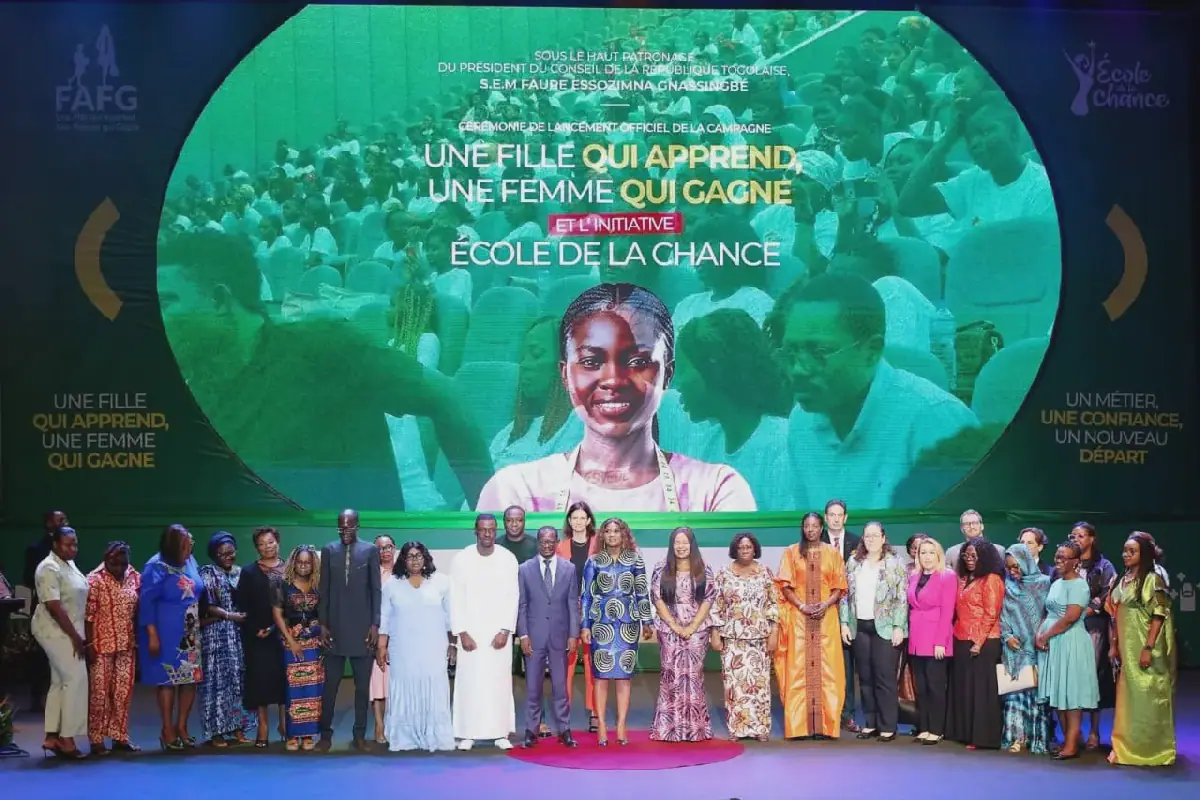
The Togolese government has launched a new initiative aimed at empowering girls and women through education and economic independence. The "Ecole de la Chance" or "School of Chance" program was officially launched on November 27, 2026, with a national 100-day campaign titled "Une fille qui apprend, une femme qui gagne" or "A girl who learns, a woman who earns." The program seeks to provide young girls with vocational training and entrepreneurship opportunities to achieve economic autonomy.
In its pilot phase, the initiative has already provided 1,500 vulnerable young girls with free training in 220 workshops in the Greater Lomé area. The girls are being trained in eight in-demand trades, including sewing, haberdashery, embroidery, hairdressing, and beauty therapy. The training, which lasts from three to six months, focuses on practical skills and is conducted by experienced artisans. Each trainee is assigned to a workshop near their home and also receives life skills training.
For many of the beneficiaries, the program offers more than just a new skill. One trainee, who received training in makeup, said she also gained confidence and improved her time management skills. These skills are essential for building a professional career and are considered just as important as mastering a trade. However, the program's organizers acknowledge that learning a new skill is not enough to guarantee economic independence.
Many girls face significant challenges in setting up their own businesses or finding employment. The minister, secretary general of the Presidency of the Council, Sandra Ablamba Johnson, called on companies and trade chambers to offer internships or apprenticeships to trainees. She also urged banks and microfinance institutions to provide adapted financial solutions to support the girls' entrepreneurial endeavors.
The 100-day campaign, supported by the World Bank and implemented under the SWEDD+ project, has four main objectives: girls' education, women's entrepreneurship and financial inclusion, prevention of gender-based violence, and women's engagement and resilience in the face of crises. The campaign aims to mobilize families, communities, public authorities, and the private sector to support girls' education and economic opportunities.
The program's impact was highlighted by Marie-Chantal Uwanyiligira, World Bank Division Director, who shared her personal story. Her mother had to drop out of school but made sure her daughters had equal opportunities. Uwanyiligira's education led to a successful international career, demonstrating the potential long-term impact of empowering girls through education and economic opportunities.
The success of the pilot phase will be evaluated to inform the extension of the initiative to regions with the greatest needs. The ultimate goal is not only to train more girls but to enable them to earn a living from their skills. The program's organizers recognize that the transition from training to economic independence is a significant challenge that must be addressed to ensure the long-term success of the initiative.
Key points
- The "Ecole de la Chance" initiative aims to provide vocational training and entrepreneurship opportunities to 1,500 vulnerable young girls in Togo.
- The program's 100-day campaign focuses on four main objectives: girls' education, women's entrepreneurship and financial inclusion, prevention of gender-based violence, and women's engagement and resilience.
- The initiative's success will be evaluated to inform its extension to regions with the greatest needs.