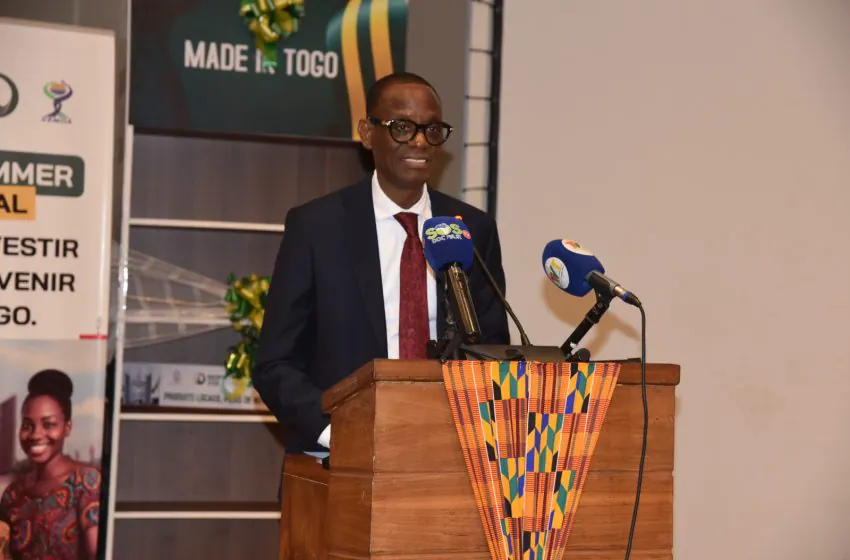
The 7th edition of the Local Consumption Month within the West African Economic and Monetary Union (UEMOA) was officially launched in Togo on October 6, 2026. The event was held in Lomé, the capital city, and was attended by Togolese Minister of Economy and Strategic Monitoring, Babanam Patoki, as well as other high-ranking officials, politicians, and economic operators. This marks the seventh consecutive year of the initiative, which was first introduced by the UEMOA Commission in October 2019.
The 2026 edition of the Local Consumption Month is themed "Local Consumption, a Factor of Regional Integration and Economic Sovereignty: Challenges and Opportunities." This national theme is derived from the regional theme, "Local Consumption, a Factor of Regional Integration and Economic Sovereignty of UEMOA in the Face of Global Trade Changes." The month-long event will run until October 31, 2026, and will be observed in all economic regions of Togo. The initiative aims to promote locally made products, stimulate the transformation of primary products, and reduce dependence on imports.
The Local Consumption Month is an initiative of the Togolese government, implemented through the Ministry of Trade, in collaboration with the other seven member states of UEMOA. The program includes various activities such as workshops, company visits, quality infrastructure tours, thematic conferences, and exhibitions-sales in Lomé and other regional capitals. The goal is to support small and medium-sized enterprises (SMEs) in the agri-food, craft, and service sectors. Minister Patoki praised the vision of President Faure Essozimna Gnassingbé, which focuses on stimulating economic transformation and modernizing public action, with an emphasis on promoting local consumption.
According to Minister Patoki, the government's strategy aims to increase production, improve the competitiveness of local goods and services, and stimulate national demand. The initiative also seeks to strengthen the capacities of local actors, reduce imports, and increase exports of finished and semi-finished products, ultimately reducing the trade balance deficit. The Local Consumption Month will enable the assessment of promising value chains, analysis of production, transformation, transportation, and distribution requirements, and identification of investment needs.
Other stakeholders, including Dr. José Symenouh, President of the Togo Chamber of Commerce and Industry (CCI-Togo), and Mme Zouréhatou Kassah-Traoré, Governor of the Grand Lomé Autonomous District, emphasized that local consumption relies not only on consumers but also on the efforts of producers and transformers. They called on these actors to improve quality, innovation, packaging, and respect for standards, certification, and traceability. They also urged UEMOA member states to harmonize their resources, strengthen their productive fabrics, and develop their enterprises to compete regionally and internationally.
Alioune Sène, Resident Representative of the UEMOA Commission in Togo, commended the Togolese authorities' commitment to regional integration. He stressed that local transformation is a powerful driver of integration and a key lever for building economic sovereignty. Sène advocated for the pooling of markets, resources, and productive capacities to create broader outlets and secure supply chains. During the event, local product promoters received symbolic displays offered by local supermarkets.
The Local Consumption Month is part of a broader effort to promote West African products and regional integration. The initiative has been welcomed by various stakeholders, who see it as an opportunity to promote economic growth, reduce dependence on imports, and increase regional cooperation. The event concluded with a visit to exhibition stands, where local products were showcased.
Key points
- The 7th edition of the Local Consumption Month was officially launched in Togo on October 6, 2026.
- The initiative aims to promote locally made products, stimulate the transformation of primary products, and reduce dependence on imports.
- The event is part of a broader effort to promote West African products and regional integration within the UEMOA.