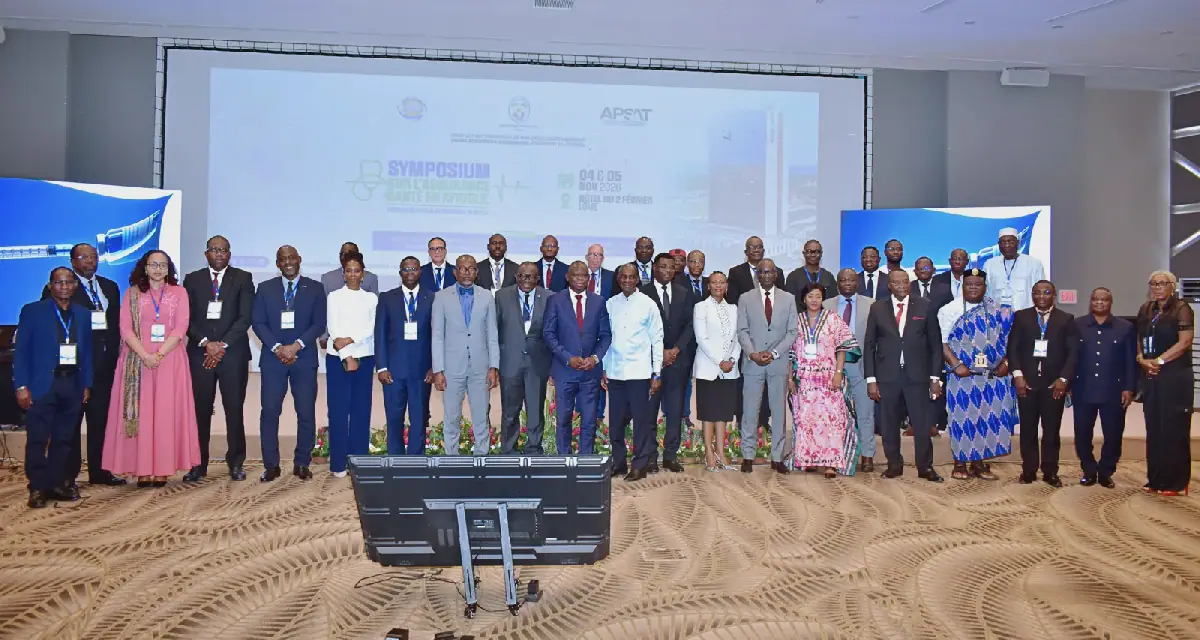
The first symposium on health insurance in Africa, organized by the Federation of African National Insurance Societies (FANAF) and the Togolese Association of Insurance Companies (APSAT), took place in Lomé, Togo, on November 4-5. The event brought together key stakeholders, including insurance company directors, regulators, and healthcare providers. The symposium's theme was "Building a viable, inclusive, and sustainable health insurance ecosystem in Africa." The gathering aimed to address the challenges facing the health insurance sector, which has been growing rapidly but remains plagued by deficits.
According to FANAF President Mamadou Koné, the health insurance sector has been growing at an annual rate of 10% since 2014. However, despite this growth, the sector has been cumulatively posting a loss of 106 billion CFA francs ($170 million) between 2020 and 2024 in the CIMA zone. Togo's Health Minister, Jean-Marie Koffi Ewonoulé Tessi, described the sector as "sick" and highlighted the need for urgent reform. He cited high combined ratios, widespread fraud, and a lack of data as major challenges facing the sector.
The symposium's discussions focused on the need for innovative solutions to make health insurance more accessible and affordable for low-income populations. Minister Tessi emphasized that the current products offered by insurance companies are often too expensive for ordinary people. He cited the example of a market vendor who earns 50,000 CFA francs ($83) per month and cannot afford an insurance premium of 20,000 CFA francs ($33) per month. The minister called on insurance companies to develop more affordable products that cater to the needs of low-income populations.
The Togolese government's efforts to introduce a universal health insurance scheme (AMU) in 2024 were also discussed during the symposium. The AMU, managed by the National Institute of Health Insurance (INAM) and the National Social Security Fund (CNSS), provides a basic package of healthcare services. However, the scheme has limitations, and private insurance companies are expected to play a complementary role in providing additional coverage. Minister Tessi encouraged insurance companies to develop products that complement the AMU.
FANAF President Koné emphasized the need for a coordinated approach to addressing the challenges facing the health insurance sector. He called on insurance companies to price their products accurately, pay healthcare providers on time, and work with regulators to prevent fraud. Koné also stressed the importance of digitalization, data interoperability, and fraud detection in improving the efficiency of the sector.
The symposium's second day focused on developing a roadmap for the sector's development between 2027 and 2030. The roadmap is expected to set clear objectives, assign responsibilities, and establish deadlines for implementation. Minister Tessi urged participants to commit to concrete actions and avoid simply taking photos at the end of the event. The adoption of the roadmap is seen as a crucial step towards transforming the health insurance sector in Africa.
The event concluded with a call to action for all stakeholders to work together to build a more sustainable and inclusive health insurance ecosystem in Africa. The sector's growth and development are critical to ensuring that millions of people have access to quality healthcare services. Key stakeholders have a shared responsibility to address the challenges facing the sector and develop innovative solutions to make health insurance more accessible and affordable for all.
Key points
- The symposium aims to develop a roadmap for the sector's development between 2027 and 2030.
- The health insurance sector in Africa has been growing rapidly but remains plagued by deficits.
- The sector's growth and development are critical to ensuring that millions of people have access to quality healthcare services.