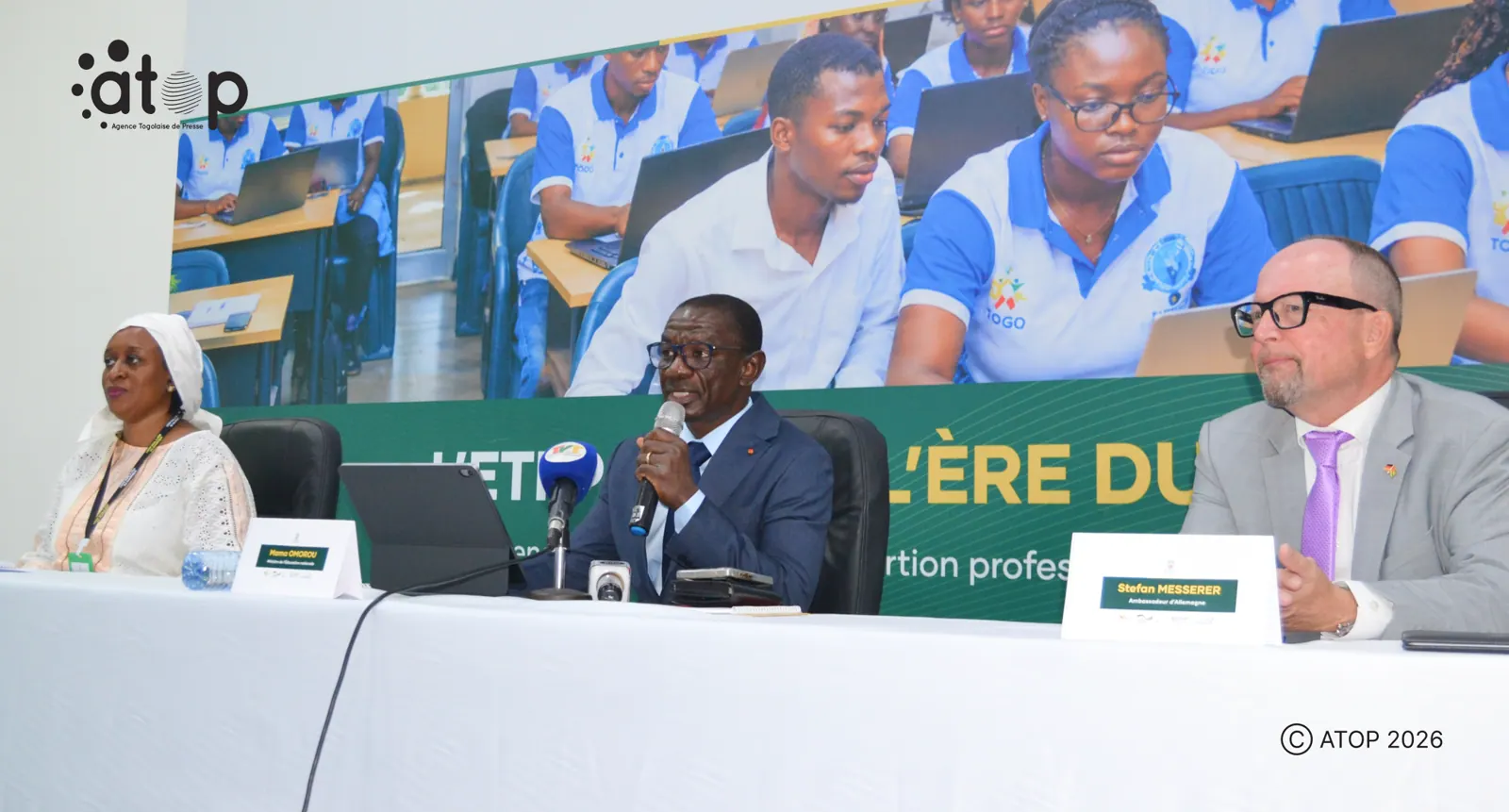
Lomé is hosting a regional workshop on "Dual Technical and Vocational Education and Training in the Digital Age" from September 21 to 24. The event brings together over 50 stakeholders from six African countries, including Burkina Faso, Côte d'Ivoire, Mauritania, Niger, Nigeria, and Togo. The workshop aims to strengthen the alignment between vocational training, business needs, and digital transformations.
The workshop is organized by the Togolese Ministry of National Education, with support from the German Development Cooperation (GIZ), the Donor Committee for Dual Vocational Education and Training (DC dVET), the International Organization of La Francophonie (OIF), and its Institute of La Francophonie for Education and Training (IFEF). The event focuses on enhancing the involvement of the private sector in dual vocational training and improving the employability of young people.
One of the key objectives of the workshop is to examine a guide developed by the DC dVET to promote better participation of enterprises in the training of young people. Participants will share experiences from different countries to adapt tools to national realities. The workshop also aims to improve the monitoring of professional insertion of graduates through the "InserJeune" tool, developed with the support of OIF-IFEF.
The transformation of the job market due to digitalization and artificial intelligence is a major theme of the workshop. Togo will submit its national policy on integrating artificial intelligence into vocational education and training for validation. Discussions will focus on the opportunities offered by new technologies and the skills to be developed to enable young people to adapt to changes in the professional world.
According to Togolese Minister of National Education, Mama Omorou, dual vocational education and training is a strategic choice to strengthen national skills. He emphasized the need to train young people not only for a diploma but also for a profession and their insertion into the economy. Omorou highlighted the need for Togo to respond to three simultaneous transformations: demographic growth, youth expectations, and digital transformation.
German Ambassador-designate to Togo, Stefan Messerer, noted that the rapid evolution of professions and skills, accelerated by digital transformation, requires innovative approaches to vocational training. He emphasized the importance of cooperation between governments, private sector, and international organizations to address these challenges.
The workshop aims to produce three main outcomes: a guide for private sector engagement adapted to the national context, operational scenarios for deploying "InserJeune", and a national policy on artificial intelligence in vocational education and training enriched by participants' contributions. The event provides a platform for stakeholders to share experiences and develop strategies to improve the employability of young people in the region.
Key points
- The workshop aims to strengthen the alignment between vocational training, business needs, and digital transformations.
- Togo will submit its national policy on integrating artificial intelligence into vocational education and training for validation.
- The event brings together over 50 stakeholders from six African countries to discuss adapting vocational training to the digital age.