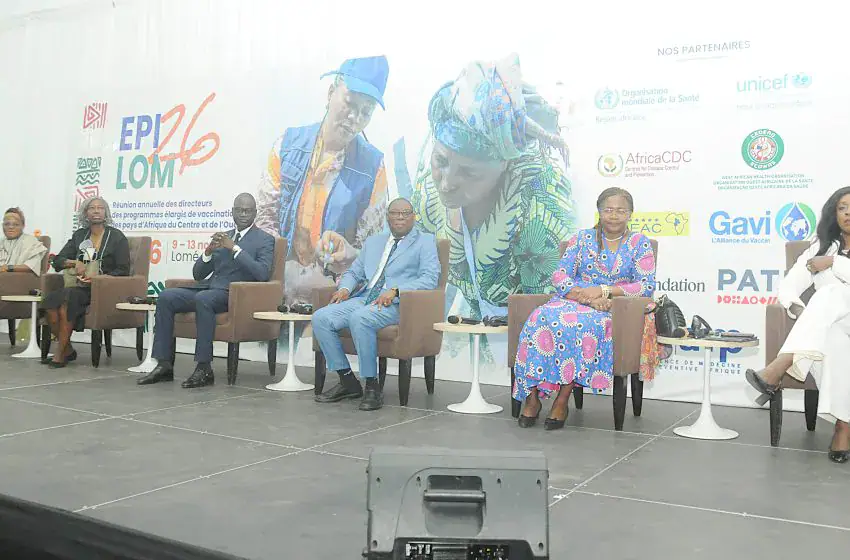
The World Health Organization's (WHO) regional office for Africa is hosting a joint annual meeting of Expanded Programme on Immunization (EPI) directors from West and Central Africa in Lomé, Togo. The meeting, which started on November 9, 2026, aims to review vaccination activities and define a budget plan to improve vaccination coverage. The one-week meeting will enable directors to share experiences, identify challenges, and develop strategies to address them.
The main objective of the meeting is to define a clear country action plan with prioritized actions, identified responsible parties, and a 12-month timeline. This plan will help improve vaccination coverage, particularly for children who are difficult to reach. The meeting also aims to address financing constraints, changes in the international development aid environment, and the transition to Gavi 6.0, a new strategic cycle for vaccine financing.
Togo's Secretary General of the Ministry of Health, Dr. Kokou Wotobé, emphasized the importance of vaccination in achieving health victories. He noted that vaccination is a collective responsibility and that governments, health professionals, and partners must work together to ensure that all children are vaccinated. Dr. Wotobé also highlighted Togo's commitment to expanding vaccination coverage, including the introduction of new vaccines against human papillomavirus and malaria.
Despite progress in vaccination coverage, challenges persist. According to WHO estimates, the coverage of the third dose of the diphtheria-tetanus-pertussis (DTP3) vaccine in West and Central Africa increased from 69% in 2022 to 71% in 2025. However, many children remain unvaccinated or under-vaccinated, particularly in remote or conflict-affected areas. The resurgence of vaccine-preventable diseases such as measles, polio, and diphtheria continues to strain health systems.
WHO Representative in Togo, Dr. Hamadou Nouhou, noted that the region is not on track to meet the 2030 targets for vaccination coverage and sustainable development. He emphasized the need for countries to accelerate their efforts to implement vaccination programs and strengthen national resource mobilization and utilization. Dr. Nouhou also highlighted the importance of meeting the commitments made by member states through declarations such as the Addis Ababa Declaration on Vaccination.
Gavi, the Vaccine Alliance, has set ambitious targets to increase vaccination coverage and leave no child behind. According to Dr. Marthe Sylvie Essengué Elouma, Gavi's regional director for West and Central Africa, the organization aims to support the vaccination of over 500 million additional children and adolescents by 2030. The success of this strategy will depend on the collective ability to translate this ambition into concrete actions and results for each child.
The meeting in Lomé will enable EPI directors to share best practices, address challenges, and develop strategies to improve vaccination coverage in West and Central Africa. The outcome of the meeting is expected to contribute to the achievement of the 2030 targets for vaccination coverage and sustainable development. Key stakeholders, including governments, health professionals, and partners, must work together to ensure that all children have access to life-saving vaccines.
Key points
- The meeting aims to define a clear country action plan to improve vaccination coverage in West and Central Africa.
- Togo has introduced new vaccines against human papillomavirus and malaria to expand vaccination coverage.
- The region is not on track to meet the 2030 targets for vaccination coverage and sustainable development.