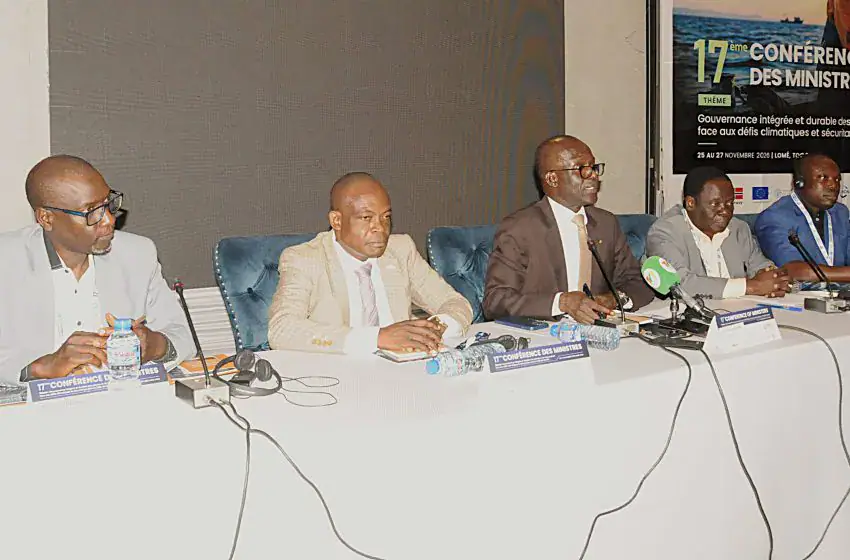
Experts from six countries in West Africa, including Benin, Côte d'Ivoire, Ghana, Liberia, Nigeria, and Togo, have convened in Lomé to examine the progress made by the Secretariat of the Committee for the Conservation and Management of Fisheries in the Central-Western Gulf of Guinea (CPCO) in 2026. The meeting, which began on November 25, 2026, aims to identify challenges and set priorities for 2027. The discussions will inform a meeting of ministers scheduled for the following day.
The experts are reviewing key documents, including the 2027 Work Plan and Budget, amendments to the CPCO Convention, and a manual of procedures. They are also discussing ways to strengthen monitoring, control, and surveillance of fisheries, including the establishment of a regional register of fishing vessels. These efforts aim to combat illegal fishing and address pressures on fish resources. According to Ahoédo Kossi, a fisheries advisor to the CPCO Secretary-General, the meeting will also focus on developing a manual of administrative, financial, and procurement procedures.
The CPCO Secretary-General, Antoine Gaston Djihinto, reported that despite constraints, the Secretariat made progress in 2026. The organization conducted coordinated operations between member states, continued work on a regional register of authorized fishing vessels, and developed a regional framework for managing and protecting marine ecosystems. The Secretariat also strengthened the capacity of member states by establishing a regional platform for researchers to share experiences and best practices.
Djihinto noted that nearly 20 years after its creation, the CPCO needs to adapt to changing circumstances. The proposed amendments to the Convention aim to address new challenges such as the blue economy, climate change, and ecosystem protection. The changes will clarify the roles and responsibilities of CPCO organs and enhance governance. The Secretary-General emphasized the importance of adopting a manual of financial and administrative procedures to ensure transparent and accountable management.
Konlani Dindiogue, Director of Cabinet at the Ministry of Agriculture, Fisheries, Animal Resources, and Food Sovereignty, highlighted the need for regional cooperation to address the challenges of sustainable management of shared fish resources. He noted that Togo has developed an adaptation plan for maritime and lagoon fisheries and adopted an ecosystem-based approach to managing fisheries. The country has also established an annual biological rest period for artisanal and industrial fishing.
Dindiogue invited experts to focus on the requirements of climate change and sustainable management of fish resources. He emphasized the importance of implementing measures to promote the replenishment of fish stocks and preserve marine biodiversity. The expert meeting will inform the decisions of the ministerial meeting scheduled for the following day.
The sustainable management of fish resources in the Gulf of Guinea region requires cooperation and commitment from all stakeholders. The CPCO plays a crucial role in promoting regional coordination and cooperation to address the challenges facing the region's fisheries. The outcome of the expert meeting will contribute to the development of effective strategies for sustainable fishing practices in the region.
Key points
- Experts from six West African nations are discussing sustainable fishing practices and addressing challenges facing the region's fisheries in Lomé, Togo.
Reporting sources
- Gestion durable des espaces halieutiques du Golfe de Guinée · Togo - Presse