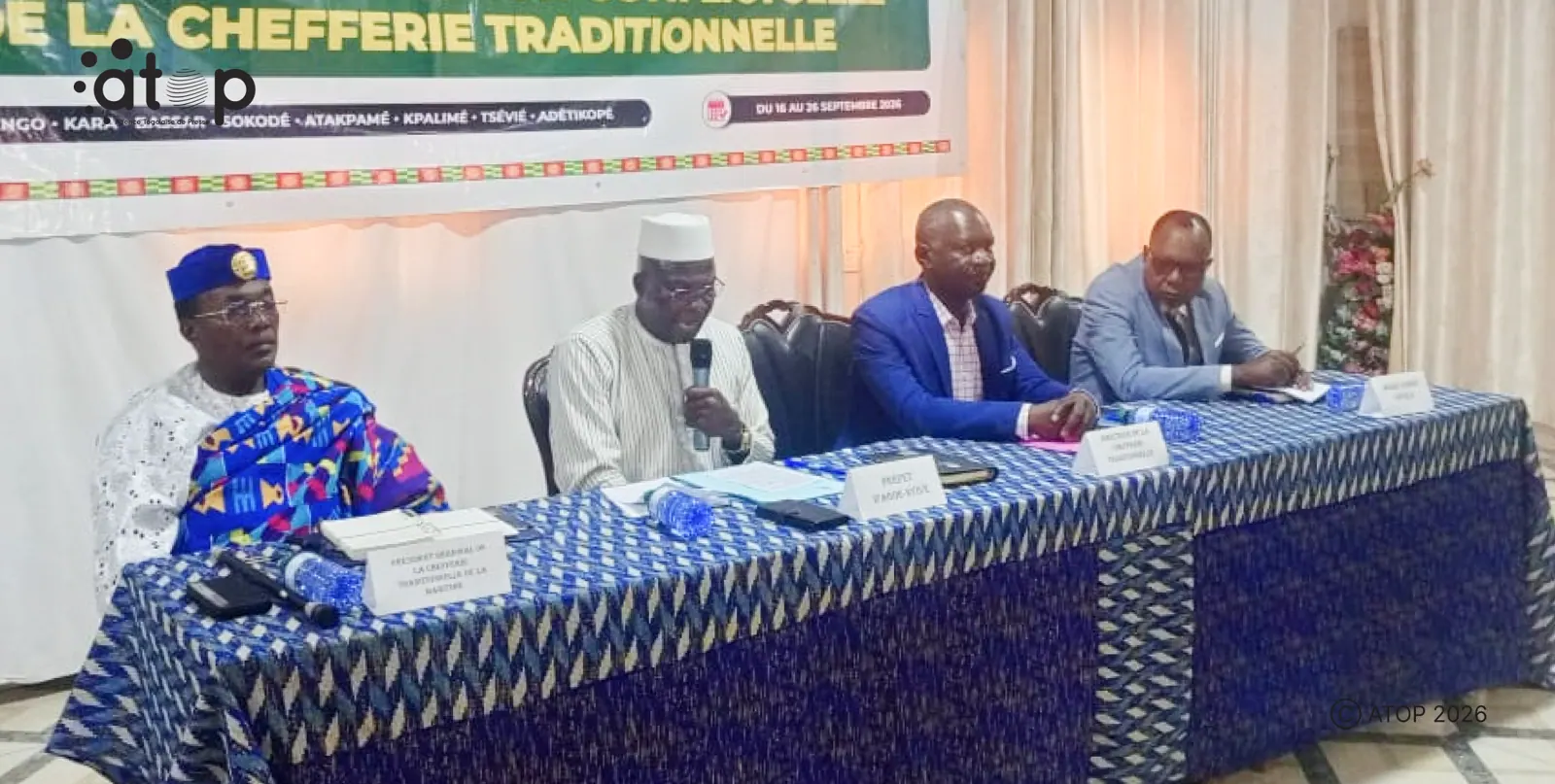
The Togolese government recently organized a training session for traditional chiefs, local authorities, and administrative officials in the Grand-Lomé region. The session, which took place on September 26 in Adétikopé, aimed to educate participants on the legal and institutional framework of traditional chieftaincy. The training covered topics such as the roles and responsibilities of different actors, the rules governing the designation and recognition of traditional chiefs, and the mechanisms for resolving disputes.
The training session was part of a national capacity-building tour initiated by the Ministry of Traditional Affairs. The tour, which began on September 16 in Dapaong, has visited several cities across the country, including Mango, Kara, Bassar, Sokodé, Atakpamé, Kpalimé, and Tsévié. The goal of the tour is to promote peaceful management of traditional chieftaincy and prevent conflicts. Participants in the training session included representatives of the state, local elected officials, traditional authorities, and administrative officials from the prefectures and communes of Grand-Lomé.
During the training session, participants discussed the importance of a common understanding of existing laws and regulations governing traditional chieftaincy. They also explored the role of traditional authorities in preserving peace and social cohesion. The representative of the Minister of Traditional Affairs, Dr. Tinaka Wédiabalo, emphasized that the management of traditional chieftaincy cannot be limited to administrative procedures alone. He noted that it also involves history, culture, traditions, and social organization of communities.
Dr. Tinaka Wédiabalo highlighted the significance of traditional chieftaincy as an institution that maintains links with local populations and contributes to social cohesion. He encouraged participants to prioritize dialogue, responsibility, and transparency in the exercise of their missions, while respecting the laws and regulations of the Republic. The training session provided participants with a better understanding of their roles and responsibilities in the process of designating traditional chiefs.
The training session covered the process of constituting and transmitting candidate files to competent authorities. Participants learned about the rules governing the designation and recognition of traditional chiefs, as well as the relationships between traditional authorities and local authorities. The session also addressed mechanisms for resolving disputes that may arise during the designation process.
The national capacity-building tour is an initiative of the Ministry of Traditional Affairs aimed at promoting peaceful management of traditional chieftaincy. The tour has reached its final stage, with the Adétikopé session marking the end of the training program. The Ministry hopes that the training will contribute to reducing conflicts related to traditional chieftaincy and promoting social cohesion.
The Togolese government has taken steps to strengthen the capacity of traditional chiefs and local authorities to manage traditional chieftaincy peacefully. The training session in Adétikopé was attended by representatives of various stakeholders, including the state, local authorities, and traditional leaders. The government is committed to supporting the development of traditional institutions and promoting peaceful coexistence among communities.
Key points
- The Togolese government trains traditional chiefs and local authorities on peaceful management of traditional chieftaincy
- The training session covered topics such as the roles and responsibilities of different actors and the mechanisms for resolving disputes
- The national capacity-building tour aims to promote peaceful management of traditional chieftaincy and prevent conflicts