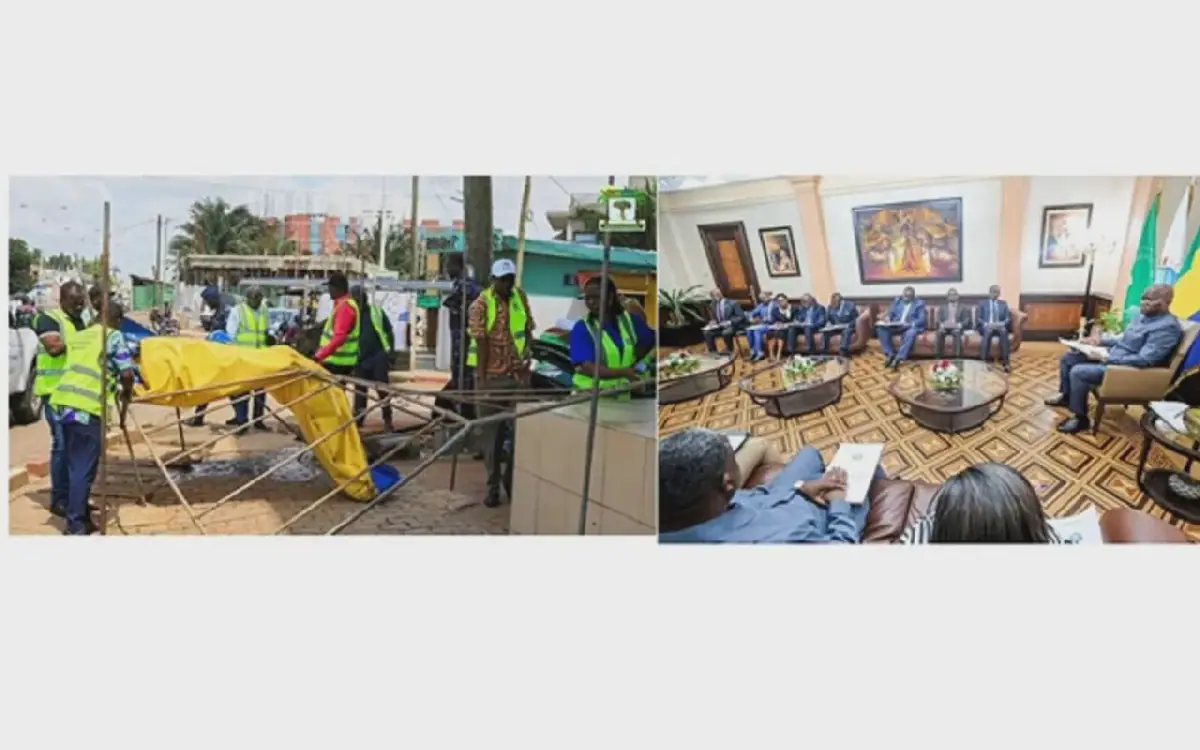
The Togolese government has started a demolition drive in Lomé, targeting small businesses and stalls on pavements. The exercise, which began on November 2, 2026, has already caused widespread destruction, with many small traders and vendors losing their livelihoods. The government's move has sparked controversy, with many questioning the harsh methods used to enforce the clearance of pavements.
According to the Comité ad'hoc de lutte contre l'occupation anarchique du domaine public dans le Grand Lomé, a committee set up to oversee the exercise, traders and vendors were given an ultimatum to vacate the pavements by November 20, 2026. However, the committee's communiqué, issued on November 6, 2026, seemed to contradict earlier reports that demolition exercises would begin immediately. The committee urged traders to vacate the premises voluntarily by November 20, 2026, after which the authorities would take over.
The demolition drive has been marred by allegations of theft and vandalism. In one incident, some agents were accused of stealing pork from a vendor in Attikoumé, a suburb of Lomé. The authorities have reportedly taken disciplinary action against the agents involved, but many are calling for them to be brought to justice. The incident has raised concerns about the conduct of the agents and the need for accountability.
The Togolese government's actions have drawn comparisons with similar exercises in other West African countries, including Gabon and Benin. In Gabon, President Brice Clotaire Oligui Nguema has promised to provide compensation and alternative housing to families affected by a similar exercise. He announced an additional 4 billion francs CFA to support affected families, bringing the total allocation to 7.5 billion francs CFA.
In contrast, many expropriated individuals in Togo have not received compensation or alternative housing. The case of the Grand Contournement and the Adétikope Industrial Platform (PIA) is cited, where some individuals have been waiting for over a decade for compensation. There are concerns that some officials may have misappropriated funds meant for compensation.
The Comité ad'hoc has called on local authorities to educate traders and vendors about the exercise and to encourage them to vacate the pavements voluntarily. The committee has also appealed to the public to show civism and responsibility. However, many are questioning the government's approach and calling for a more humane and transparent process.
The situation in Togo highlights the challenges of balancing urban development with the needs of small traders and vendors. While the government has a responsibility to maintain public order and infrastructure, it must also ensure that its actions are fair, transparent, and do not disproportionately affect vulnerable populations.
Key points
- The Togolese government's demolition drive has sparked controversy and raised concerns about the treatment of small traders and vendors.
- The exercise has been marred by allegations of theft and vandalism, and there are calls for accountability and justice.
- The situation in Togo highlights the need for a more humane and transparent approach to urban development and the management of public spaces.