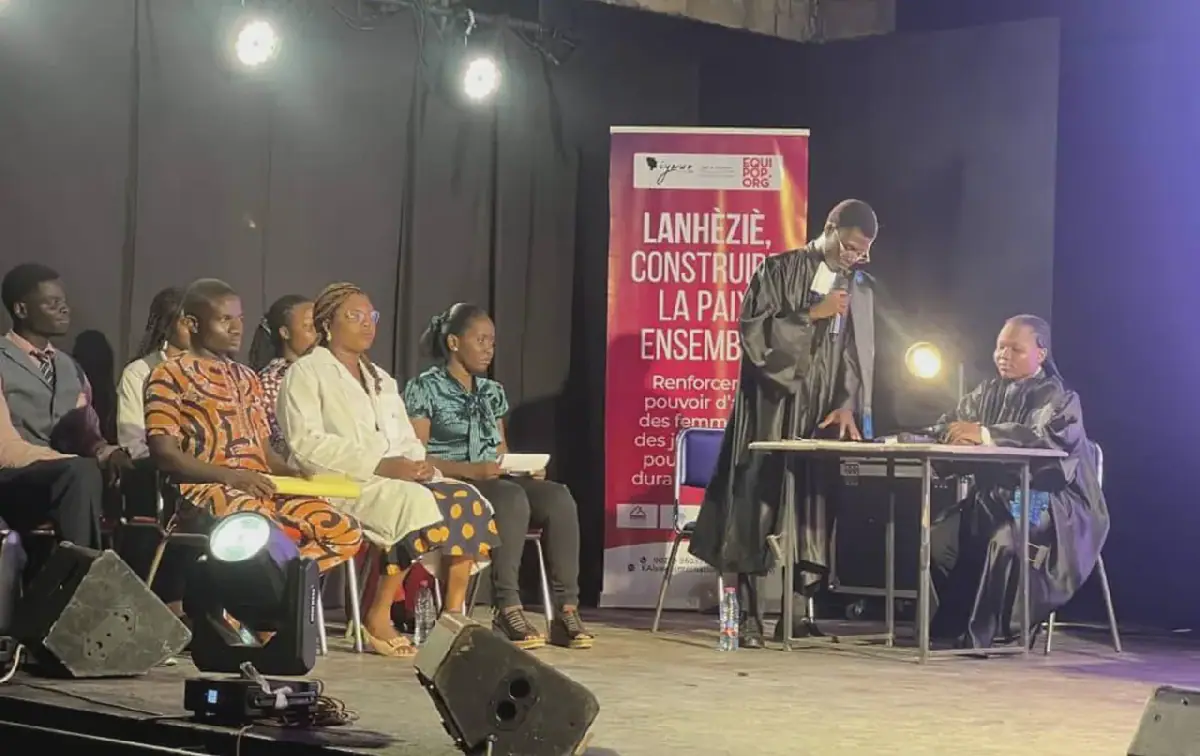
In Togo, despite a legal framework allowing for abortion under certain circumstances, access to safe and secure abortion services remains fraught with obstacles. The association Iyawo organized a fictional trial in Lomé on October 23, 2026, to break taboos and educate young people about their rights and the consequences of clandestine abortions. This initiative aims to go beyond traditional awareness-raising discourse and confront participants with the realities faced by women and young girls.
The trial highlighted the distinction between clandestine and secure abortions, as well as the difficulties in applying the law. According to Elisabeth Apampa, president of Iyawo, there are many taboos and silences surrounding these issues. The goal is to find an approach that can directly engage young people, provide them with concrete information, and help them understand the legal mechanisms that govern their rights.
In Togo, the Reproductive Health Law, adopted in 2007, provides for circumstances in which an abortion can be authorized. However, between the legal provisions and their implementation, difficulties persist. Dr. Abram Agossou, a pediatrician and public health specialist, notes that healthcare professionals often face obstacles when a request for abortion falls within the situations provided for by law.
The fictional trial featured the story of a student who became pregnant after being raped. The young woman turned to a general practitioner who performed a clandestine abortion, but her health deteriorated, and she was eventually taken to a public hospital. The case took a judicial turn, with the student and the doctor who performed the intervention called to testify.
This case highlights the importance of legal information, support for victims of sexual violence, and access to appropriate care. It emphasizes that victims of rape who become pregnant need to be guided and protected, rather than left alone to face a situation they do not know how to manage.
Dr. Agossou stresses that the fight against clandestine abortions cannot be limited to messages about health risks. It must also take into account sexual violence, the reaction of those around the victim, and the ability of victims to ask for help without being stigmatized. He cites over 11,000 cases of clandestine abortions recorded in 2024.
The Iyawo association chose the format of a fictional trial to address these realities differently. The goal is to allow participants to better understand their rights and the challenges surrounding reproductive health. By staging this trial, Iyawo aims to spark a more nuanced conversation about unwanted pregnancies and access to safe abortion services in Togo.
Key points
- The Togolese law allows for abortion under certain circumstances, but its implementation is hindered by obstacles and stigma.
- A fictional trial was staged in Lomé to raise awareness and educate young people about their rights and the consequences of clandestine abortions.
- The trial highlighted the importance of legal information, support for victims of sexual violence, and access to appropriate care.