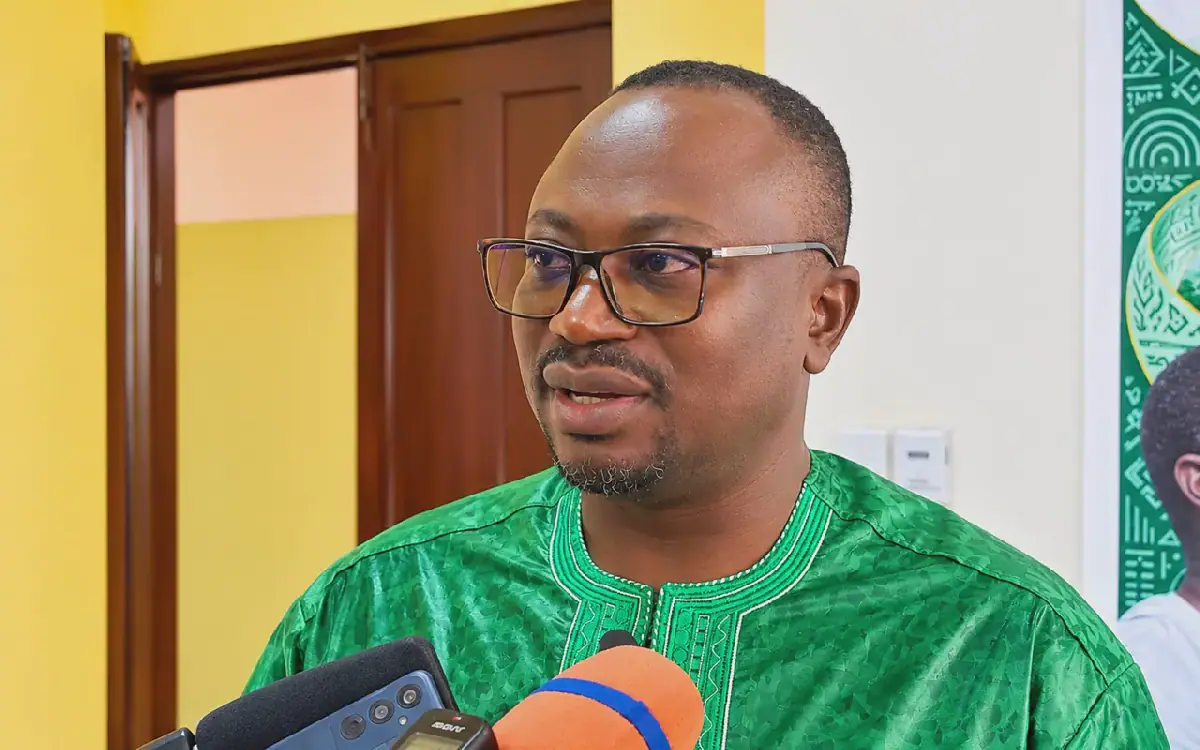
Dr Richard Tindjo, a member of the Democratic Socialists of Africa (DSA), has spoken out against what he calls "leadercide," a concept that refers to the destruction of a leader's image without physical harm. During a press conference held by Pyramide Togo, Dr Tindjo explained that leadercide is a strategy used to neutralize or eliminate a leader by ruining their reputation. He cited examples of Togo's past leaders, including Sylvanus Olympio, Gilchrist Olympio, and Yawovi Agboyibo, who were allegedly targeted using this tactic.
According to Dr Tindjo, leadercide works by sowing doubt in the minds of the public, making it difficult for the leader to develop and implement their ideas. He referenced the works of sociologists Pierre Bourdieu, Max Weber, and Erving Goffman to explain how leadercide operates. Dr Tindjo argued that a leader is a symbol, and therefore an easy target for those who seek to undermine their authority. He emphasized that it is impossible to wage a struggle without a leader, and that leadercide is a threat to the very fabric of democracy.
Dr Tindjo specifically mentioned Jean-Pierre Fabre, a Togolese politician, as a victim of leadercide. He claimed that Fabre's opponents used various tactics, including attacks on his home, arrests, and smear campaigns, to discredit him. Dr Tindjo also alleged that the 2020 presidential election was designed to weaken Fabre, who is the leader of the Alliance of National Change (ANC). He warned that leadercide can be carried out through various channels, including the media, social networks, and even "partners in the struggle" who may be exploited for their statements.
However, Dr Tindjo emphasized that he is not opposed to criticism of leaders. He stated that "we do not refuse to criticize leaders," but rather that criticism should be constructive and not aimed at destroying a leader's image. He called on people to demand evidence before sharing accusations, and to be cautious of those who use criticism as a way to discredit leaders. Dr Tindjo presented the slogan "Jean-Pierre Fabre or death, we will triumph" as a symbol of the need to protect leaders from leadercide.
The concept of leadercide was introduced by Pyramide Togo, a movement that seeks to promote democracy and good governance in Togo. Dr Tindjo is one of the personalities that Pyramide Togo seeks to protect from leadercide. However, not everyone agrees with Dr Tindjo's views on leadercide. Some have criticized his strategy, particularly his decision to work with the ruling party, UNIR, to win a local election.
Despite the controversy, Dr Tindjo remains committed to his cause. He sees leadercide as a threat to democracy and stability in Togo, and believes that it is essential to raise awareness about this tactic. Dr Tindjo hopes that by educating people about leadercide, they will be better equipped to recognize and resist it. He also called on leaders to be vigilant and to take steps to protect themselves from leadercide.
The issue of leadercide is likely to remain a contentious topic in Togo, with different stakeholders having different views on the matter. However, Dr Tindjo's warnings about the dangers of leadercide are likely to resonate with many Togolese who are concerned about the country's democratic development. As Togo continues to navigate its complex political landscape, the concept of leadercide is likely to remain a key issue of discussion.
Key points
- Dr Richard Tindjo warns against tactics to destroy a leader's image without physical harm.
- Leadercide can be carried out through various channels, including the media and social networks.
- Dr Tindjo emphasizes the need for constructive criticism and for people to demand evidence before sharing accusations.