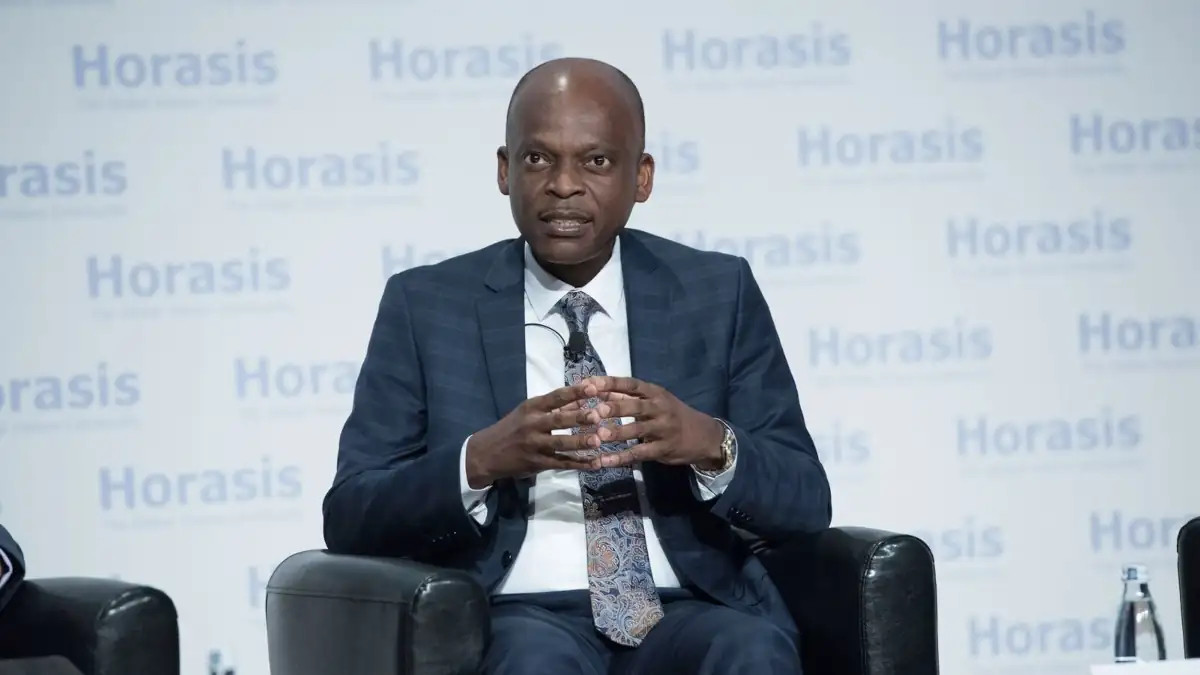
Togo's Foreign Minister, Robert Dussey, has denied any links with Russia regarding the country's recent resolution on the world map at the United Nations. The resolution, which encourages the adoption of the Equal Earth projection, was adopted by 164 votes against one, with six abstentions. Japan had suggested that Togo's support for the resolution could be motivated by a desire to support Russia in its territorial dispute with Japan over the Kuril Islands.
The dispute between Russia and Japan centers on the Kuril Islands, which have been administered by Moscow since the end of World War II but are claimed by Tokyo. The issue has escalated in recent months, with Russian President Vladimir Putin visiting the archipelago and conducting missile tests, prompting a formal protest from the Japanese government. Togo's resolution, however, is focused on promoting a more accurate representation of the world's continents, rather than addressing territorial disputes.
According to Minister Dussey, the Japanese reaction is based on a misunderstanding of the resolution's purpose. He emphasized that the Equal Earth projection is a cartographic issue, not a territorial one, and that "no border has shrunk or grown" since the adoption of the resolution. The Ukrainian government, which abstained from the vote, had expressed concerns about the representation of Crimea on certain maps, but this was not addressed in the resolution.
The Equal Earth projection, which was designed in 2018 by three cartographers, aims to correct the distortions of surface area inherited from the Mercator projection, which has been used since the 16th century. The new projection is considered more accurate in representing the size and shape of continents. The resolution was supported by the African Group at the UN, and Minister Dussey noted that it was not an ideological or radical project, but rather a scientific truth.
The United States was the only country to vote against the resolution, with the Trump administration describing it as a "radical ideological project". Minister Dussey rejected this characterization, saying that the resolution was primarily a scientific issue. He also expressed gratitude for the support of France, whose Foreign Minister, Jean-Noël Barrot, had spoken in favor of the resolution.
The adoption of the resolution has been seen as a significant step towards promoting a more accurate representation of the world's continents. Minister Dussey noted that the issue was not about rewriting history or altering borders, but about promoting a more nuanced understanding of the world. The resolution has also been welcomed by the Union African, which has been working to promote African interests at the UN.
The controversy surrounding the resolution highlights the complex geopolitics surrounding cartography and territorial disputes. While Togo's resolution was not intended to take sides in the dispute between Russia and Japan, it has nonetheless been drawn into the debate. Minister Dussey's denial of any links with Russia is aimed at clarifying Togo's position and reassuring international partners.
Key points
- Togo's Foreign Minister Robert Dussey denies links with Russia over UN map resolution.
- The resolution promotes the adoption of the Equal Earth projection, a more accurate representation of the world's continents.
- The controversy highlights the complex geopolitics surrounding cartography and territorial disputes.