The Togolese government has reaffirmed its commitment to translating the Kampala Declaration into concrete actions, aiming to transform the country's agro-food systems sustainably. A high-level mission, led by the African Union Commission, commenced on October 19, 2026, in Lomé, to support the accelerated implementation of the declaration. The four-day strategic reflection will focus on reinforcing climate resilience, food and nutrition security, and promoting a blue economy.
The mission aligns with the African Union's Agenda 2063 and focuses on operationalizing the new guidelines of the Comprehensive Africa Agriculture Development Programme (CAADP) post-Kampala Declaration adoption. The goal is to transition from mere agricultural growth to a comprehensive approach that ensures food security, climate resilience, and sustainable environmental resource management. The CAADP's 2026-2035 Action Plan targets a 45% increase in agro-food production and a tripling of intra-African trade by 2035.
Dindiogue Konlani, Director of Cabinet at the Ministry of Agriculture, Fisheries, Animal Resources, and Food Sovereignty, emphasized the need for enhanced involvement and capacity of all stakeholders in the national acceleration process. He called for a shift from cooperation to co-construction and co-investment, with the state playing a facilitative and regulatory role. Konlani expressed the government's commitment to synergizing efforts with stakeholders to accelerate the Kampala Declaration's implementation through the ProMAT initiative.
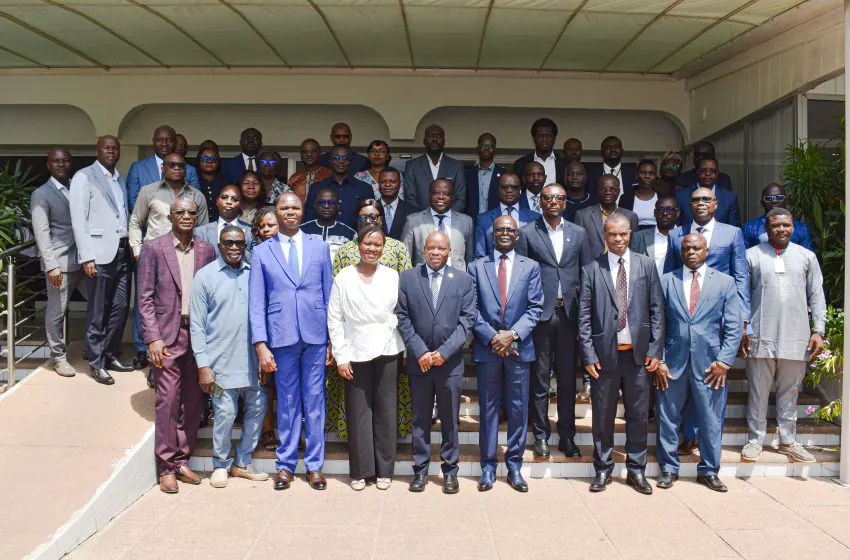
The meeting takes place as Togo actively structures itself for the new CAADP decade, notably through the recent establishment of its National Platform for Non-State Actors. This platform aims to foster coordination among stakeholders and ensure effective implementation of the CAADP. The high-level mission brings together national authorities and representatives from the African Union Commission's Department of Agriculture, Rural Development, Blue Economy, and Sustainable Environment.
Moses Vilakati, Commissioner for Agriculture, Rural Development, Blue Economy, and Sustainable Environment at the African Union Commission, highlighted the significance of the Lomé meeting. The discussions aim to engage all concerned stakeholders in exploring ways to transform Togo's agro-food systems sustainably, enhance food and nutrition security, and promote a blue economy and climate resilience.
The Kampala Declaration's implementation is critical for Togo's agricultural development and aligns with the country's goals for sustainable development. The meeting's outcomes are expected to contribute to a more coordinated and effective approach to achieving these objectives. The involvement of non-state actors is seen as crucial in ensuring the success of the CAADP and the country's agricultural transformation.
The high-level mission's conclusions will inform Togo's future actions in implementing the Kampala Declaration and achieving its agricultural development goals. The country's commitment to sustainable agricultural transformation and its alignment with the African Union's Agenda 2063 underscore its dedication to ensuring a more food-secure and climate-resilient future.
Key points
- Togo hosts high-level mission to accelerate implementation of Kampala Declaration for sustainable agricultural transformation
- The CAADP's 2026-2035 Action Plan targets a 45% increase in agro-food production and a tripling of intra-African trade by 2035
- Togo establishes National Platform for Non-State Actors to foster coordination in CAADP implementation