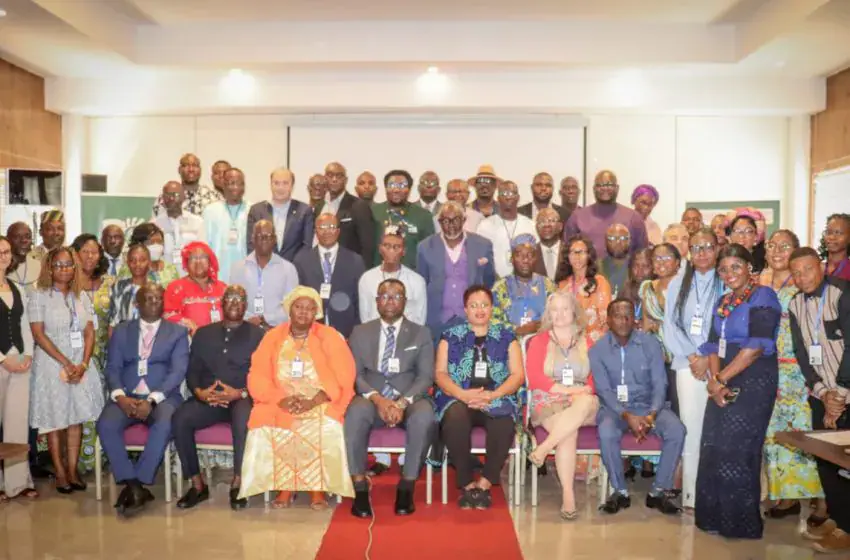
The West African Network of Human Rights Defenders (ROADDH) recently celebrated its 20th anniversary in Baguida, Togo, under the theme "20 years of commitment to protecting human rights in West Africa". The event aimed to assess the network's progress and strengthen mechanisms for protecting human rights defenders. ROADDH was established in May 2005 and has since worked to promote and protect human rights defenders in West Africa. The network has contributed to positioning Togo at the heart of regional initiatives for human rights.
The ceremony was attended by representatives of national and international institutions, civil society organizations, and delegations from 16 countries in the sub-region. Clément N. Voule, President of ROADDH's Board of Directors, presided over the ceremony. He recalled the vision of the network's founders, which is to build a space for solidarity, consultation, and collective action among human rights defenders in West Africa. Voule paid tribute to pioneers and deceased members who contributed to this dynamic.
Over the past two decades, ROADDH has contributed to providing protection to over a hundred defenders threatened due to their engagement. However, Voule noted that these actors still face difficulties, including restrictions on civic space, physical and digital threats, intimidation, and pressure on civil society organizations. He called for a shift from declarative solidarity to operational solidarity. For the next 20 years, he proposed six strategic orientations, including strengthening the network's governance, protecting defenders, regional advocacy, youth participation, digital transformation, and sustainable resource mobilization.
The Togolese government has reaffirmed its commitment to promoting and protecting human rights. Idrissou-Biyao Kolou, technical advisor to the Minister of Justice and Human Rights, saluted the contribution of defenders in various areas, such as social justice, freedom of expression, and environmental protection. He recalled the mechanisms established by the government to strengthen this protection, including the National Mechanism for the Prevention of Torture and the Human Rights Monitoring Framework.
Despite these achievements, Kolou highlighted the persistent difficulties in the sub-region, including political instability, security challenges related to terrorism and violent extremism, hate speech, humanitarian and environmental crises, and pressure on civic space. These challenges are a concern for human rights defenders. He expressed hope that the recommendations from the event will contribute to promoting a more inclusive civic space and ensuring better protection for defenders in West Africa.
Ohini Kwao Sanvee, President of the National Human Rights Commission (CNDH), praised ROADDH's progress, which has become a reference framework for human rights defenders from 16 countries in the sub-region. He emphasized the importance of collaboration between national human rights institutions and civil society organizations. Sanvee indicated that the CNDH's mandate was strengthened by its organic law of 2021, which explicitly gives it the mission of protecting human rights defenders.
The celebration called for reinforced regional cooperation and consolidation of protection mechanisms. Institutional officials and human rights defenders emphasized the need for synergy in actions to promote a more inclusive civic space and guarantee better protection for defenders. Key recommendations included the adoption of a specific legal framework for the recognition and protection of human rights defenders in Togo and the pursuit of efforts to ensure its definitive adoption.
Key points
- ROADDH has provided protection to over a hundred human rights defenders threatened due to their engagement.
- The Togolese government has established mechanisms to strengthen the protection of human rights defenders, including the National Mechanism for the Prevention of Torture.
- Institutional officials are calling for reinforced regional cooperation to promote a more inclusive civic space and guarantee better protection for human rights defenders.