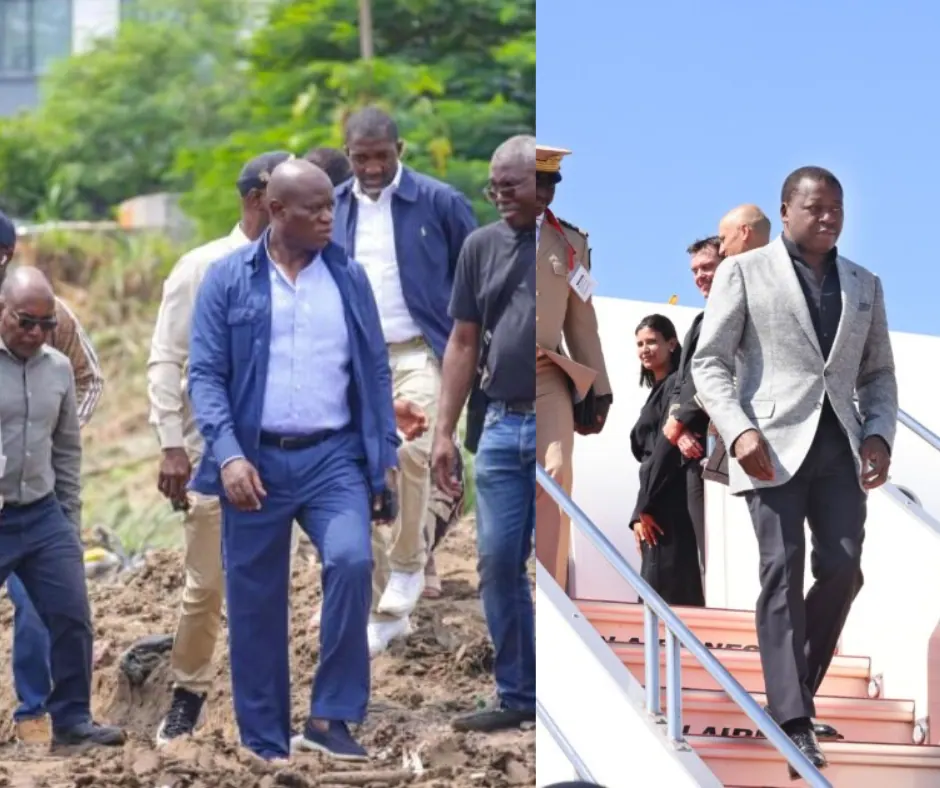
The Togolese people are not benefiting from the country's economic ratings, a reality that seems lost on the ruling regime. Despite the government's claims of pseudo-economic performances, the population remains in poverty. This has led to criticism that the regime is more focused on impressing international financial institutions than addressing the needs of its citizens. The government's pursuit of statistics and ratings has not translated into tangible improvements in the lives of Togolais.
Recently, Gabonese President Brice Clotaire Oligui Nguema highlighted the disconnect between economic ratings and the well-being of citizens. During an interview with pan-African journalists, he bluntly stated that "the people do not eat ratings." This perspective is shared by many economists who question the economic model imposed on African states by international institutions and rating agencies. In contrast, Togo's President Faure Gnassingbé has prioritized obtaining good ratings to secure more loans, which has led to increased debt.
Faure Gnassingbé has been in power for over 20 years, during which time Togo has seen few significant infrastructure projects or constructive reforms. The country's economic stagnation is evident, with operators complaining about the lack of dynamism in the market. Despite this, the government claims that economic activities are progressing. In contrast, countries like Benin and Côte d'Ivoire are investing in infrastructure and securing investments, demonstrating a different approach to economic development.
The difference in approach between Oligui Nguema and Gnassingbé is striking. While the Gabonese president denounces financing for unexecuted or poorly executed projects, the Togolese leader appears indifferent to the fate of such projects. For Gnassingbé, securing funds for personal interests takes precedence over the well-being of his citizens. This has led to criticism that his regime is more focused on self-enrichment than serving the needs of the Togolese people.
Oligui Nguema's recent state visit to France and subsequent interview highlighted his focus on practical results. He reportedly requested an audit of debts claimed by the International Monetary Fund (IMF). This move demonstrates a commitment to transparency and accountability, which is lacking in Togo. The Gabonese president's approach has resonated with many Africans who are skeptical of the economic model imposed by international institutions.
The economic models employed by Togo and Gabon have significant implications for their citizens. While Gnassingbé's regime prioritizes ratings and statistics, Oligui Nguema's government is focused on delivering tangible results. The Togolese people's suffering is a testament to the failure of the current economic approach. As the country's economy continues to stagnate, it remains to be seen whether the government will shift its priorities to address the needs of its citizens.
The criticism of Faure Gnassingbé's regime has come from within, with a former minister being detained for speaking out against the government's governance. The minister's comments that Gnassingbé can no longer bring anything to his fellow citizens are a scathing indictment of the regime's failures. As Togo continues to struggle economically, the need for a new approach to economic development has become increasingly evident.
Key points
- Faure Gnassingbé's regime prioritizes economic ratings over practical results, leading to continued poverty and stagnation in Togo.
- Gabonese President Brice Clotaire Oligui Nguema's focus on practical results and transparency has highlighted the differences between his approach and that of Gnassingbé.
- The economic models employed by Togo and Gabon have significant implications for their citizens, with Togo's approach leading to continued suffering and stagnation.