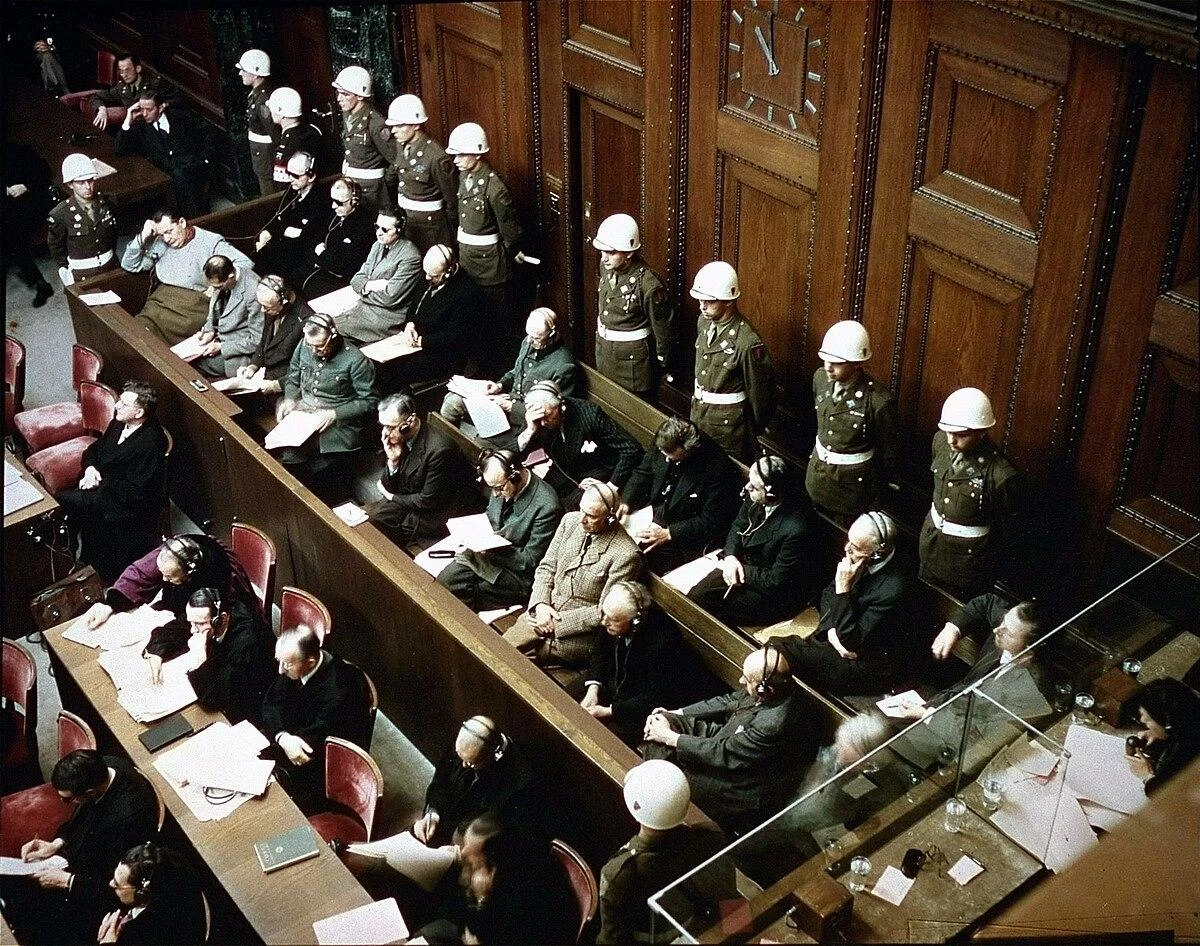
Today, October 1, marks the anniversary of the execution of 12 top Nazi leaders, including prominent figures such as Hermann Göring, Joachim von Ribbentrop, and Albert Speer, in Nuremberg, Germany. The executions were the culmination of the Nuremberg trials, which began on November 20, 1945, and lasted for 218 days. The trials were held to bring to justice those responsible for war crimes and crimes against humanity committed during World War II.
The Nuremberg trials were a series of proceedings held by the Allied powers to prosecute top Nazi officials for their roles in the war and the atrocities committed during it. The trials were held in the Palace of Justice in Nuremberg, which was chosen due to the extensive damage suffered by German courts during the war. The trials were a significant step towards holding individuals accountable for their actions and establishing the principle of individual responsibility for international crimes.
The trials were initiated by the three main Allied powers - the United States, the Soviet Union, and Britain - who met in Tehran in 1943 and agreed to punish those responsible for war crimes committed during World War II. The trials were conducted by a panel of four judges, one from each of the main Allied powers, and a French judge. The prosecutors presented evidence of the atrocities committed by the Nazi regime, including the systematic persecution and murder of Jews and other minority groups.
The Nuremberg trials resulted in the conviction of 200 top Nazi officials, with 12 receiving the death penalty. The trials also led to the conviction of 1600 other Nazi officials in regular military courts outside of Nuremberg. The trials marked a significant turning point in the development of international law, as they established the principle that individuals can be held accountable for their actions, even if they were acting on behalf of a state.
The Nuremberg trials were not limited to the main leaders of the Nazi regime. Between 1946 and 1949, further trials were held to prosecute other groups of Nazi officials, including doctors who conducted medical experiments on humans and other individuals who played a role in the atrocities committed by the regime. These trials helped to bring to justice those who had escaped punishment in the initial trials.
The legacy of the Nuremberg trials continues to be felt today, with the principles established during the trials serving as the foundation for modern international law. The trials demonstrated that individuals can be held accountable for their actions, even if they were acting on behalf of a state, and that those who commit atrocities will be punished. The trials also highlighted the importance of upholding human rights and the rule of law.
In conclusion, the Nuremberg trials were a significant event in modern history, marking a major step towards holding individuals accountable for their actions and establishing the principle of individual responsibility for international crimes. The trials resulted in the conviction and execution of top Nazi leaders and paved the way for the development of modern international law. Today, October 1, marks the anniversary of the execution of these leaders, serving as a reminder of the importance of upholding human rights and the rule of law.
Key points
- The Nuremberg trials established the principle of individual responsibility for international crimes.
- The trials resulted in the conviction and execution of 12 top Nazi leaders.
- The legacy of the Nuremberg trials continues to influence modern international law.