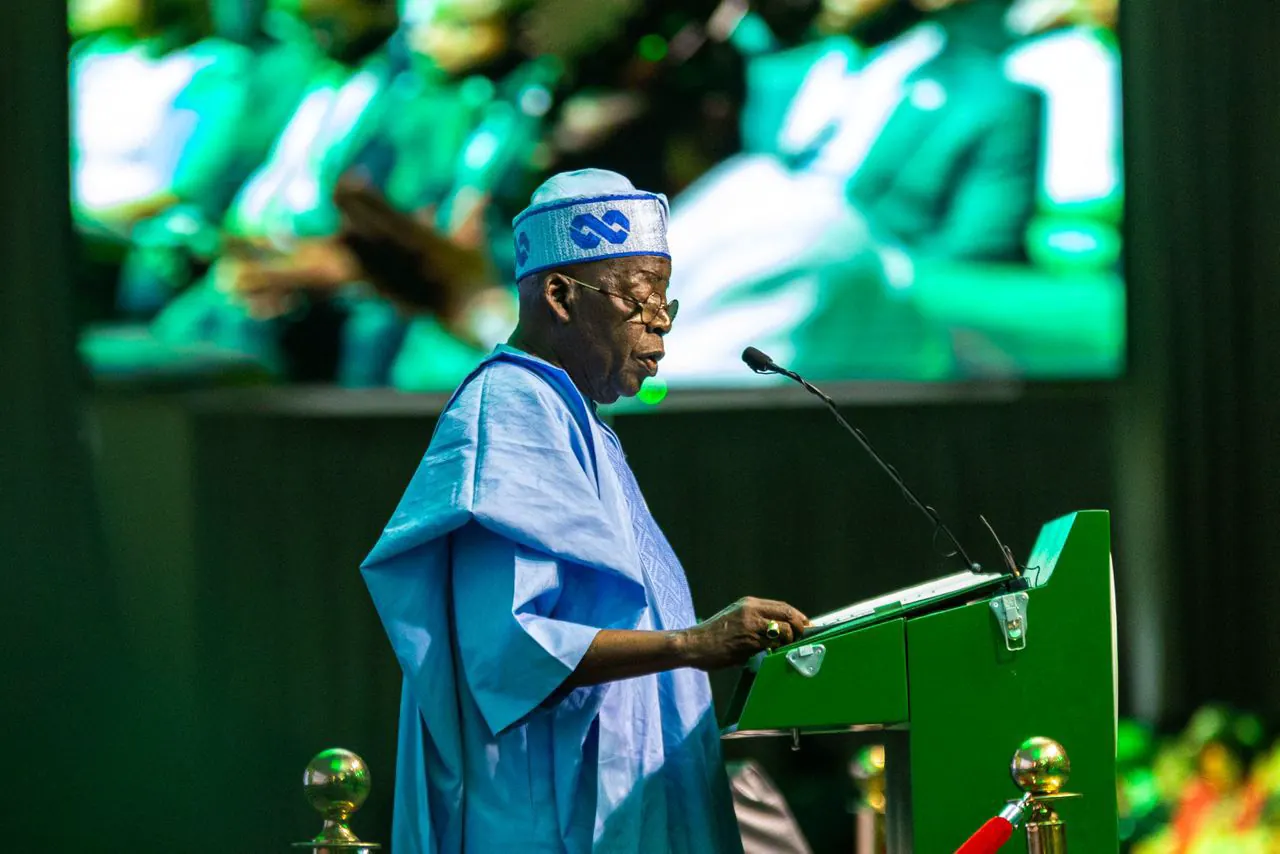
On Thursday, President Bola Tinubu delivered a nationwide broadcast as Nigeria celebrated its 66th anniversary. In his address, Tinubu emphasized his administration's commitment to reducing the cost of living, which has been a significant challenge for many Nigerians. He highlighted the various reforms initiated by his government, aimed at addressing the country's deep-seated economic distortions. Tinubu acknowledged that the journey to economic recovery would be difficult but expressed optimism about the prospects of a better future.
Tinubu drew a vivid analogy between Nigeria's economic situation and a patient diagnosed with cancer. He explained that the patient faces a choice: to undergo painful treatment with a strong chance of recovery or to opt for palliative care, which would only alleviate the symptoms temporarily. The president implied that previous administrations had chosen the latter approach, avoiding difficult decisions and passing the consequences to future generations. In contrast, his administration has opted for a more proactive approach, tackling the root causes of the economic problems.
The president defended his administration's reforms, describing them as necessary measures to address the country's economic weaknesses. He emphasized that the reforms were not the cause of the economy's problems but rather a solution to confront and overcome them. Tinubu expressed concern about regressive voices that advocate for a return to the era of subsidy, which he believes would undermine the progress made so far. He urged Nigerians to resist such calls and remain committed to the country's economic recovery journey.
According to Tinubu, there are undeniable signs of improvement in Nigeria's economic outlook. He stated that the economy has grown by over 4 per cent this year, driven by contributions from both the oil and non-oil sectors. The president expressed his administration's commitment to sustaining this growth trajectory and improving the living standards of Nigerians. He envisioned a Nigeria where farmers can cultivate their land safely, factories have reliable power, and young people can find productive employment.
Tinubu's vision for Nigeria's future is one where food and transportation are affordable, education is accessible, and hard-working families can look forward to a better future with confidence. He emphasized that his objective is not merely to manage poverty but to defeat it altogether. The president promised to prioritize the reduction of the cost of living by lowering the cost of producing and moving goods consumed by Nigerians.
Tinubu's address comes at a time when Nigerians are grappling with the challenges of high transportation costs, despite his promise of relief on October 1. The president's commitment to addressing these challenges is seen as a critical test of his administration's ability to deliver on its promises. As Nigeria looks to the future, Tinubu's vision for a more prosperous and equitable society will be closely watched by citizens and observers alike.
As Nigeria marks its 66th anniversary, the country faces significant development challenges. Tinubu's address serves as a reminder that the work of building a more stable and prosperous Nigeria is far from over. The president's emphasis on economic reforms and poverty reduction will be crucial in shaping the country's future and addressing the needs of its citizens.
Key points
- President Tinubu has promised to prioritize reducing the cost of living in Nigeria through economic reforms.
- Tinubu has defended his administration's reforms as necessary measures to address the country's deep-seated economic distortions.
- The president has envisioned a future Nigeria with affordable food and transportation, accessible education, and productive employment opportunities.