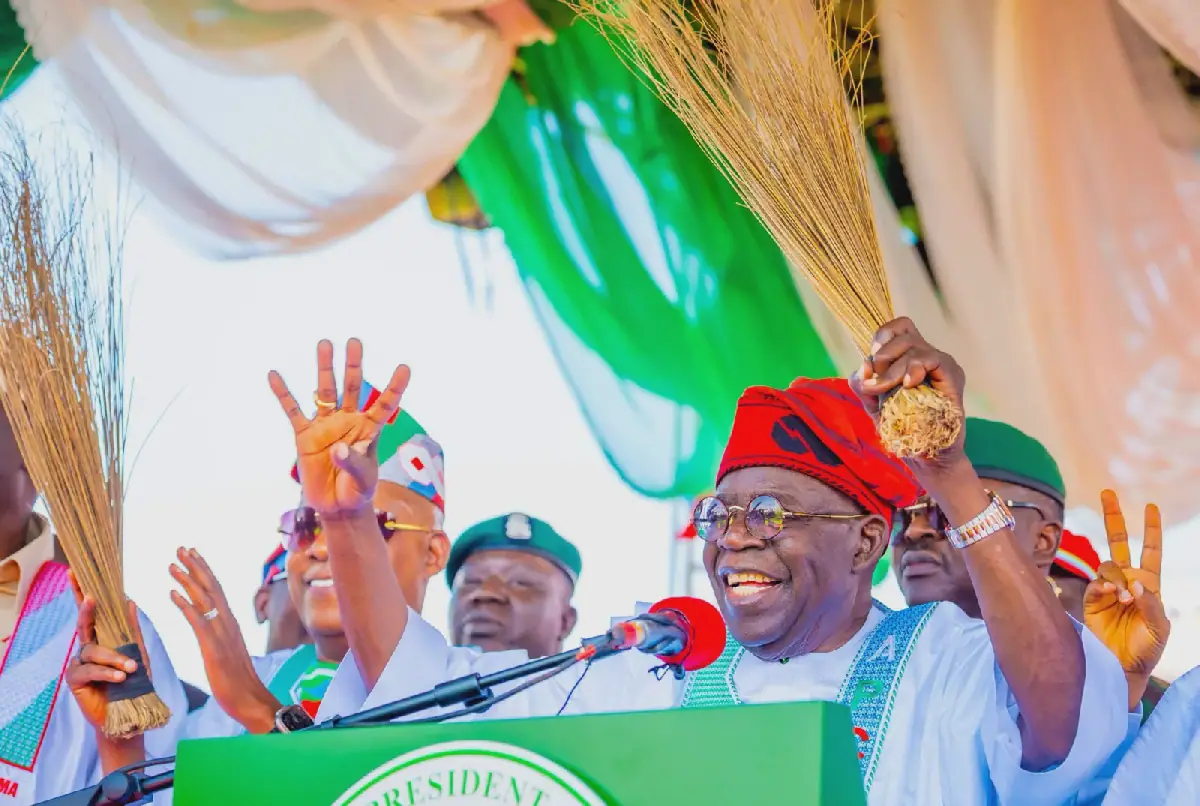
President Bola Tinubu has unveiled his 2027-2031 manifesto, titled From Reforms to Prosperity, which places greater emphasis on the movement, preservation, and affordability of food. The manifesto, presented on November 10 in Abuja, outlines the President's proposed priorities for 2027 to 2031. A key part of the plan is to reduce post-harvest losses by 2030 and increase national storage capacity by 50 percent by 2028.
The new document builds on promises Mr. Tinubu made in his 2023 manifesto, including expanding irrigation, improving farmers' access to finance, establishing commodity boards, increasing grain reserves, and constructing farm-to-market roads. However, the 2027 manifesto puts more measurable timelines around some of these priorities, particularly storage and post-harvest losses. The President says he will steady staple-food prices by building on the Guaranteed Minimum Price scheme and the strategic grain reserve.
The manifesto states that the President will publish a monthly staple-food price tracker alongside headline inflation so that families and farmers can see what is changing. This move aims to help Nigerians monitor changes in the cost of essential food items. The proposals reflect a problem that extends beyond the volume of food produced, as inadequate storage, poor transportation, and limited processing facilities can prevent produce from reaching consumers in good condition.
The 2027 manifesto lists 25,000 tonnes of storage capacity as added and targets a 50 percent increase by 2028. It also promises to halve post-harvest losses by 2030. However, the document does not provide a baseline for measuring current post-harvest losses or explain the storage capacity against which the proposed 50 percent increase will be calculated. These details will matter in assessing progress towards the targets.
The manifesto also presents figures to support the administration's claim that it has made progress in agricultural production, mechanization, irrigation, and farmer support. It states that 622,818 farmers received subsidized inputs through the NAGS-Agro Pocket programme, with estimated food output of ₦2.31 trillion across seasons. The administration also reports distributing more than six million bags of fertilizer and developing 154,000 hectares of irrigable farmland.
Mr. Tinubu's 2027 proposals also connect agricultural development to food safety, processing, and export earnings. He promises to strengthen food-safety standards, including Hazard Analysis and Critical Control Points (HACCP) and ISO 22000, across processing, markets, and export chains. The manifesto identifies agro-processing and food manufacturing as priority industries, with an emphasis on developing local value chains.
The proposals suggest that the administration wants agricultural output to support local industries and generate more value before products reach export markets. The success of the food-security plan will depend on the implementation of these proposals and the achievement of the set targets.
Key points
- President Tinubu aims to increase national storage capacity by 50 percent by 2028.
- The administration plans to halve post-harvest losses by 2030.
- A monthly staple-food price tracker will be published to help Nigerians monitor changes in food prices.