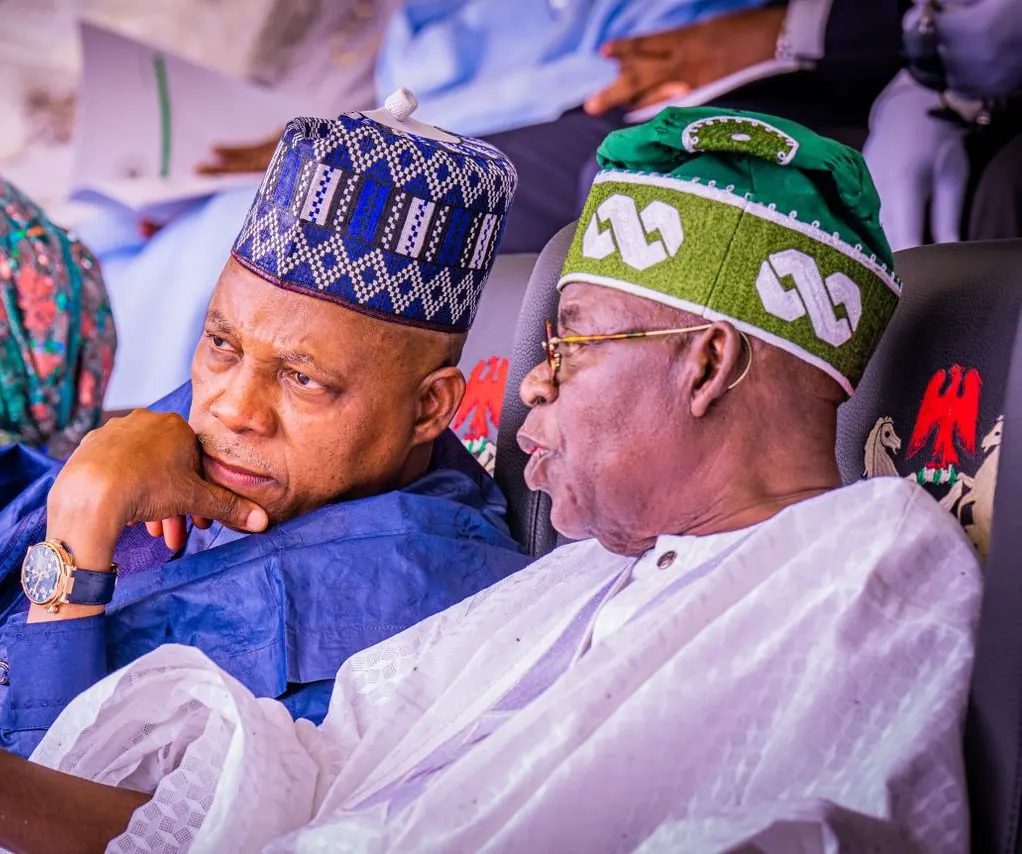
Vice President Kashim Shettima has stated that Nigeria was on the verge of economic collapse when President Bola Tinubu assumed office in 2023. According to Shettima, the country's foreign reserves had dwindled to below $3.9 billion, a situation that left Nigeria unable to fund even one month of fuel imports. This, he said, necessitated tough reforms by the administration to prevent the country from "falling into pieces."
Shettima made these remarks while addressing journalists after visiting Tinubu at his residence in Ikoyi, Lagos. The Vice President defended Tinubu's decision to remove petrol subsidy and unify the country's multiple exchange rates, describing both measures as necessary responses to the state of the economy. He emphasized that the economy was on the verge of collapse and that Tinubu's actions saved it.
The Vice President compared Nigeria's economic trajectory at the time to the crisis experienced in Venezuela, stating that the country was "on the road to Caracas." He acknowledged the hardship facing Nigerians but expressed that the government was introducing programmes aimed at reducing the pressure on households. According to Shettima, "tough times do not last forever; tough people do."
Shettima disclosed that the administration would soon launch an e-logistics programme in the North-West, as well as thousands of electric tricycles, buses, and taxis in other parts of the country. This initiative aims to ease the pains of the people, particularly in the North-East, where 10,600 electric tricycles will be launched, and in other areas, where 300 buses and e-taxis will be introduced.
The meeting between Tinubu and Shettima was their first public interaction since the President returned from his vacation in Europe and the Vice President returned from the United Nations General Assembly in New York. During the interaction, Shettima described Tinubu as a leader who has "empathy for the common man."
Shettima's comments come as the government continues to implement policies aimed at reviving the economy. The administration has taken several measures to address the economic challenges facing the country, including the removal of petrol subsidy and the unification of exchange rates. These decisions have been met with mixed reactions from Nigerians.
The Vice President's remarks have sparked reactions from various stakeholders, with some praising Tinubu's leadership and others criticizing the government's policies. As the government continues to navigate the complexities of economic reform, Nigerians will be watching closely to see the impact of these policies on their daily lives.
Key points
- Nigeria's foreign reserves had fallen below $3.9 billion when Tinubu took office in 2023.
- The administration has introduced programmes aimed at reducing the pressure on households.
- Tinubu's leadership has been praised by Shettima for saving Nigeria from economic collapse.