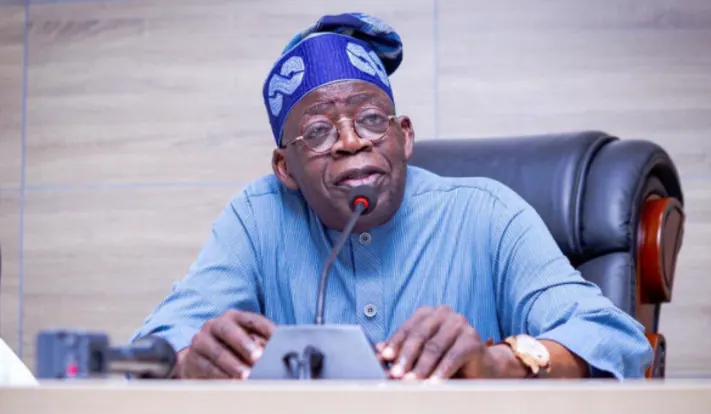
President Bola Tinubu has extended his working vacation in Europe, with Vice-President Kashim Shettima leading Nigeria's delegation to the 81st United Nations General Assembly in New York. This marks Tinubu's third consecutive absence from the high-level gathering, sparking debate over his repeated absence and potential implications for Nigeria's foreign relations. Shettima departed Abuja on September 20 and will deliver Nigeria's national statement at the UNGA.
The Presidency announced on Monday that Tinubu, who departed Nigeria on August 30 for a working vacation in London before moving to Paris, would return to Nigeria at the weekend. Despite his absence, the Presidency stressed that Tinubu has remained engaged with affairs at home, ordering an independent investigation into the deaths of 37 illegal miners in Minna and directing government business. Tinubu also held meetings in Paris with French President Emmanuel Macron and businessman Vincent Bolloré.
Former Vice-President Atiku Abubakar has demanded an explanation for Tinubu's repeated absence, arguing that three consecutive years can no longer be treated as a routine delegation arrangement. Atiku stated that the UNGA provides presidents with a unique opportunity to defend their countries' interests, negotiate partnerships, court investors, and engage directly with other world leaders. He questioned whether Tinubu's history with US authorities had become a burden on Nigeria's foreign relations.
Atiku's comments have effectively linked Tinubu's repeated absence to the unresolved political controversy surrounding a 1993 US civil asset-forfeiture case involving funds held in an account in Tinubu's name. US court records show that the United States filed a civil forfeiture action in 1993 over funds in accounts associated with Tinubu and others, resulting in $460,000 being forfeited to the US government. The case was a civil forfeiture proceeding rather than a criminal prosecution, and Tinubu was not convicted of a drug offence.
The controversy goes beyond Tinubu's personal attendance, as UNGA is one of the few occasions when virtually all world leaders converge in one city, creating opportunities for bilateral meetings, investment discussions, security diplomacy, and negotiations with international institutions. Nigeria is currently seeking greater international cooperation against terrorism, more foreign investment, and stronger support for its economic reforms. The country is also attempting to manage its relationship with Washington after a period of heightened tension.
Critics argue that Tinubu's personal presence at UNGA would have offered an important platform to reinforce diplomatic gains, including security cooperation and intelligence sharing with the US. However, supporters of the President have dismissed the criticism, with Lagos State governor Babajide Sanwo-Olu stating that there was "nothing to worry about" because Nigeria would be adequately represented. Tony Elumelu, chairman of Heirs Holdings, argued that leaders have to prioritise where their presence is most valuable.
The competing interpretations leave Nigeria with a broader diplomatic question: whether presidential presence at UNGA is primarily symbolic or an important instrument of foreign policy. For now, Shettima has the task of carrying Nigeria's message to the world, while Tinubu will return to a country already deep in the political preparations for 2027, with the controversy over his repeated absence likely to follow him home.
Key points
- President Bola Tinubu's third consecutive absence from the UNGA has sparked controversy over his US legal history and diplomatic representation.
- The absence has raised questions about the impact on Nigeria's foreign relations and the importance of presidential presence at the UNGA.
- Vice-President Kashim Shettima will lead Nigeria's delegation to the UNGA, delivering the country's national statement in Tinubu's absence.