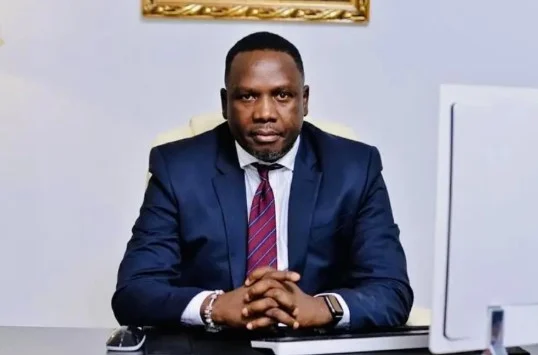
Special Adviser to President Bola Tinubu on Policy Communication, Daniel Bwala, has stated that the President can effectively govern Nigeria from any location worldwide. This assertion was made in response to criticism from opposition figures regarding Tinubu's prolonged absence from the country. Bwala emphasized that the President's constitutional powers are not geographically bound.
Bwala's comments were prompted by concerns raised by former Vice President Atiku Abubakar, who questioned who was in charge of Nigeria during Tinubu's extended stay abroad. Atiku Abubakar's inquiry followed Tinubu's prolonged vacation in Europe, which has been extended by a few days, with the President expected to return to Nigeria over the weekend.
According to Bwala, the President's authority to govern is not limited by physical presence in Nigeria. He cited the President's role as commander-in-chief of the armed forces, which enables him to issue orders, direct, delegate, and administer the constitution from anywhere in the world. This perspective has sparked a national debate on the interpretation of the Nigerian Constitution.
The controversy arose after Atiku Abubakar questioned whether Tinubu had transmitted a written declaration under Section 145 of the 1999 Constitution before leaving the country. This section requires the President to notify the President of the Senate and the Speaker of the House of Representatives in writing if he is proceeding on vacation or is unable to discharge his duties.
The Presidency has maintained that Tinubu continues to direct the affairs of government despite his physical absence. The State House announced on Monday that the President had extended his working vacation and was expected to return to Nigeria at the weekend. This development has raised questions about the operational structure of the presidency during periods of absence.
Bwala's assertion has significant implications for the exercise of presidential powers in Nigeria. If the President can govern from abroad, it may set a precedent for future administrations. However, critics argue that this could lead to concerns about accountability and the effective governance of the country.
The debate over Tinubu's governance from abroad has highlighted the need for clarity on the constitutional provisions governing presidential absences. As the President prepares to return to Nigeria, the nation awaits further developments on this issue. The conversation is expected to continue, with various stakeholders weighing in on the implications of the President's ability to govern from abroad.
Key points
- President Tinubu's ability to govern Nigeria from abroad has sparked a national debate on the interpretation of the Nigerian Constitution.