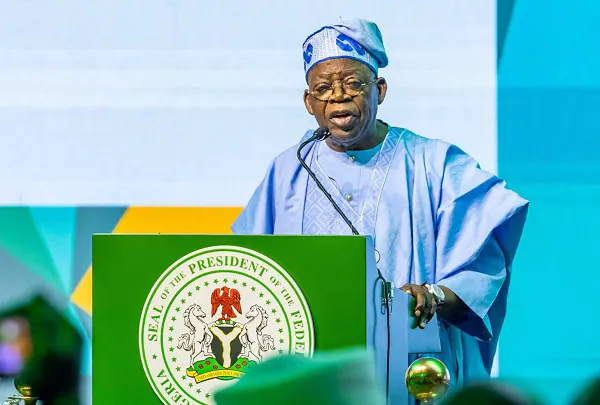
The Director General of the Presidential Enabling Business Environment Council (PEBEC) and National Publicity Secretary of the City Boy Movement, Princess Zahrah Mustapha Audu, has called for a comprehensive evaluation of President Bola Ahmed Tinubu's political career. She draws parallels with former South African President Nelson Mandela and former Ghanaian leader Jerry John Rawlings, both of whom had complex and controversial histories. Audu argues that Tinubu's accomplishments and significance in Nigeria's history should not be erased due to controversies surrounding his biography.
Audu notes that history does not require leaders to have "immaculate biographies," but rather remembers what they built, changed, defended, or transformed. She cites Mandela, who was once regarded as a dangerous criminal and spent 27 years in prison before becoming president. Similarly, Rawlings' political career evolved from military intervention to elected constitutional leadership. Audu believes that Nigeria's ongoing debate over Tinubu deserves greater intellectual consideration, taking into account the complexities of his political career.
Regarding controversies surrounding Tinubu's educational credentials, Audu says Nigerians have the right to scrutinize his biography but must distinguish between allegations, disputed facts, and established facts. She references the 2023 litigation involving Chicago State University, which confirmed that Tinubu attended the institution and graduated in 1979. However, questions remain about the provenance and authenticity of a specific diploma submitted to Nigerian electoral authorities.
Audu argues that legitimate questions about a public official's credentials should not be dismissed due to political achievements, nor exaggerated to invalidate their entire political career. She emphasizes that Tinubu's political trajectory, including his time in the Senate, involvement in pro-democracy politics, and eight-year tenure as Lagos State governor, provides another body of evidence to consider.
The State House records Tinubu as having served as Lagos governor from 1999 to 2007 and later as a national political figure and APC leader. Audu highlights that "political leadership produces another kind of evidence: decisions, institutions, coalitions, reforms, electoral victories, administrative systems, and measurable outcomes." She believes that even if critics' concerns about Tinubu's educational pedigree are accepted, they would not explain how he rose through Nigeria's political system to become President.
Audu suggests that Tinubu's record in office should be subjected to a higher standard of scrutiny than the circumstances surrounding his emergence as President. She acknowledges concerns over inflation, food insecurity, and the cost of living but notes that international institutions have recognized the administration's economic reforms for their structural significance.
Audu concludes by urging Nigerians to avoid extremes in assessing political leadership, such as hagiography and reductionism. She believes that Tinubu's biography should continue to be scrutinized, and his administration criticized where evidence warrants it, while also assessing his achievements on their evidence and record.
Key points
- PEBEC DG Princess Zahrah Mustapha Audu calls for a comprehensive evaluation of President Bola Ahmed Tinubu's political career.
- Audu draws parallels with former South African President Nelson Mandela and former Ghanaian leader Jerry John Rawlings.
- Tinubu's record in office should be subjected to a higher standard of scrutiny than the circumstances surrounding his emergence as President.