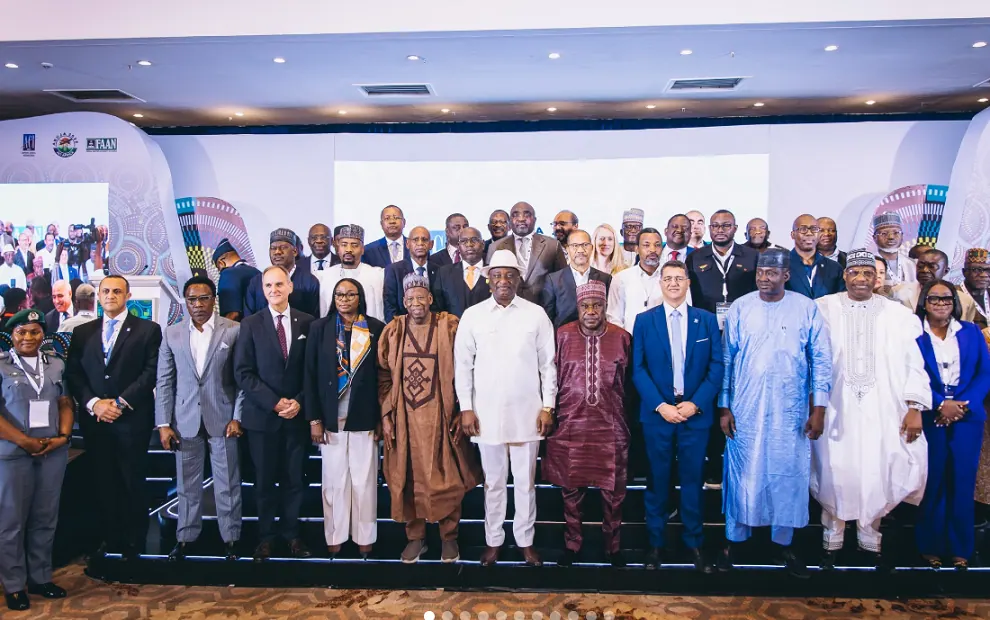
Nigeria's Minister of Aviation and Aerospace Development, Festus Keyamo, has announced that President Bola Tinubu's reforms in the aviation sector have led to a significant decrease in airfares, increased competition among airlines, and improved safety. According to Keyamo, the reforms have attracted new airlines and aircraft into the Nigerian market, resulting in a more competitive environment. The minister made these remarks at the 35th Airports Council International (ACI) Africa Annual General Assembly in Abuja.
The Nigerian aviation market has been ranked as the fourth largest in Africa, with over 18.8 million domestic and international passengers recorded in 2025. This represents a year-on-year increase of 11.9 per cent, according to the Federal Airports Authority of Nigeria (FAAN). The country's aviation sector has experienced significant growth, with the Murtala Muhammed International Airport in Lagos recording the fastest growth in scheduled seat capacity among Africa's ten largest airports in September.
Keyamo attributed the growth in the aviation sector to the implementation of the Cape Town Convention and efforts to attract foreign investment and aircraft into the country. He said these initiatives were designed to address challenges in the aviation sector and provide long-term solutions. The minister also cited the rehabilitation and expansion of airport infrastructure, including the ongoing work at the Murtala Muhammed International Airport Terminal 1 in Lagos.
Nigeria's safety performance has also improved, with the country recording an effective implementation score of 91.45 per cent following the 2026 International Civil Aviation Organisation (ICAO) validation mission. Keyamo described this result as Nigeria's highest-ever score, but noted that it should be regarded as a new baseline rather than the destination for the country's aviation sector.
The minister identified the next major challenge for African aviation as improving connectivity across the continent. He argued that it should not be easier for passengers to travel from an African city to a destination outside the continent than to travel between two African countries. Keyamo called for a reduction in protectionist policies among African countries and greater cooperation to unlock the benefits of regional integration.
Keyamo cited the European single-sky model as an example of how countries could work together for broader regional benefit. He said African countries needed to learn from such arrangements and utilise frameworks such as the Single African Air Transport Market (SAATM) and the African Continental Free Trade Area (AfCFTA) to improve connectivity and economic integration.
FAAN MD, Mrs Olubunmi Onabanjo-Kuku, described the meeting hosted by Nigeria as a convergence of vision, reflecting the collective undertaking for the continent. She noted that African airlines recorded a 6.4 per cent year-on-year increase in international passenger demand in July 2026, outpacing global growth. Onabanjo-Kuku said Nigeria's aviation market was leading the growth story in Africa, with over 18.8 million domestic and international passengers recorded in 2025.
Key points
- President Tinubu's reforms have led to decreased airfares and increased competition in Nigeria's aviation sector.
- Nigeria ranks as the fourth largest aviation market in Africa, with over 18.8 million passengers recorded in 2025.
- Improving connectivity across Africa is the next major challenge for the continent's aviation sector.