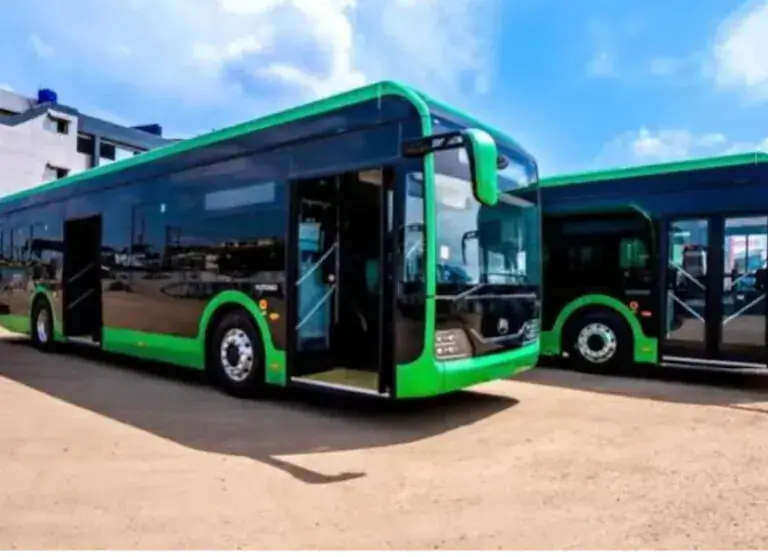
President Bola Tinubu's administration has reaffirmed its commitment to alleviating transportation costs for Nigerians. The government plans to introduce more compressed natural gas (CNG)-powered buses and establish a local assembly plant. This initiative, part of the National Affordable CNG Transit Programme (NACTP), aims to reduce transport fares by approximately 40% on participating routes.
According to Bayo Onanuga, the President's Special Adviser on Information and Strategy, Tinubu has invited Yutong, a Chinese bus manufacturer, to support the expansion of affordable mass transportation across Nigeria. Yutong will supply an initial 300 CNG-powered buses under an agreement with the Presidential Initiative on Compressed Natural Gas and Electric Vehicles (Pi-CNG & EV).
The first 100 buses are expected to arrive in Lagos by the end of December 2026, with subsequent units to be assembled locally. The buses will be assembled in Nigeria through YP Automobiles Bus Assembly at the former Leyland Automotive plant in Ibadan, Oyo State. This arrangement is expected to revive local industrial capacity, reduce dependence on imported vehicles, and create employment opportunities for Nigerian engineers, technicians, and other workers.
The investment is also expected to promote technology transfer, strengthen the country's automotive industry, and support a steady supply of affordable commercial buses. President Tinubu emphasized that the success of the CNG programme would be measured by the amount Nigerians save on transportation. He noted that millions of citizens depend on commercial vehicles to commute to work, take their children to school, access markets, and transport goods.
Tinubu added that the lower operating costs of CNG-powered buses must translate into reduced fares for passengers, enabling workers, traders, and families to spend more of their earnings on food, education, and other essential needs. The administration stated that the programme would be implemented in collaboration with state governments as part of its Renewed Hope Agenda 2.0 for 2027–2031.
The introduction of CNG-powered buses is expected to have a positive impact on the environment and the economy. The use of CNG-powered buses will reduce the country's reliance on fossil fuels and decrease greenhouse gas emissions. Additionally, the local assembly plant will create jobs and stimulate economic growth in the automotive sector.
The government's efforts to reduce transport fares and improve the transportation system are crucial in addressing the high cost of living in Nigeria. The 40% reduction in transport fares is expected to provide relief to millions of Nigerians who struggle to afford transportation costs. The administration's commitment to implementing the programme in collaboration with state governments will ensure its success and sustainability.
Key points
- The programme aims to reduce transport fares by approximately 40% on participating routes under the National Affordable CNG Transit Programme (NACTP).
Reporting sources
- Tinubu, Again Promise To Cut Transport Fares By 40% · Spice Radio Nigeria