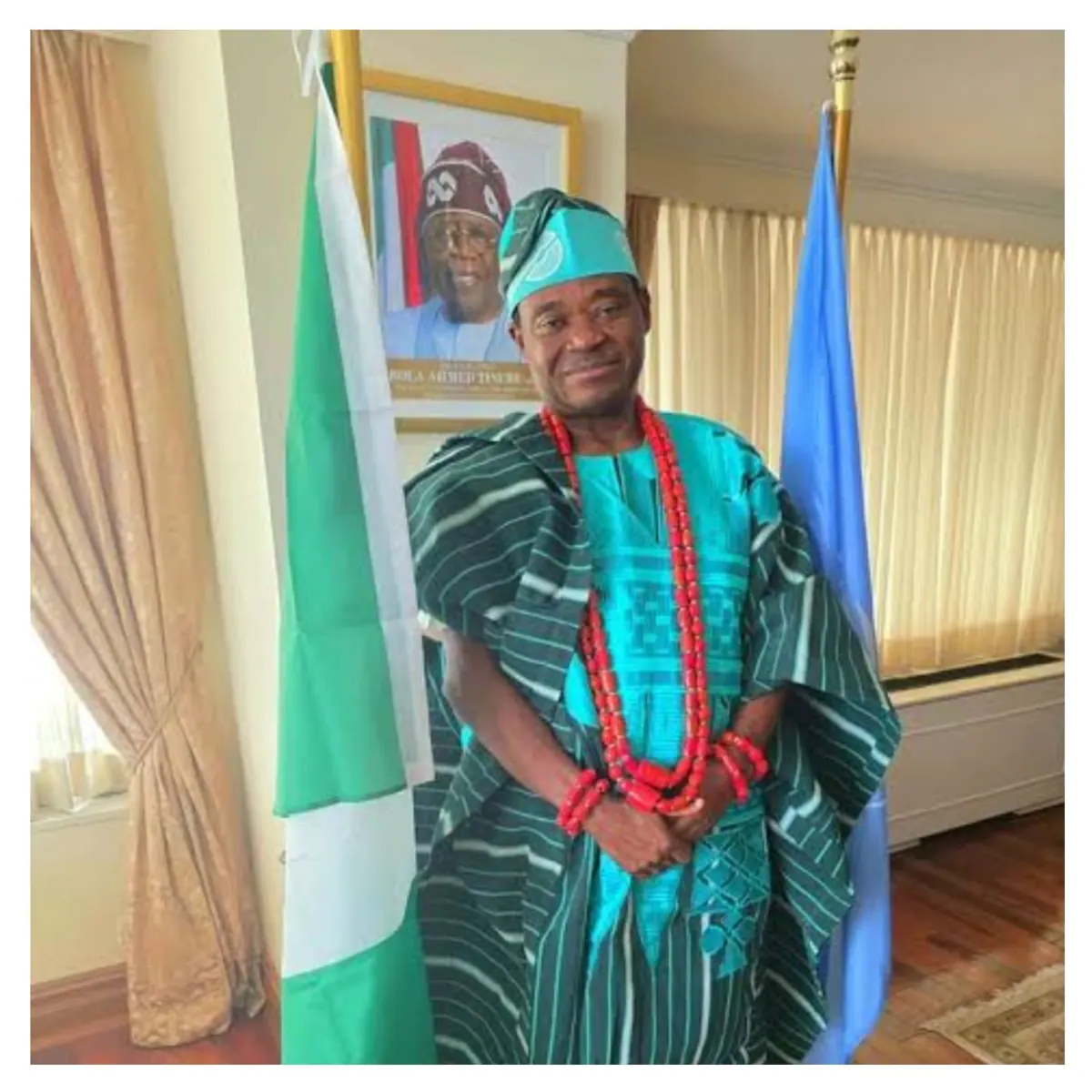
Nigeria's Permanent Representative to the United Nations, Jimoh Ibrahim, has shed light on President Bola Tinubu's absence from the ongoing 81st UN General Assembly in New York. According to Ibrahim, Tinubu's presence at the assembly would not be justified given the short duration of his potential speech and the caliber of other attendees. Most speakers on the list are vice presidents and Foreign Affairs ministers, making Tinubu's 15-minute speaking slot insufficient reason for his attendance.
Ibrahim revealed that he had meetings with several ambassadors, including those of the US, UK, and Singapore, and emphasized that Tinubu's presence at the UNGA would not be necessary. Vice President Kashim Shettima is currently representing Nigeria at the assembly, attending high-level meetings with other country representatives. Ibrahim stressed that Shettima's participation is in line with protocol, as vice presidents and foreign affairs ministers are commonly invited to such events.
Ibrahim expressed concerns about the logistics of hosting meetings with the President in various embassies, suggesting that such interactions should take place in Nigeria House. He noted that Vice President Shettima had met with the diaspora community at Nigeria House, highlighting the value of such engagements. Ibrahim emphasized that Nigeria's participation in the UNGA is significant, with the country seated in a prominent position, ahead of several other nations, including the US.
Ibrahim drew a comparison with former US President Donald Trump's attendance at the UNGA, where he delivered a lecture and departed shortly after. He questioned whether Nigeria's impact at the assembly would be diminished by Tinubu's absence, suggesting that the country's presence is already being felt. As chair of the administration and budget committee, Ibrahim provided insight into the composition of this year's speaking list, which features 60% foreign affairs ministers and vice presidents.
Given the speaking list's composition, Ibrahim indicated that he would not recommend Tinubu's attendance, as the President's presence would not be commensurate with the level of representation from other countries. He suggested that if the speaking list were comprised mainly of presidents, Tinubu's attendance might be justified. However, with a significant proportion of ministers and vice presidents, Ibrahim believes that Vice President Shettima's participation is sufficient.
Ibrahim reiterated that there are exigencies that inform the decision to attend the UNGA, and in this case, Tinubu's absence is not a reflection of Nigeria's commitment to global engagement. He emphasized that Nigeria is already making an impact at the assembly, and Tinubu's presence would not be necessary to demonstrate the country's involvement. Ibrahim's comments provide insight into the diplomatic considerations that underpin Nigeria's participation in international events.
The explanation from Ibrahim provides context for Tinubu's decision to extend his vacation in Paris, while Vice President Shettima represents Nigeria at the UNGA. With the assembly underway, Nigeria's engagement with the international community continues, and Ibrahim's comments highlight the intricacies of diplomatic protocol and scheduling that inform the country's participation in such events.
Key points
- - Nigeria's Permanent Representative to the UN, Jimoh Ibrahim, explains President Tinubu's absence from UNGA 81, citing protocol and scheduling issues. - Vice President Kashim Shettima is representing Nigeria at the assembly, attending high-level meetings with other country representatives. - Ibrahim emphasizes that Nigeria's participation in the UNGA is significant, with the country seated in a prominent position.