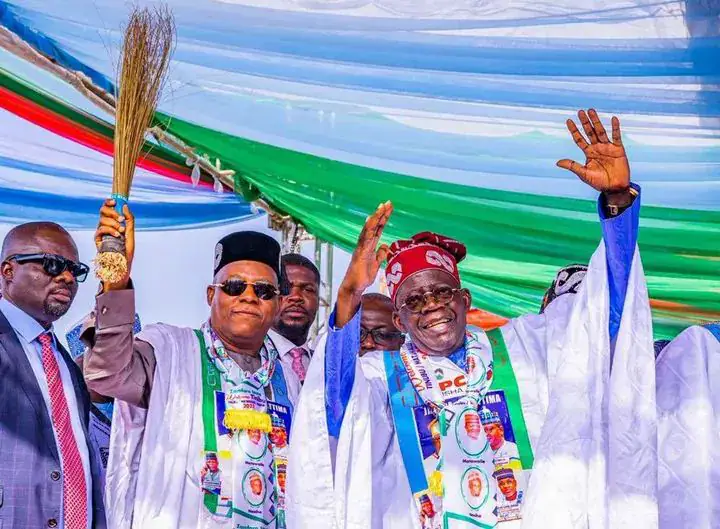
President Bola Tinubu has stated that his administration will not reinstate the fuel subsidy, instead choosing to expand support for farmers and invest in education. This announcement was made during the All Progressives Congress (APC) presidential campaign rally at Dutse Township Stadium in Jigawa State. The rally was part of the party's campaign activities ahead of the 2027 general election. Tinubu defended the removal of the petrol subsidy, maintaining that his administration would not reverse the policy.
Tinubu emphasized that the government would strengthen support for farmers to boost agricultural production and improve food security. This move aims to mitigate the economic impact of fuel subsidy removal, particularly on transportation costs, food prices, and the cost of living. The President's remarks come amid ongoing public debate over the policy's effects. By supporting farmers, the government hopes to increase food production and reduce the nation's reliance on imports.
The President also pledged continued investment in education, describing it as a crucial part of his administration's development agenda. Education is seen as a key sector that can drive economic growth and development. Tinubu's commitment to education is expected to be a major boost to the sector, which has faced challenges in recent years. The investment in education is also expected to have a positive impact on the nation's human capital development.
The APC rally in Jigawa State was part of the party's nationwide mobilisation ahead of the 2027 presidential election. The rally provided a platform for Tinubu to engage with party supporters and articulate his vision for the country's future. The President's speech was well-received by the crowd, who expressed enthusiasm for his policies. The rally was a significant event in the party's campaign activities.
Tinubu's decision to rule out fuel subsidy restoration is seen as a significant policy decision. The fuel subsidy has been a contentious issue in Nigeria, with many arguing that it has been a drain on the nation's resources. The President's administration has maintained that the subsidy was unsustainable and that its removal was necessary to free up resources for other critical sectors. The decision has had significant economic implications, including increased transportation costs and food prices.
The President's pledge to support farmers and invest in education has been welcomed by many Nigerians. The agricultural sector is a critical part of the nation's economy, and support for farmers is expected to have a positive impact on food production and security. The investment in education is also expected to have long-term benefits for the nation, including improved human capital development and economic growth.
Tinubu's administration has faced criticism for its handling of the economy, particularly with regards to the fuel subsidy removal. However, the President has maintained that his administration is committed to implementing policies that will drive economic growth and development. The pledge to support farmers and invest in education is seen as a step in the right direction, and many Nigerians are eagerly awaiting the implementation of these policies.
Key points
- President Bola Tinubu rules out restoring fuel subsidy, citing the need to allocate resources to other critical sectors.
- Tinubu pledges to boost support for farmers to improve agricultural production and food security.
- The President commits to continued investment in education, describing it as crucial to the nation's development agenda.
Reporting sources
- Tinubu Rules Out Fuel Subsidy Return, Promises Support for Farmers and Education · Daily Times of Nigeria