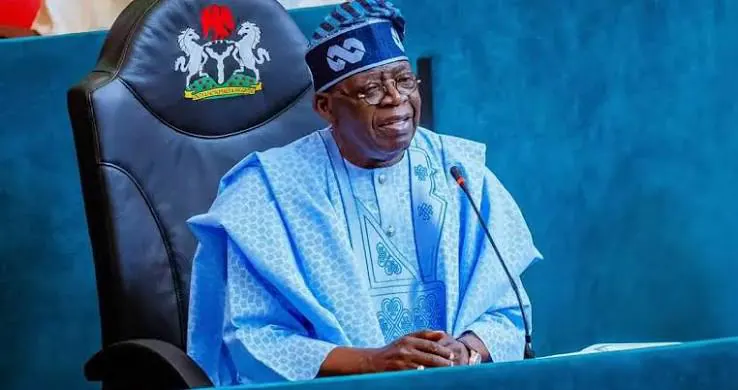
President Bola Tinubu has announced that Nigerians can expect measurable reductions in transportation costs from October 1. This reduction will be achieved through the expanded use of cheaper compressed natural gas (CNG)-powered transport. The President made this announcement in a statement personally signed by him on Saturday, September 19. He assured that the Federal Government is working with state governments, transport unions, and other stakeholders to ensure that savings from cheaper energy are passed on to commuters through lower fares.
Tinubu revealed that he met with the governors of the 36 states on August 27, where they agreed on the need to ensure that more Nigerians benefited from lower transportation costs. Following the meeting, an implementation committee for the National Affordable CNG Transit Programme was established under the Nigeria Governors’ Forum. The committee, chaired by Kwara State Governor AbdulRahman AbdulRazaq, is working with relevant stakeholders to identify priority transport corridors and determine appropriate interventions.
The President cited existing CNG and electric transport initiatives across several states as evidence that cheaper energy can deliver significant savings to commuters. In Borno, CNG-powered and electric public transport services carry passengers for between N50 and N100 on routes where commercial operators charge between N300 and N600. These initiatives have shown promising results in reducing transportation costs for Nigerians.
Tinubu provided examples of successful CNG and electric transport initiatives in various states. In Kaduna, 100 CNG-powered buses provide free transportation on major routes and carried about 3.2 million passengers in their first year, saving commuters more than N3.5 billion in transport costs. In Oyo State, CNG buses deployed to Pacesetter Transport reduced the Lagos-Ibadan fare from about N8,000 to N3,200 during the initial deployment.
The President also mentioned that Adamawa’s alternative-energy transport services have reduced fares by as much as 50 per cent, from N8,000 to N4,000. In Enugu, the deployment of 100 CNG buses reduced the Enugu-Nsukka fare from N2,500 to N1,500. Additionally, government-supported buses in Plateau State transport about 13,000 commuters daily at N200 per trip, compared with more than N500 charged by commercial operators.
Tinubu commended governors and state governments that have embraced alternative-energy transportation but urged them to intensify their efforts ahead of October 1. He assured the states of continued Federal Government support. The President emphasized that disruptions to global energy supplies are putting renewed pressure on petrol and diesel prices and increasing transportation costs worldwide.
Tinubu urged state governments to sustain the momentum towards October 1 by working with transport unions and commercial operators to accelerate vehicle conversions and fleet deployment. He assured Nigerians that the Federal Government would continue to support CNG infrastructure, vehicle conversion capacity, and access while creating an enabling environment for private-sector investment. The President emphasized that Nigeria has the gas and is building the infrastructure, and now it is time to move faster and scale up the initiative.
Key points
- President Bola Tinubu assures Nigerians of reductions in transportation costs from October 1 through the expanded use of CNG-powered transport.
- The Federal Government is working with state governments, transport unions, and other stakeholders to ensure that savings from cheaper energy are passed on to commuters through lower fares.
- Existing CNG and electric transport initiatives across several states have shown promising results in reducing transportation costs for Nigerians.