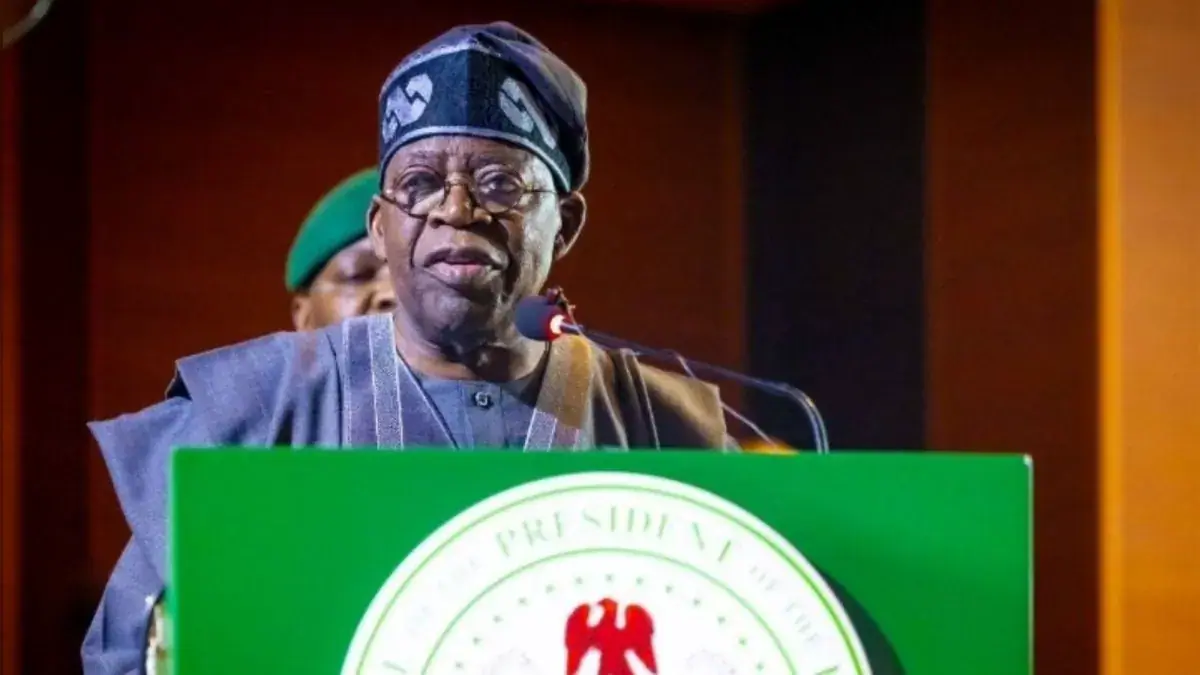
President Bola Tinubu has defended Nigeria's plan to borrow billions of dollars and euros to address the country's infrastructure deficit and stimulate economic growth. In an essay, Tinubu argued that the value of government borrowing should be assessed by the projects it finances and the economic benefits they generate. He emphasized that the real question is not how much Nigeria borrows, but what it builds, what value it creates, and what future it leaves behind.
Tinubu's defence of the borrowing plan comes amid criticism from opposition parties, including the African Democratic Congress Presidential Campaign Council (ADC-PCC). The ADC-PCC condemned Tinubu's request for Senate approval to borrow $20.51 billion and €1.45 billion to address funding gaps under the Federal Government's 2026-2027 supplementary borrowing plan. The opposition party argued that the new borrowing plans could worsen the economic difficulties facing millions of Nigerians.
According to Tinubu, the funds would help address Nigeria's infrastructure deficit and finance critical socio-economic sectors. He identified key projects expected to strengthen Nigeria's productive capacity, including the Lagos-Calabar Coastal Highway, Sokoto-Badagry Superhighway, Trans-Sahara Superhighway, electricity grid upgrades, and the modernization of major commercial ports in Lagos. These projects are expected to connect economic regions, reduce logistics costs, unlock agricultural and industrial potential, and attract private investment.
The Lagos-Calabar Coastal Highway is expected to reduce logistics costs along its corridor by 15 to 20 percent and could contribute up to two percent to Nigeria's gross domestic product (GDP) through expanded trade, tourism, and industrial activity. The project is also projected to generate about 100,000 direct jobs in construction and engineering, as well as more than 150,000 indirect jobs in logistics, materials supply, and related services.
Tinubu said his administration is shifting public borrowing away from financing immediate fiscal pressures towards investments expected to generate economic returns, create jobs, and expand opportunities. He maintained that Nigeria's ambition to build a $1 trillion economy by 2030 would require sustained infrastructure investment to support productivity, industrialization, and trade. Tinubu emphasized that Nigeria cannot build a $1 trillion economy with infrastructure designed for an economy a fraction of that size.
The president also defended his administration's economic reforms, saying they had helped restore macroeconomic stability, strengthen public finances, and improve Nigeria's standing in international financial markets. Tinubu cited assessments by international credit rating agencies as evidence of improved investor confidence, arguing that stronger external reserves and improved macroeconomic management had enhanced Nigeria's financial credibility.
Tinubu's administration is pursuing longer-term financing arrangements that would align repayment structures with the lifespan of infrastructure assets, reduce refinancing pressures, and secure more competitive funding for productive investments. He identified five priorities for the next phase of the Federal Executive Council's economic strategy, including food affordability and energy price stability, budget harmonization and fiscal discipline, and completion of high-impact projects and investment in critical infrastructure.
Key points
- President Tinubu defends Nigeria's fresh borrowing plans, citing the need to address infrastructure deficit and stimulate economic growth.
- The borrowing plan has been criticized by opposition parties, who argue that it could worsen economic difficulties facing Nigerians.
- Tinubu's administration is pursuing longer-term financing arrangements to support infrastructure development and economic growth.