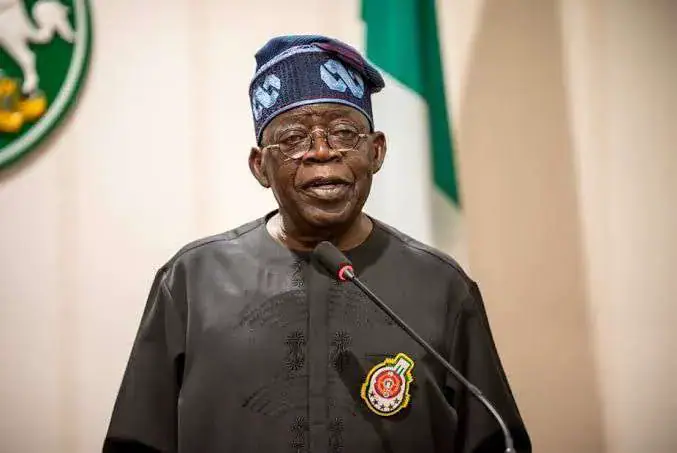
President Bola Tinubu has justified his administration's reliance on foreign loans, emphasizing that sustained investment in critical infrastructure is crucial for Nigeria to achieve its target of a $1 trillion economy by 2030. According to Tinubu, borrowing should be assessed based on the economic value it generates, the projects it finances, and its long-term impact on the country. He made these remarks in an essay titled 'From Reforms to Delivery: Our Infrastructure Investment and Growth Strategy'.
Tinubu's comments come amid growing concerns about Nigeria's debt profile and the implications of continued borrowing from international financial institutions and commercial lenders. The President listed several strategic projects expected to expand the country's productive capacity, including the Lagos-Calabar coastal highway, Sokoto-Badagry superhighway, Trans-Sahara superhighway, electricity grid upgrades, and the modernization of major commercial ports in Lagos. These investments, combined with spending on healthcare, education, and vocational training, aim to improve connectivity between economic centers and stimulate economic growth.
The Lagos-Calabar coastal highway is expected to reduce logistics costs along its route by between 15 and 20 percent and contribute as much as 2 percent to the country's gross domestic product through increased trade, tourism, and industrial activities. The project is also projected to create about 100,000 direct jobs in construction and engineering, in addition to over 150,000 indirect jobs across logistics, building materials, and related sectors. Tinubu emphasized that the administration is not simply building highways but opening economic corridors, connecting markets, and unlocking industries.
Tinubu linked the administration's infrastructure ambitions to the economic reforms introduced since he assumed office in May 2023, including the removal of petrol subsidies, exchange rate unification, tax reforms, and measures aimed at controlling inflation. He noted that these reforms have contributed to improvements in key macroeconomic indicators, with Nigeria's real GDP growth reaching 4.43 percent in the second quarter of 2026. Headline inflation declined to 14.63 percent in September from 20.98 percent in the corresponding period of the previous year.
The President also disclosed that Nigeria's gross external reserves stood at $55.1 billion as of October 9, 2026, including approximately $46 billion in net reserves. The country's tax-to-GDP ratio has risen to 12.5 percent from 7 percent. Tinubu argued that these developments demonstrate the impact of the government's policies on macroeconomic stability, public finances, and Nigeria's credibility in international financial markets.
Tinubu cited favorable assessments by international credit rating agencies as evidence that investors are becoming more confident in the Nigerian economy. He maintained that these assessments reflect improvements in external reserves, economic management, and financial credibility rather than political considerations. The President added that the improved perception of Nigeria in international markets could enable the country to attract institutional investors, obtain longer-term financing, and secure loans at more favorable rates.
The President outlined five priority areas for the government, including improving food affordability and stabilizing energy prices, harmonizing budgets and strengthening fiscal discipline, completing high-impact projects and investing in critical infrastructure, improving the economic policy framework and regulatory efficiency, and providing targeted household support while investing in human development. He emphasized that the success of the administration's economic program would ultimately depend on tangible outcomes, including completed projects, higher investment, job creation, and better living standards for Nigerians.
Key points
- President Tinubu defends foreign loans for infrastructure development to achieve $1 trillion economy by 2030.
- Nigeria's real GDP growth reached 4.43 percent in the second quarter of 2026.
- The country's gross external reserves stood at $55.1 billion as of October 9, 2026.