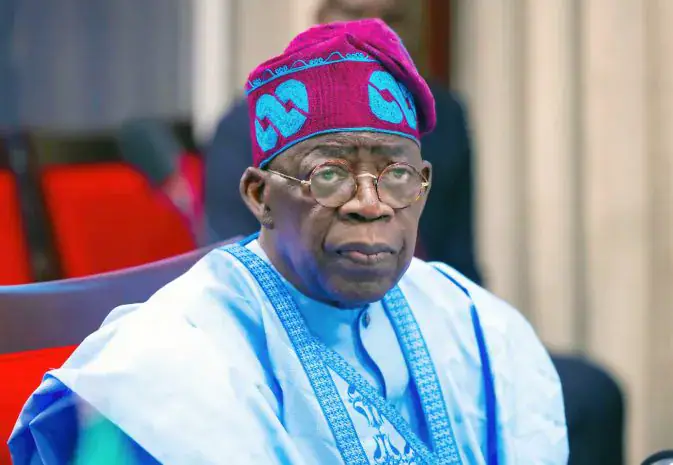
President Bola Tinubu has defended his government's $21.7 billion external borrowing plan, stating that the funds will be used for infrastructural growth, including highways, ports, power, and human capital development. The plan has faced criticism from opposition leaders, who have urged lawmakers to scrutinize the proposal. Tinubu argued that the investments are intended to expand productivity rather than finance consumption. He emphasized that the goal is to build a $1 trillion economy by 2030.
The president identified several key projects that will be funded by the borrowing plan, including the Lagos-Calabar Coastal Highway, the Sokoto-Badagry Superhighway, and the Trans-Sahara Superhighway. These projects aim to strengthen Nigeria's productive capacity and improve the business environment. The Lagos-Calabar Coastal Highway is expected to reduce logistics costs by 15-20% and add 2 percentage points to GDP through trade, tourism, and industrial activity. The project is also expected to generate 100,000 direct construction and engineering jobs.
Tinubu's administration estimates that the Lagos-Calabar Coastal Highway will generate over 150,000 indirect jobs in logistics, materials, and related services. The president tied the borrowing strategy to his administration's goal of building a $1 trillion economy by 2030, stating that Nigeria cannot achieve this goal with its current infrastructure. He argued that sustained investment is necessary to lift productivity, industrialization, and trade. The president cited improving macroeconomic indicators as evidence that difficult reforms have begun to restore stability and investor confidence.
According to Tinubu, about $10.6 billion of the proposed external borrowing plan is earmarked for transport links, including the Sokoto-Badagry and Lagos-Calabar highways and the Kano-Kaduna metro rail. Officials describe the request as a multiyear investment plan rather than an immediate drawdown. The president reported that real GDP expanded 4.43% year over year in the second quarter of 2026, while headline inflation fell to 14.63% in September from 20.98% a year earlier.
Gross external reserves stood at $55.1 billion as of October 9, including about $46 billion in net reserves, according to figures cited by the president. Nigeria's tax-to-GDP ratio rose to 12.5% from 7%, he said. The World Bank reported that Nigeria's economy grew 4.2% in the first half of 2026, up from 3.9% a year earlier, while gross external reserves rose from $45.5 billion at the end of 2025 to $53.8 billion by August.
Despite the president's defense of the borrowing plan, opposition figures, including former Vice President Atiku Abubakar, have urged the National Assembly to reject the request and demand project-level details. Critics warn that additional external debt could burden future generations and question whether funds will be transparently allocated. Tinubu countered that improved credit assessments, stronger reserves, and better macroeconomic management should lower Nigeria's risk premium and borrowing costs.
The president emphasized that the government will prioritize food affordability and energy-price stability, fiscal discipline, completion of high-impact projects, regulatory efficiency, and targeted household support. He also stated that Nigeria will seek longer-term financing to match the useful life of infrastructure assets and reduce refinancing risk. The president concluded that securing financing is not the achievement, but rather the impact it has on the economy and the lives of Nigerians.
Key points
- President Tinubu defends $21.7bn borrowing plan for infrastructure development
- The plan aims to expand productivity and achieve a $1 trillion economy by 2030
- Opposition figures have urged the National Assembly to reject the request and demand project-level details