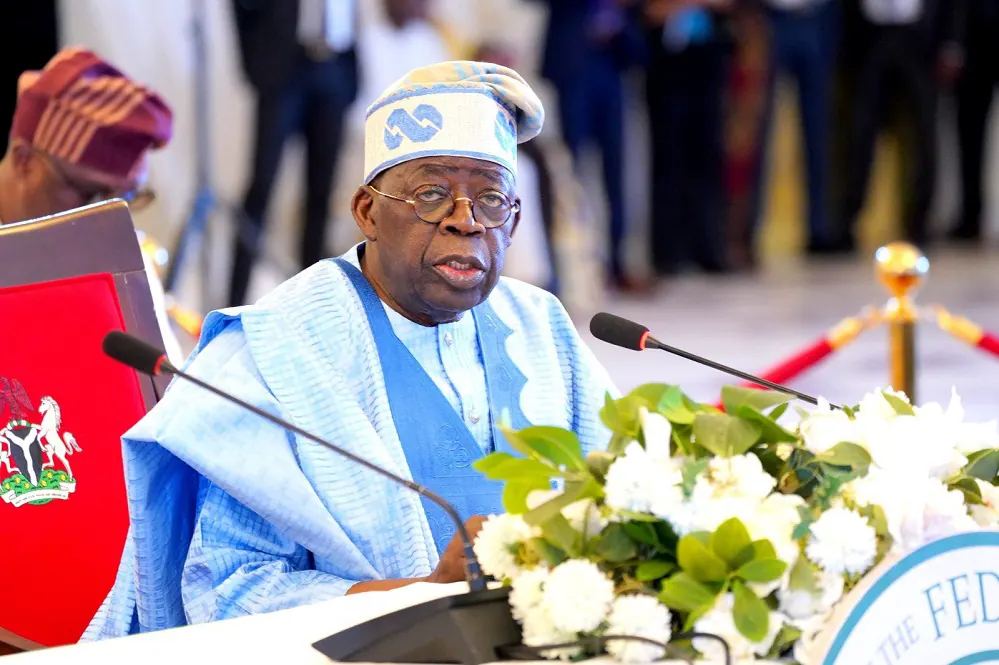
President Bola Ahmed Tinubu announced that his administration's investment in compressed natural gas (CNG) and electric-powered transportation is yielding significant results, with some commuters experiencing reductions of up to 67% in transport fares. The President shared testimonials from beneficiaries of the Federal Government's transportation interventions, highlighting the emerging relief as a demonstration of his administration's commitment to cushioning the hardship caused by the removal of petrol subsidy.
Tinubu specifically mentioned a commuter, Blessing, whose journey from Masaka to Berger in the Federal Capital Territory (FCT) now costs ₦500 instead of ₦1,500, representing a saving of ₦1,000 or approximately 67% on each trip. He also cited testimonies from Ada and Abigail, who reported that their transportation costs between Enugu and Nsukka had dropped from ₦4,000 to ₦1,600, translating into savings of ₦2,400 per journey, or 60%. These examples demonstrate the positive impact of the government's CNG and electric-vehicle transportation initiative.
The President further cited encouraging reports from Borno State, where some commuters now pay as little as ₦50 per trip on government-supported CNG and electric-powered vehicles. Tinubu emphasized that the government's investment in CNG transportation aims to achieve lower operating costs for drivers, which should translate into more affordable fares for passengers, leaving families with more money for their everyday needs.
Reflecting on his administration's decision to remove the petrol subsidy on May 29, 2023, Tinubu acknowledged the economic difficulties the policy imposed on households but maintained that the government had a corresponding obligation to develop sustainable alternatives. He noted that the government had implemented measures to cushion the hardship, including the ₦3.3 trillion fuel-tax waiver and the Nigerian National Petroleum Corporation (NNPC)'s 30-day petrol relief.
The development comes against the backdrop of renewed efforts by the Federal Government and state administrations to accelerate the deployment of CNG-powered buses, electric vehicles, and other affordable mass-transit alternatives following the latest surge in global crude oil prices. On September 1, Tinubu announced that the Federal Government and the 36 state governors are working to ensure measurable reductions in transportation fares from October 1, through the National Affordable CNG Transit Programme.
The President cited successful interventions, including Kaduna State, where 100 CNG-powered buses provided free transportation on major routes, carrying about 3.2 million passengers in their first year and reportedly saving commuters more than ₦3.5 billion. Other examples included Oyo State, where the initial deployment of CNG buses reduced fares on the Lagos-Ibadan route from about ₦8,000 to ₦3,200, and Adamawa, where alternative-energy transportation reduced some fares by half.
Tinubu assured Nigerians that the government is intensifying collaboration with state governments and private investors to expand the programme, acknowledging that the benefits have yet to reach all commuters. He cited ongoing deployments, including Ekiti State receiving 15 CNG buses, Lagos 20, while Akwa Ibom had 50 buses ready for service. The President's administration aims to provide wider relief to Nigerians through the National Affordable CNG Transportation Programme.
Key points
- President Tinubu's administration has recorded a 67% drop in transport fares for some commuters through its CNG and electric-powered transportation initiative.