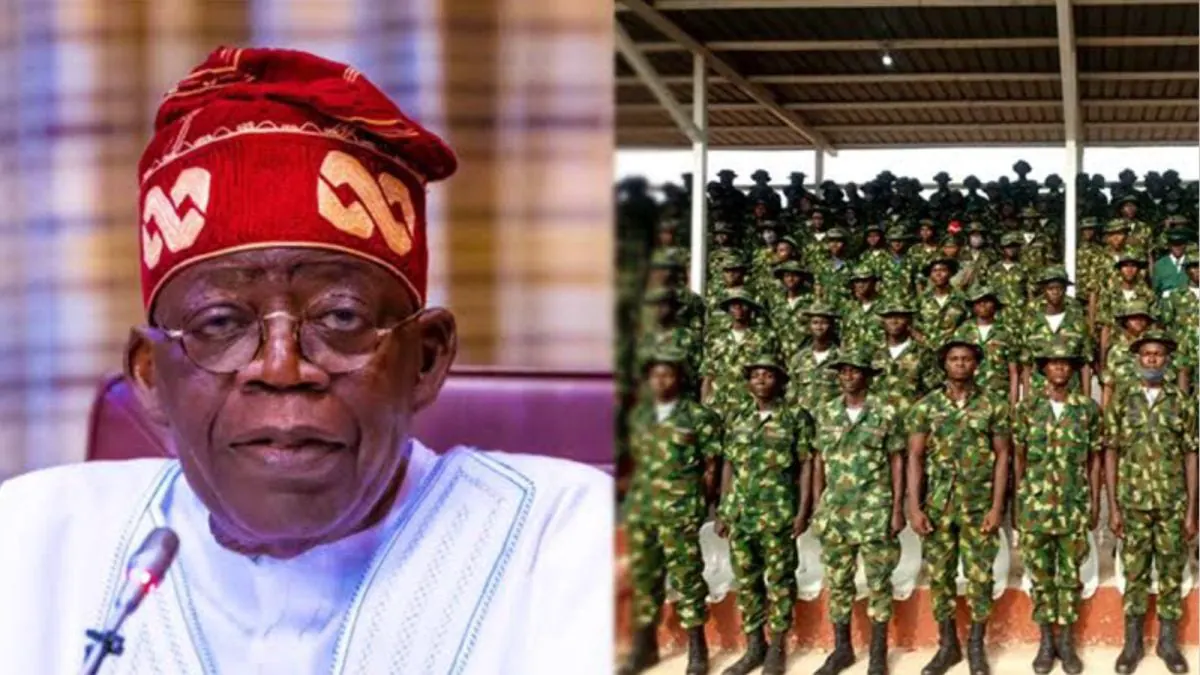
President Bola Tinubu has announced the operationalisation of new Nigerian Army formations in Zamfara, Kebbi, Oyo, and Osun states as part of efforts to strengthen security and improve the military's response to threats. The new formations will position troops closer to communities considered vulnerable to attacks, allowing the military to respond faster to threats. This move aims to enhance the military's ability to protect communities and respond swiftly to security challenges.
The development is part of the Federal Government's efforts to reorganise the country's military structure in response to persistent security challenges. In July, Tinubu approved the expansion of the Army from eight to 12 divisions and the recruitment of 28,000 additional personnel. The expansion created new divisional headquarters in Makurdi, Ilorin, Jalingo, and Benin City. The new structure aims to decentralise military command, improve response time, and strengthen security operations across different parts of the country.
The new formations announced by Tinubu are expected to complement the wider restructuring by increasing the Army's presence at the community level. Zamfara and Kebbi are particularly important to the security strategy due to persistent attacks by armed bandits and kidnappers in parts of the North-West. Several communities across the region have faced attacks, abductions, and disruption of farming activities. The increased military presence is expected to improve the ability of security forces to reach affected areas and conduct operations closer to communities.
The President also disclosed that the Federal Government is moving ahead with the construction of new military barracks and depots in Abuja, Ekiti, Ebonyi, and Kogi states. Construction of the military facilities in Osun State has already been completed. The projects aim to improve the welfare and living conditions of personnel serving the country. Tinubu stated that the projects are not only about expanding military infrastructure but also about supporting the men and women in uniform and their families.
Tinubu linked the infrastructure projects to the sacrifices made by members of the Armed Forces. He said military personnel require adequate facilities and support to carry out their duties effectively, especially as deployments continue across different parts of the country. The President also spoke about the recent increase in the salaries of military personnel, saying the adjustment has begun to improve the lives of servicemen, women, and their families.
The President noted that deployments often affect not only the officers and soldiers involved but also their families, who remain at home while their relatives serve in difficult and sometimes dangerous locations. Tinubu added that every deployment is a sacrifice made by a family too. As Commander-in-Chief, his duty is to ensure that the Armed Forces have the resources and support to do their job, and that Nigeria stands firmly behind the families waiting for them at home.
The Federal Government has placed greater emphasis on strengthening military manpower, equipment, and infrastructure in recent months. The expansion to 12 Army divisions is part of the administration's broader security programme, which also includes the recruitment of additional personnel and investment in military platforms and operational equipment. The restructuring has placed new divisional commands across different regions of the country, including the 5 Division in Makurdi, 9 Division in Ilorin, 10 Division in Jalingo, and the planned 83 Division in Benin City.
Key points
- President Bola Tinubu announces new Nigerian Army formations in Zamfara, Kebbi, Oyo, and Osun states to strengthen security and improve response to threats.
- The Federal Government is constructing new military barracks and depots in several states to improve the welfare and living conditions of personnel.
- The restructuring of the military includes the expansion of the Army from eight to 12 divisions and the recruitment of 28,000 additional personnel.