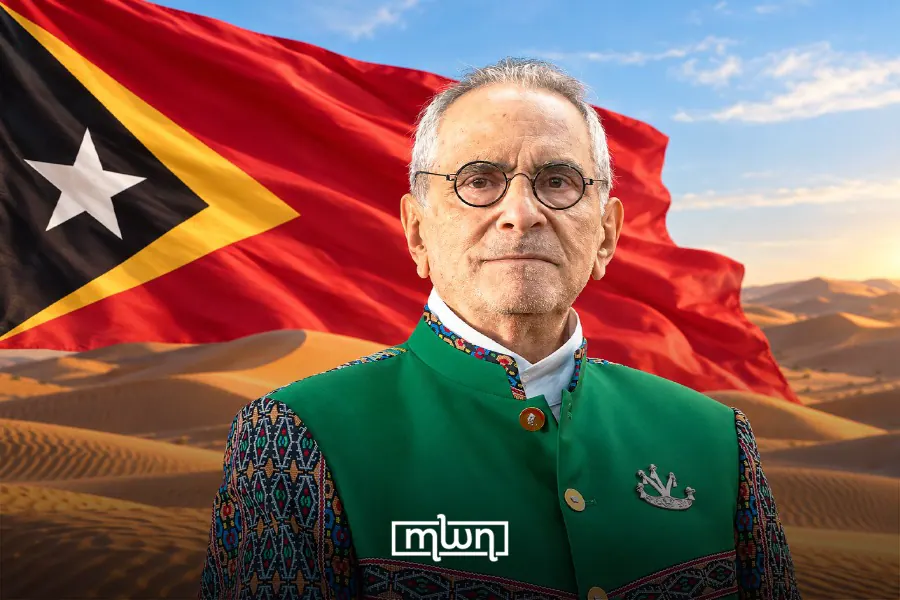
On September 23, at the 81st session of the UN General Assembly, President José Ramos-Horta of Timor-Leste announced a significant change in his country's position on Western Sahara. He welcomed Morocco's Autonomy Plan as an opportunity for dialogue, alongside a recent UN Security Council resolution. This move marks a clear evolution in Timor-Leste's stance, as the country had long been a close partner of the separatist Polisario Front.
For over two decades, Timor-Leste had drawn parallels between its own independence struggle and the cause promoted by the self-proclaimed "Sahrawi Arab Democratic Republic" (SADR). However, Ramos-Horta's statement paired the welcome with familiar caveats, emphasizing the need for consultation with the people directly concerned and a just, comprehensive settlement between Moroccan authorities and the Polisario. This subtle shift in tone is significant, given the depth of Timor-Leste's past ties with the separatists.
Timor-Leste established diplomatic relations with the SADR in 2002 and granted it full diplomatic representation in Dili in 2010. The country has also provided regular financial support to the entity, including MAD 600,000 ($60,000) approved by the cabinet in March. However, Ramos-Horta's endorsement of the Moroccan proposal as a basis for dialogue further narrows the separatists' shrinking diplomatic space. The president's stance reflects the weight of UN Security Council Resolution 2797, adopted in October 2025.
The resolution called for negotiations taking Morocco's Autonomy Proposal as the basis and stated that genuine autonomy could represent a particularly feasible outcome. This formula has given governments, once wedded to the referendum thesis, a path toward Rabat's framework. While Timor-Leste has not yet announced a withdrawal of its recognition of the SADR, the entity's embassy remains listed on the Timorese Foreign Ministry website.
The shift in Timor-Leste's stance is not an isolated case. Other countries have also moved toward backing Morocco's sovereignty over its southern provinces. Mauritius, which recognized the SADR in 1982, withdrew that recognition in 2014 and restored it in 2015, before deciding to align its position with Resolution 2797. Latin American countries, once a Polisario stronghold, have also moved in the same direction this year.
Bolivia suspended its relations with the fictional republic in February, and Honduras announced a similar move in April. Colombia recognized Moroccan sovereignty in August and froze relations with the Polisario's paper state, while Chile, Panama, and Peru backed Morocco's sovereignty and its Autonomy Plan in New York this month. The European Union also updated its collective position in January, accepting Morocco's Autonomy Plan as the basis for negotiations.
With over 130 countries now backing Morocco's sovereignty, diplomacy is increasingly moving beyond Cold War-era ideological solidarities toward pragmatic, interest-based cooperation. A handful of capitals continue to echo the Polisario's outdated narrative, but the direction at this year's General Assembly was clear. Governments once counted among the Polisario's firmest backers are increasingly treating Morocco's Autonomy Plan as the starting point for any settlement.
Key points
- Timor-Leste President José Ramos-Horta welcomes Morocco's Autonomy Plan for Western Sahara, marking a shift in the country's stance.
- The move reflects the weight of UN Security Council Resolution 2797, which calls for negotiations taking Morocco's Autonomy Proposal as the basis.
- The shift in Timor-Leste's stance is part of a broader trend, with over 130 countries now backing Morocco's sovereignty over its southern provinces.