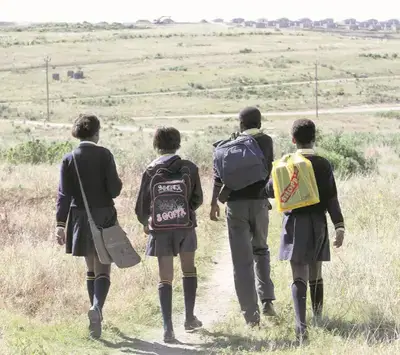
The Eastern Cape province in South Africa is grappling with a persistent scholar transport crisis, which has been a recurring issue for years. In 2023, reporters from the Daily Dispatch experienced firsthand the dangers faced by pupils at Jojweni Zweliyandila High School in Chalumna, who are forced to walk long distances to and from school. During their visit, the reporters were robbed and their vehicle was damaged by an armed thug, highlighting the urgent need for a reliable transport solution.
The provincial government had previously reacted to the crisis by providing temporary transport for the pupils at Jojweni Zweliyandila High School. However, this solution was short-lived, and the scholar transport crisis has once again landed the provincial government in court. The South African Human Rights Commission has approached the Makhanda high court with an urgent application, seeking to compel the provincial government to provide scholar transport to over 40,000 qualifying pupils who remain without this essential service.
The crisis is not merely a dispute about budgets, administration, or departmental responsibilities, but a fundamental issue about children's constitutional right to education, safety, and future. The situation is particularly disturbing given that it is not new. In December 2024, the Makhanda high court declared the provincial government's failure to provide scholar transport to qualifying pupils unconstitutional and ordered the authorities to address the problem.
Despite the court order, thousands of pupils are still being left behind almost two years later. This raises questions about the effectiveness of court orders and the provincial administration's commitment to implementing them. The government cannot continue to hide behind budgetary constraints, administrative difficulties, and disagreements between departments. It has a responsibility to plan properly, prioritize essential services, and ensure that allocated resources reach the people they are intended to serve.
The consequences of the lack of scholar transport extend far beyond missed school days. Pupils who walk long distances arrive exhausted, have less time for homework, and face additional safety risks. Those who remain at home lose valuable teaching time and may struggle to catch up with their peers. For matric pupils, lost classroom time can have particularly serious consequences, affecting their academic performance and future prospects.
To address the crisis, the provincial government must produce a credible, funded, and measurable plan. This plan should include establishing an accurate database of qualifying pupils, resolving payment disputes with operators, providing transparent timelines for outstanding applications, and ensuring that every eligible child receives safe and reliable transport. The government must move beyond promises and take concrete actions to deliver scholar transport to the pupils who need it.
Ultimately, a child should never have to take the government to court, through their parents or a human rights body, simply to get to school. The time for explanations has passed, and the children need transport, classrooms, and government to deliver. The provincial government must take responsibility for ensuring that every child in the Eastern Cape has access to safe and reliable scholar transport, and that their right to education is protected and prioritized.
Key points
- The Eastern Cape province in South Africa faces a recurring scholar transport crisis affecting over 40,000 pupils.
- The provincial government's failure to provide scholar transport has been declared unconstitutional by the Makhanda high court.
- The government must produce a credible plan to address the crisis and ensure safe and reliable transport for all eligible pupils.