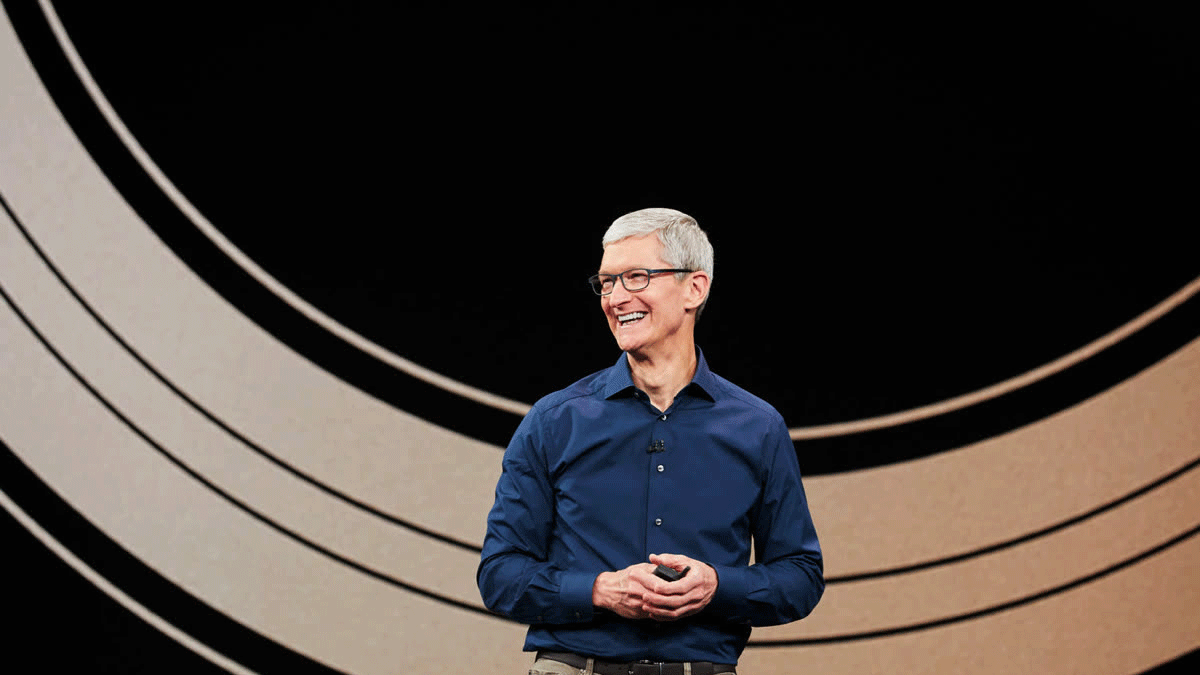
Tim Cook has stepped down as CEO of Apple, marking the end of a 15-year tenure that has seen the company undergo significant transformation. When Cook took over from Steve Jobs in 2011, Apple's annual revenue was $108 billion. By the end of 2025, this figure had increased to over $416 billion. The company's market capitalisation has also grown exponentially, from around $350 billion to over $4 trillion. This remarkable performance is a testament to Cook's leadership and Apple's ability to adapt and evolve.
Under Cook's leadership, Apple has diversified its revenue streams, moving beyond its reliance on iPhone sales. The introduction of new product categories, such as the Apple Watch and AirPods, has contributed to this growth. Additionally, Apple's services segment, including iCloud, Apple Pay, Apple Music, and Apple TV, has become a significant contributor to the company's revenue, generating over $100 billion annually. The company's active user base has also grown, with over 2.5 billion devices now part of the Apple ecosystem.
Cook has also overseen a significant shift in Apple's technology, with the company taking greater control over its chip design and production. This move has reduced Apple's dependence on external suppliers and enabled the company to better monetise its user base. As Cook hands over the reins to John Ternus, he leaves behind a company that is well-positioned for future growth, but also faces challenges in emerging technologies such as artificial intelligence.
Despite Apple's impressive financial performance, the company's future prospects are not without challenges. The failure of several projects, including the abandoned car project, and the mixed reception to the Vision Pro, have raised questions about Apple's ability to innovate and drive growth in new areas. Furthermore, the company's position in the rapidly evolving field of artificial intelligence is uncertain, and it remains to be seen whether Apple can maintain its dominance in this space.
John Ternus, who takes over as CEO, has been with Apple for over 25 years and has played a key role in the company's hardware engineering efforts. He faces a significant challenge in building on Cook's legacy and driving Apple's future growth and innovation. With a strong foundation in place, Ternus will need to navigate the complexities of emerging technologies and ensure that Apple remains a leader in the tech industry.
The transition of power at Apple marks a significant change in leadership, but also underscores the company's commitment to long-term planning and succession. Cook's departure was announced in April 2026, and Ternus's appointment has been widely seen as a logical choice. As Apple looks to the future, the company will need to balance its focus on innovation and growth with the need to maintain its financial performance and market position.
As Tim Cook steps down as CEO, his legacy at Apple is clear. He has transformed the company into a global giant, with a diversified revenue stream and a capitalisation of over $4 trillion. While challenges lie ahead, Apple's strong foundation and talented leadership team ensure that the company is well-positioned for future success.
Key points
- Tim Cook's 15-year tenure at Apple has seen the company's revenue grow from $108 billion to over $416 billion.
- Apple's market capitalisation has grown from around $350 billion to over $4 trillion during Cook's tenure.
- John Ternus takes over as CEO, tasked with building on Cook's legacy and driving Apple's future growth and innovation.