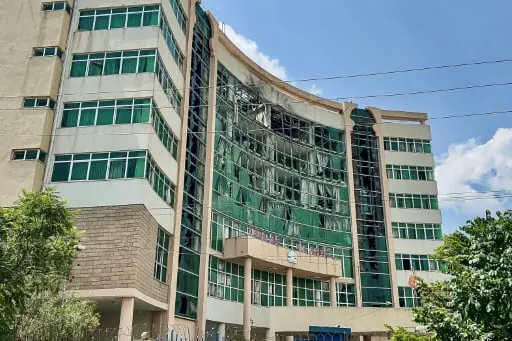
The Tigray People's Liberation Front (TPLF) rebels are abandoning their regional capital, Mekelle, in northern Ethiopia, as pro-government forces advance on the city. A local journalist and residents told AFP that the rebels and their leaders are leaving Mekelle, while federal forces have not yet entered the city. Government offices and police stations have been left without security personnel, raising concerns about potential looting and lawlessness. Residents are worried about their safety and the security of public property.
The conflict began on September 23, when the TPLF launched attacks into neighboring states, sparking fears of a return to the devastating 2020-2022 civil war. However, federal forces and pro-government militias have pushed the rebels back in recent days and are now heading north towards Mekelle. The TPLF has long been the dominant force in Tigray but was marginalized with the rise of Prime Minister Abiy Ahmed in 2018.
The leader of the TPLF, Debretsion Gebremichael, has stated that the group will continue to carry out guerrilla-style attacks, as they did when Mekelle fell to government forces in 2020. In a video message, Debretsion implied that the TPLF would operate under a strategy to strike the enemy wherever they choose. This has raised concerns about the potential for further violence and instability in the region.
The conflict has also triggered a breakdown in Ethiopia's relations with Eritrea and Egypt, which Ethiopia accuses of supporting the rebels. Ethiopia expelled 10 Eritrean diplomats and shut its embassy in Asmara, while Eritrea responded by severing all diplomatic ties. Eritrea accuses landlocked Ethiopia of planning to invade and seize access to its coastline.
The TPLF initially made advances in neighboring Afar and Amhara states, working alongside local militias. However, they were pushed back this week, and the government launched a counter-offensive into Tigrayan territory along three axes towards Mekelle. There were reports that Mekelle's airport had fallen to a pro-government militia, although social media accounts are difficult to verify.
The conflict has significant implications for the region, with concerns about the potential for further violence and instability. The TPLF ruled all of Ethiopia from 1991 to 2018, and their marginalization led to a civil war from 2020 to 2022, which left more than 600,000 dead, according to the African Union. The Pretoria Peace Agreement of 2022 maintained an uneasy calm, but was never fully implemented.
The humanitarian situation in the region is also a concern, with reports of significant communications blackouts and restricted media access. A humanitarian source told AFP that the TPLF had been entirely pushed out of Afar. The situation remains volatile, with residents and local journalists expressing concerns about their safety and the security of public property.
Key points
- The TPLF rebels are abandoning their regional capital, Mekelle, as pro-government forces advance on the city.
- The conflict has triggered a breakdown in Ethiopia's relations with Eritrea and Egypt.
- The TPLF will continue to carry out guerrilla-style attacks, according to its leader Debretsion Gebremichael.