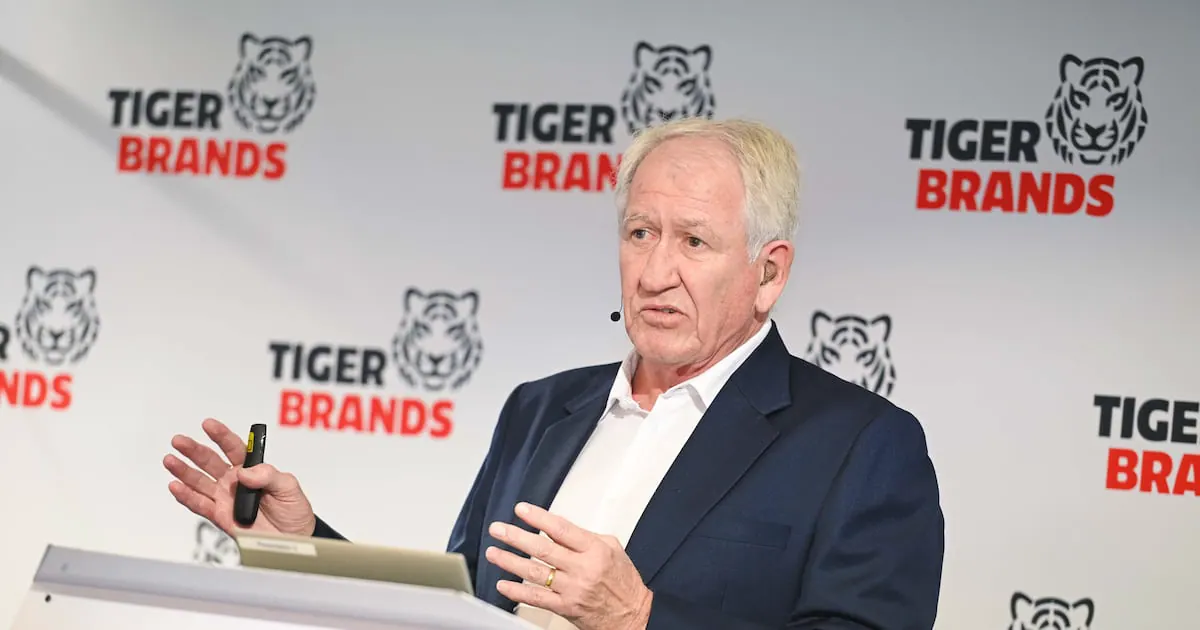
In a challenging economic environment, Tiger Brands has made a deliberate choice to invest in its operations. The company's CEO, Tjaart Kruger, believes that uncertainty is now a part of the business environment, with trade disruption, shifting tariffs, and geopolitical tension affecting companies worldwide. Despite these challenges, Tiger Brands has opted to move forward with discipline, investing in its operations to strengthen its competitiveness and serve consumers better.
South Africa's economic growth has been slow, with high unemployment and household insecurity. Consumers are cautious about their spending, prioritizing affordability and quality. Kruger notes that consumers are not just looking for the lowest price but also value products that offer quality, taste, convenience, and trust. To meet these demands, Tiger Brands has had to rethink its investment strategy, incorporating affordability into its entire value chain.
The company's investment strategy includes optimizing its existing capacity, reducing waste, and improving consistency. A more efficient factory not only increases capacity but also reduces waste, improves consistency, secures supply, protects quality, and enables faster innovation. Tiger Brands has also strengthened its distribution network, improving availability, sharpening service, and getting the right products to the right outlets at the right time.
Tiger Brands has made significant investments in its operations, including a R200m investment in Paarl to turn an historic facility into a modern culinary site. The company has brought vinegar production in-house, moved the manufacture of Mrs Ball's Chutney into Tiger Brands, and installed new lines that enable the packing of jam in lighter, recyclable PET containers. These investments aim to make the company more reliable, productive, and responsive to consumer needs.
The company's investment plans include spending about R1.5bn annually over the next three years, with annual investment peaking at about R2bn. This capital will be directed towards strengthening competitiveness, supporting growth, and serving consumers better. Tiger Brands is also investing in energy and logistics resilience, with solar generation now running at seven of its manufacturing sites.
Tiger Brands' latest results show that the changes are taking hold, with normalized volumes growing 4.5% and gross margin improving. Every business unit lifted operating income, and eight of the company's 14 focus brands gained both value and volume share over the preceding year. The company is also committed to localization, investing in energy and logistics resilience, and backing South African farmers.
The company's investments are expected to have a positive impact on its operations and the economy. With its focus on affordability, quality, and innovation, Tiger Brands aims to grow and create a strong and competitive manufacturing base in South Africa. The company's commitment to localization and sustainability is also expected to contribute to the country's economic growth and development.
Key points
- Tiger Brands invests R1.5bn annually to strengthen competitiveness and serve consumers better
- The company focuses on affordability, quality, and innovation to meet consumer demands
- Tiger Brands prioritizes localization and sustainability to contribute to South Africa's economic growth