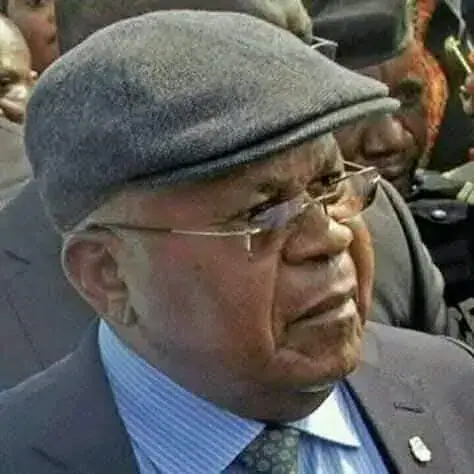
Étienne Tshisekedi wa Mulumba was a key figure in the Democratic Republic of Congo's complex history. Born in Angola, his origins are unclear, but his impact on the nation is well-documented. Tshisekedi wa Mulumba was involved in the country's politics as early as 1960, serving as Commissaire général adjoint à la Justice under Colonel Joseph-Désiré Mobutu's government. His early life and education remain unclear, but his influence in Congolese politics is a matter of record.
Tshisekedi wa Mulumba's association with Albert Kalonji, also known as Mulopwe "Empereur," led to his appointment as Minister of Justice in the breakaway state of South Kasai. The autonomous state was proclaimed in August 1960, with Kalonji as its leader. Tshisekedi wa Mulumba's role in this secessionist movement highlights the complexities of Congo's post-independence era. He was part of a group of leaders who surrounded Mulopwe and managed key portfolios in the autonomous state.
Tshisekedi wa Mulumba's actions during this period have been criticized by some. He reportedly referred to Patrice Lumumba, the country's first prime minister, as a "crapaud" (toad). Lumumba's assassination in January 1961, along with Maurice Mpolo and Joseph Okito, marked a dark chapter in Congo's history. Tshisekedi wa Mulumba's involvement in the subsequent executions of Lumumbist politicians and militants has also been documented.
The "Martyrs of Bakwanga" were a group of nationalist politicians and activists arrested, deported, and executed in Bakwanga. Tshisekedi wa Mulumba, as Minister of Justice, played a role in their trial and condemnation by tribal judges. The prisoners were handed over to the secessionist authorities, who then carried out the executions. This event remains a painful part of Congo's history.
Among the executed was Jean-Pierre Finant, the first governor of the Province Orientale and a prominent lumumbist. Finant's daughter, Élisabeth Finant, later became a renowned singer known as Abeti Masikini. Christophe Muzungu, the first administrator of the Sûreté nationale and secretary general of the MNC, was also among those executed. These individuals were prominent figures in Congolese politics and administration.
Tshisekedi wa Mulumba's legacy is complex, with some viewing him as a national hero and others criticizing his actions during this tumultuous period. His association with the CIA has also been reported. The controversy surrounding his life and actions reflects the challenges of navigating Congo's turbulent history.
Today, Étienne Tshisekedi wa Mulumba's place in Congolese history remains a topic of discussion. His role in shaping the country's early years has been acknowledged, even as the controversy surrounding his actions continues. The impact of his decisions on the lives of many Congolese people is still felt.
Key points
- Étienne Tshisekedi wa Mulumba played a significant role in Congo's post-independence politics, serving in various capacities, including as Minister of Justice in the breakaway state of South Kasai.
- His involvement in the executions of Lumumbist politicians and militants has been documented, and his legacy remains a topic of discussion.
- Tshisekedi wa Mulumba's association with the CIA has also been reported, adding to the complexity of his life and actions.