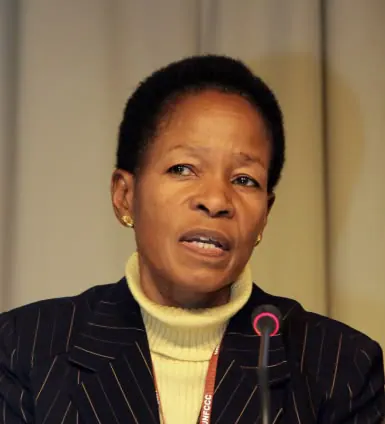
Former Tanzania Minister for Lands, Housing and Human Settlements Development Professor Anna Tibaijuka has urged East African Community (EAC) leaders to adopt a unified approach to major infrastructure investments. She argues that proposed oil refineries, petroleum pipelines, gas infrastructure, and ports should be coordinated across national borders to improve economic efficiency, attract investment, and prevent unnecessary competition among partner states.
Tibaijuka's intervention comes as East Africa considers major energy projects in Kenya, Uganda, and Tanzania. The Dangote East Africa refinery, planned for Lamu, Uganda's proposed refinery at Hoima, and a proposed petroleum hub in Tanga have raised questions about whether the region could end up investing in more refining capacity than its domestic market can absorb. The Dangote refinery project reached its groundbreaking stage in Lamu on September 30, 2026.
The planned Lamu facility is designed to process up to 700,000 barrels of crude oil per day, with its developers targeting completion around 2030. Uganda has continued with plans for a smaller refinery at Hoima, while Tanzania and Uganda have explored cooperation with energy trader Vitol on a petroleum hub at Tanga. Tibaijuka emphasizes that the debate should not focus on which location will emerge as the leading investment destination.
Tibaijuka argues that the region needs to consider how different investments can work together. She suggests that governments should first determine what the regional economy needs and then establish how each project can contribute to that shared objective. A refinery in one country could serve customers across several EAC member states, while pipelines, ports, storage facilities, and transport corridors could be developed to connect producers with processing centers and markets.
A recent analysis estimated that the region currently consumes approximately 416,000 barrels of refined petroleum products a day, while the proposed Lamu, Hoima, and Tanga refineries could together provide close to one million barrels of daily processing capacity. This raises questions about whether regional demand, export markets, and future consumption growth will be sufficient to sustain all the proposed projects commercially.
Tibaijuka's approach suggests that regional planning should address both economic efficiency and the political distribution of benefits. Her position is consistent with a concern previously expressed by Ugandan President Yoweri Museveni about countries building similar facilities without adequate regional coordination. Museveni has maintained that Uganda intends to proceed with its planned Hoima refinery even as the much larger Lamu project moves forward.
Tibaijuka has called for an in-depth regional study to guide investment planning towards 2050. Such a study would examine expected petroleum demand, refining capacity, export opportunities, pipeline connections, port services, financing requirements, and environmental and social effects. Long-term planning would help governments assess whether proposed facilities should compete directly, specialize in different products or markets, or complement one another through shared transport, storage, and distribution networks.
Key points
- Tibaijuka urges EAC leaders to adopt a unified approach to major infrastructure investments.
- The region's energy plans, including proposed refineries in Lamu, Hoima, and Tanga, raise questions about coordination and economic efficiency.
- A regional study is needed to guide investment planning towards 2050 and ensure that proposed facilities complement one another.