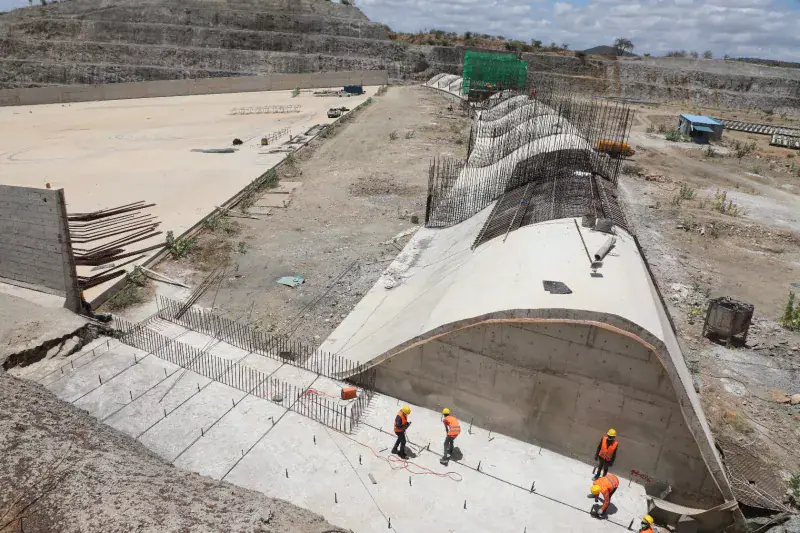
The Thwake Multipurpose Dam project in Kenya is nearing completion, with 94.2% of the work done, according to Principal Secretary for Water and Sanitation Julius Korir. The project, located at the confluence of the Athi and Thwake rivers along the Makueni-Kitui border, aims to address water scarcity, improve agricultural productivity, support energy generation, and strengthen resilience against drought and flooding. Residents of Makueni, Kitui, and Machakos counties are rallying behind the project, citing its potential to unlock the agricultural and economic potential of the Lower Eastern region.
Despite the progress, controversy surrounds the project, with some households alleging that construction-related blasting damaged their homes. Residents from villages in Mavindini Ward, organised under the Thwake Dam Blasting-Affected Community Committee, sought an independent review by the African Development Bank (AfDB) in August 2026. They claimed that blasting had damaged houses and community facilities, with some alleging that their properties had been left out of assessments and compensation. However, most residents have defended the project, insisting that officials assessed and compensated affected households and that isolated grievances should not undermine the investment.
The government has secured additional financing from the AfDB after the project experienced cash-flow constraints. Water and Sanitation PS Julius Korir reaffirmed the government's commitment to completing the dam during a stakeholder engagement visit to Mavindini in October. Korir said that residents with unresolved grievances should use established procedures rather than allow disputes to undermine the project. The AfDB team, led by Nancy Ogal, interacted with local communities, checked standards of workmanship, and overall progress of the project, reporting that it is 94% complete.
An independent assessment of properties potentially affected by blasting was conducted by Agile Consulting, which assessed affected households within a two-kilometre radius and submitted a report to the project implementation team. The consultant found that a huge percentage of the 330 households covered were satisfied with the assessment. Ben Mwongela, a director at the consulting agency, detailed parameters observed during the assessment, including reviewing blasting records, vibration data, and compliance with regulatory standards.
The dispute highlights a difficult balancing act facing the government: delivering major infrastructure while ensuring that communities bearing the immediate costs of construction are treated fairly. Martin Kimeu, a resident of Wote, said the dam represents a major opportunity to reverse decades of underinvestment in water infrastructure and improve agricultural production in the region. “Ukambani is fertile. Water has been the biggest impediment to the realization of our agricultural potential. Thwake Dam water is the clear solution to this,” he said.
Jacob Mwanzia, a resident of Madangi Village, questioned the motives of some individuals campaigning against the project, arguing that their grievances should not be allowed to overshadow its wider benefits. Mariam Mwikali, a resident, said assessments had been conducted on affected properties and that residents had been given an opportunity to raise concerns. The AfDB team asked the few disgruntled households to follow due process to resolve any pending matters.
The Thwake Dam project is one of the most significant water infrastructure investments in the Lower Eastern region, with a projected completion date in April 2027. The project is expected to benefit millions of people, and residents are urging politicians and activists to keep off and allow the project to be completed. The government's position is that residents with unresolved grievances should use established procedures rather than allow disputes to undermine the project.
Key points
- The Thwake Dam project is 94.2% complete, with the remaining works being accelerated to allow water impoundment to begin in April 2027.
- Residents are defending the project as a transformative regional development project, citing its potential to unlock the agricultural and economic potential of the Lower Eastern region.
- The project has experienced controversy over compensation claims, with some households alleging that construction-related blasting damaged their homes.