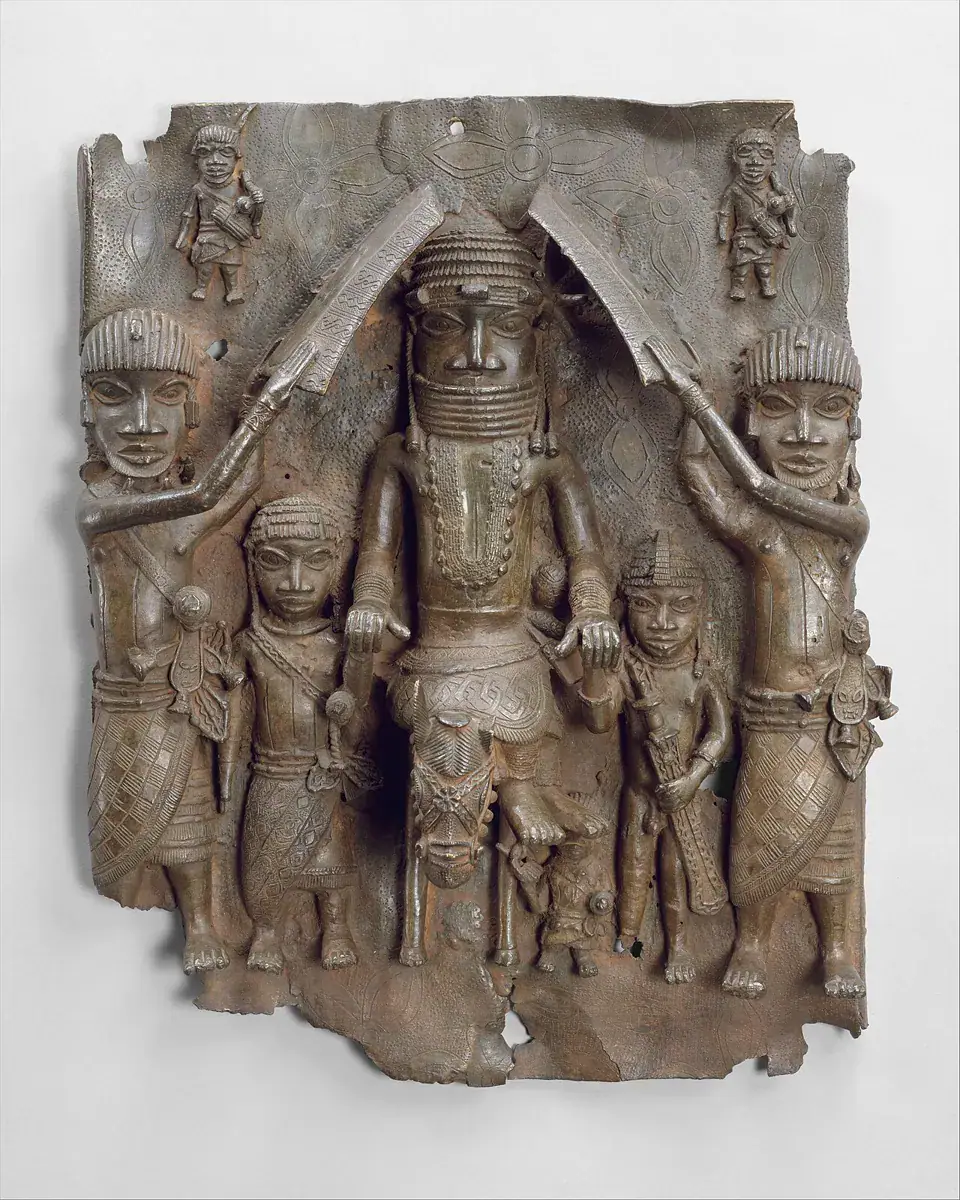
The Benin Kingdom has been without a king for three years following the death of Oba Olua. According to Benin tradition, the senior chiefs attempted to govern the kingdom without appointing another monarch. However, this arrangement lasted only approximately three years before political disorder prompted an extraordinary decision: the recall of Prince Okpame, who had previously been banished over the reported killing of a royal heir. His return is remembered through a story involving a court jester, two mice, and a lesson that persuaded the exiled prince to come home.
Prince Okpame had already refused an invitation to return to Benin when the chiefs sent him an unusual gift. Inside a leather box were two mice, one accustomed to living in a house and the other belonging to the bush. The messenger was Akaromwon, also called Oden, a royal jester. When Okpame opened the box, the house mouse ran towards the dwelling and climbed onto its roof, while the bush mouse escaped in the opposite direction, disappearing into the vegetation. Okpame interpreted the animals' movements as a reminder that every creature had a place to which it belonged.
Historian Jacob Egharevba preserved this episode in A Short History of Benin, which concerns the final days of Okpame's exile, immediately before the prince returned to become Oba Ozolua, traditionally dated to around 1481. The story is not supported by a contemporary written account of the encounter and belongs to Benin's oral historical tradition. Later historians have recorded a more elaborate version involving a third animal. This event marked the beginning of Okpame's return to Benin, where he would eventually ascend to the throne.
The succession crisis began after Oba Ewuare's death, which led to a series of disputes over who should govern Benin. Ewuare's son Ezoti succeeded him but died shortly afterwards. Ezoti's son Owere was nominated as the next ruler, only to be killed in an incident attributed in Benin tradition to his uncle Okpame. Okpame was banished, while another son of Ewuare, Olua, eventually accepted the kingship. Olua's accession did not immediately eliminate the danger associated with his brother.
Robert Arthur Sargent, in his 1984 doctoral dissertation, Politics and Economics in the Benue Basin, c. 1300–1700, records that Olua stationed his youngest son at Eho to prevent Okpame from approaching the capital by force. Okpame remained at Ora, away from the Benin court. Olua's eldest son, Iginua, also occupies an important place in the succession accounts. Sargent identifies him as a holder of the Edaiken title, which designated the crown prince.
After Olua died, the problem of succession returned, and the available traditions do not identify another prince who was able to command sufficient acceptance to ascend the throne immediately. The Uzama Nihinron, the senior chiefs traditionally involved in selecting and installing Benin's Obas, then assumed responsibility for governing. The arrangement became known in historical accounts as Benin's republican government. This experiment in governance was an attempt by the chiefs to exercise authority without a reigning Oba.
The three-year republican government in Benin involved the Uzama Nihinron, the senior chiefs, exercising governmental authority without a monarch. According to Sargent, the Oliha served as the president of the Uzama Nihinron. This arrangement increased the political standing of the Uzama while attempting to reduce, or perhaps even dispense with, the office of Oba. The experiment ultimately led to the return of Prince Okpame, who would become Oba Ozolua.
Key points
- The Benin Kingdom faced a succession crisis after Oba Olua's death, leading to a three-year republican government.
- The return of Prince Okpame was facilitated by a story involving a court jester, two mice, and a lesson about belonging.
- The experiment in governance by the Uzama Nihinron ultimately led to the return of Prince Okpame, who became Oba Ozolua.