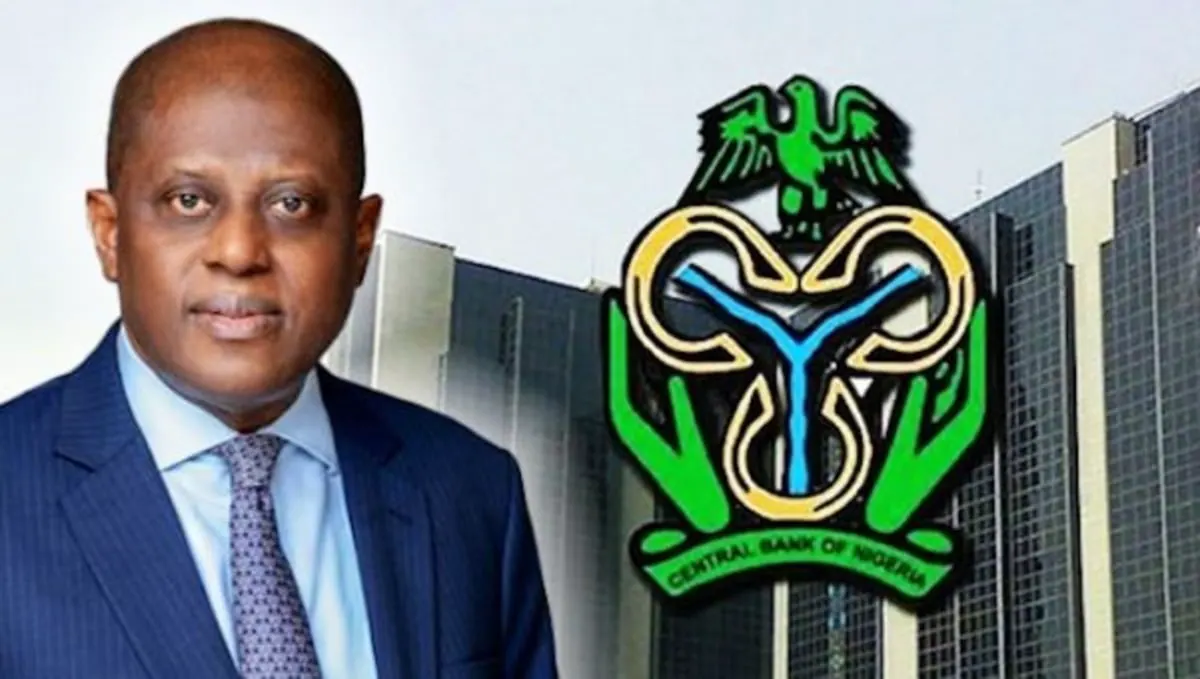
Since assuming office as Governor of the Central Bank of Nigeria on 22 September 2023, Olayemi Cardoso has led the institution through significant reforms. The mandate was clear: restore credibility, rebuild buffers, strengthen the banking system, deepen market transparency, and modernise the payments and financial infrastructure. These interventions have reshaped Nigeria's monetary and financial landscape, with measurable results. External reserves have climbed above $50 billion for the first time in roughly 17 years. Payments vision documents, agent-banking rules, cybersecurity tools, and foreign-exchange market reforms have been rolled out.
The reforms have drawn public commendation from President Bola Tinubu and the Central Bank of the Year Award from Central Banking in London. Renowned economist and CEO of Financial Derivatives Company, Mr. Bismarck Rewane, attributed Nigeria's turnaround to the bold monetary policy reforms and transparency introduced by the CBN under Cardoso. The currency has strengthened due to the discipline in the monetary policy framework, explicit inflation targeting, and a more transparent foreign exchange market. In recent months, the naira has shown remarkable resilience, appreciating against major global currencies.
As of June 2025, inflation dropped to 22.22%, a significant improvement from the spikes seen throughout 2023 and early 2024. Mr. Rewane credits this progress to a consistent and coherent macroeconomic strategy, particularly in tightening fiscal leaks and restoring investor confidence. The banking-sector recapitalisation was the most capital-intensive reform, completed by 31 March 2026, with 33 banks meeting the revised minimum capital requirements after raising roughly N4.65 trillion. About 72.55 percent of that capital was sourced domestically, reducing reliance on external funding.
The CBN introduced a Domestic Systemically Important Bank (DSIB) succession framework in September 2025, requiring orderly, pre-approved succession planning for chief executives of banks whose failure would pose systemic risk. The measure closes a governance gap that had long worried supervisors and rating agencies. In February 2026, the CBN approved a Non-Interest Banking Window for the Bank of Industry, expanding Sharia-compliant financing options for enterprises. These steps have thickened the capital and governance buffers of the banking system.
The Centre for the Promotion of Private Enterprise (CPPE) praised Cardoso's transformative leadership, highlighting significant gains in transparency, credibility, and financial system stability. The CBN has addressed longstanding challenges, including foreign exchange market distortions, weak corporate governance, and excessive monetary financing. Successive moves toward greater transparency, liberalisation, and market-driven pricing have characterised Cardoso's tenure. On 15 May 2026, the CBN released the fourth edition of the Foreign Exchange Manual, codifying operational rules to strengthen credibility and efficiency.
Parallel reforms in the Bureau de Change (BDC) segment gave licensed BDCs structured access to foreign exchange through authorised dealer banks. A dedicated FX BDC Purchase Tracker was introduced to provide real-time oversight, improving compliance and reducing opportunities for opacity. Further liberalisation measures arrived in late March 2026, including new naira-settlement requirements on International Money Transfer Operators and permitting International Oil Companies to repatriate 100 percent of their export proceeds through authorised dealer banks.
The CBN's comprehensive strategic reset of Nigeria's payments infrastructure has addressed concerns about agent reliability, fraud, and interoperability. The Payments System Vision 2028 Project Committee was inaugurated on September 9, 2025, culminating in the formal launch of Payments System Vision 2028 on June 1, 2026. The new roadmap aims to transform the payments ecosystem, building on high mobile-money and instant-payment volumes.
Key points
- The CBN's reforms under Cardoso have led to a more transparent and stable financial system.
- The banking sector has seen significant improvements in capital ratios and governance buffers.
- The foreign exchange market has become more transparent and accessible, with a clearer regulatory framework.