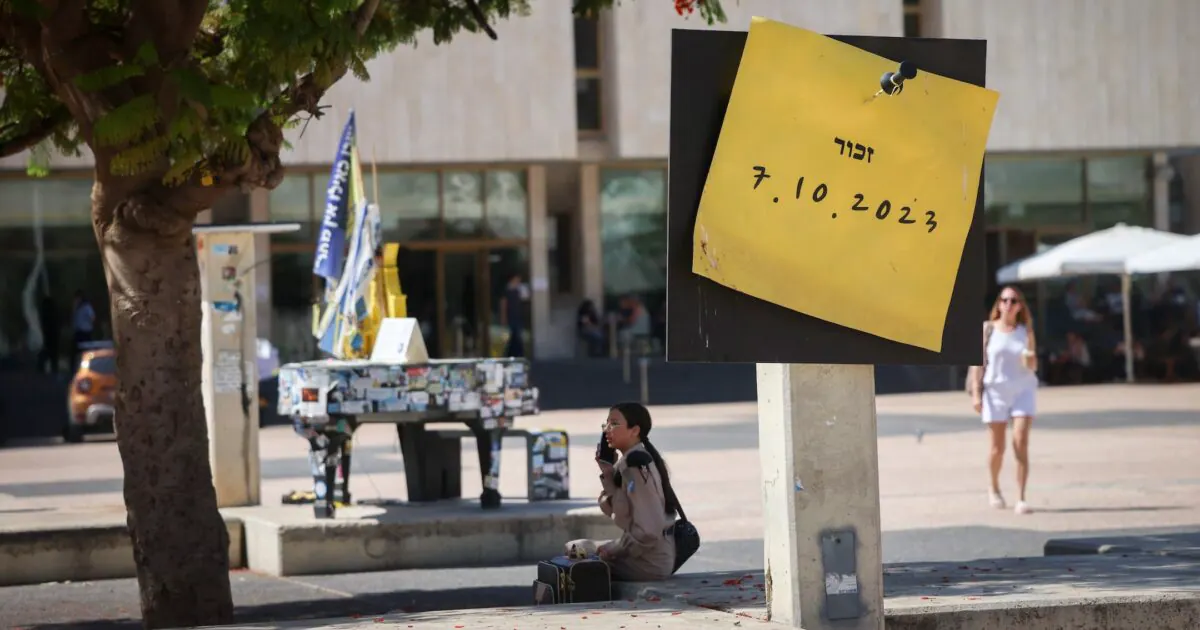
In Tel Aviv's Hostage Square, few remnants remain of the national crisis that unfolded after the 7 October Hamas attacks. The plaza, once filled with "Bring Them Home" signs and hostage posters, now bears only a few yellow ribbons and a sign reading "Remember 7.10.23". The square hosted demonstrations, press conferences, and a replica of a Hamas tunnel, but has since returned to near-normalcy. Despite this, many Israelis continue to grapple with the trauma of that day.
A recent Channel 12 TV poll revealed that 74% of respondents fear another large-scale attack, while 66% want a state commission of inquiry into the 7 October events. An Israel Democracy Institute survey found that 68% of Jewish Israelis and 32% of Arab Israelis consider the attack a "central factor" in deciding which party to vote for. These statistics indicate that the trauma and anxiety persist, influencing daily life and politics.
For Isaac Badra, a 33-year-old realtor, the trauma of 7 October lingers. He recalled the air-raid sirens, reserve soldiers rushing to base, and frantic phone calls with his wife's family near the Gaza border. Even now, he jumps at noises outside and doubts whether his friends abroad have his back. The experience has left a lasting impact on his life.
Roni Shoval, a defence industry worker from northern Israel, described the attacks as "a modern Holocaust for Israel". He still does reserve duty, but doesn't want his son to follow in his footsteps. Shoval avoids visiting the Nova memorial, where Hamas murdered 378 people, and says the trauma "is still inside me". His story echoes that of many Israelis struggling to cope.
Yael Meyer, a 24-year-old Tel Aviv University student, felt a sense of helplessness after the attack. She questioned the government's ability to protect its citizens and felt a sense of unease. Her friend Talia Zecler, also 24, marvels at the bravery and solidarity of ordinary Israelis in the aftermath, but feels like she's living in an endless war.
For S, a 19-year-old IDF soldier, the trauma of 7 October was "minuscule" compared to those directly affected. However, she still worries about potential wars with Iran and hopes for a national investigation into the events. As the country prepares to vote, she plans to channel her hopes and dreams in the voting booth.
As Israel prepares to vote on 27 October, the trauma of 7 October remains a significant factor. With many still grappling with anxiety and fear, the nation seeks to move forward while acknowledging its past. The legacy of Hostage Square serves as a reminder of the events that shaped the nation.
Key points
- 74% of Israelis fear another large-scale attack
- The 7 October attack influences 68% of Jewish Israelis' voting decisions
- Israelis reflect on trauma, solidarity, and the nation's progress three years on