The Palestinian territory, recognised by 158 of the UN's 193 member states, comprises the West Bank, East Jerusalem, and the Gaza Strip, which the International Court of Justice regards as a single territorial unit. However, no such territorial continuity exists. The 1948-1949 Arab-Israeli war saw Israel control around 6,000 square kilometres more than the territory allocated to a Jewish state under the UN partition plan.
Following the 1967 war, Israel occupied Gaza and the West Bank, including East Jerusalem. Since then, land confiscation, settlement construction, and expropriation have progressively altered the geography of the Palestinian territories. The Palestinian Authority President Mahmoud Abbas described the situation as a "malicious colonial project aimed at making life more difficult for Palestinians in their homeland and forcing them to leave."
Historian Thomas Vescovi specialising in Israel and Palestine, says that if Israel is regarded as a democratic and liberal state, a comprehensive peace can be achieved through negotiations. However, if Israel is considered a colonial state, no form of negotiation can lead to peace. Since the 7 October attacks, Vescovi argues that this process has accelerated dramatically, with the war reviving the issue of Israeli settlements in Gaza.
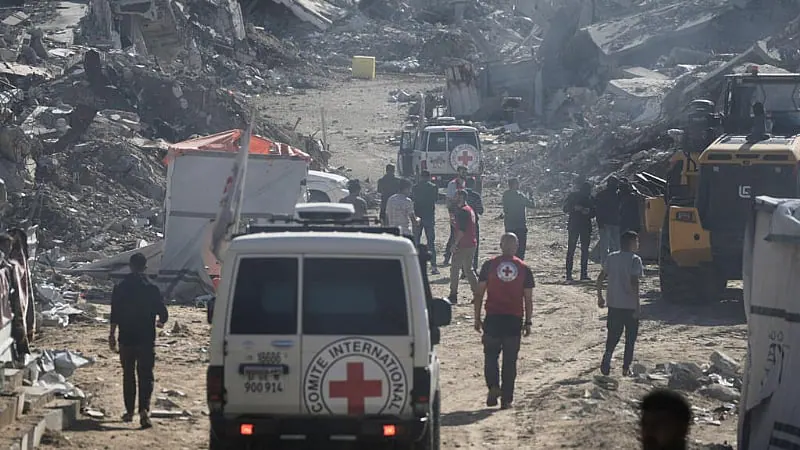
The Gaza Strip has been transformed physically and demographically, with over 74,000 Palestinians killed and more than 90 percent of Gaza's housing stock damaged or destroyed. By May 2026, Israeli forces controlled around 60 percent of the enclave, and most of Gaza's inhabitants are now concentrated in roughly a third of the area.
The occupied West Bank has seen a sharp expansion of Israeli settlements, alongside increasing settler violence, raids, and displacement of Palestinians. More than 1,000 Palestinians have been killed by Israeli forces or settlers in the West Bank since 7 October, 2023, while around 40,000 people have been forcibly displaced, according to UN figures.
Settlement construction in the West Bank reached a record level in 2025, with 146 settlements established over the past two years. Some 750,000 Israelis now live in settlements across the occupied territories, alongside hundreds of smaller outposts. The policy is pushing Israel towards "an undeclared annexation of the Palestinian territories," according to Peace Now.
The planned E1 settlement project, between Jerusalem and Ma'ale Adumim, is considered especially significant, as critics say it would effectively cut the West Bank in two and make a contiguous Palestinian state far harder to establish. European governments have repeatedly described E1 as a red line.
Key points
- The war has transformed Gaza physically and demographically, with over 74,000 Palestinians killed and 90 percent of housing stock damaged or destroyed.
- Israeli settlements in the West Bank have expanded sharply, with 146 new settlements established over the past two years.
- The planned E1 settlement project could effectively cut the West Bank in two, making a contiguous Palestinian state harder to establish.