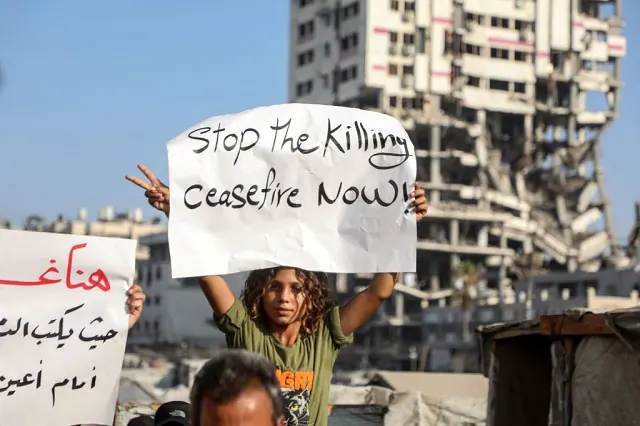
The Gaza conflict has marked three years since it began on October 7, 2023, with the coastal enclave left in ruins and tens of thousands of people killed. A ceasefire was reached in October 2025, but the fundamental deadlock between Palestinian and Israeli demands remains unresolved. Analysts attribute the prolonged conflict to irreconcilable differences between the two sides, coupled with the United States' perceived bias.
The conflict began with Hamas's "Al-Aqsa Flood" assault on October 7, 2023, which saw thousands of rockets fired from Gaza and fighters infiltrating southern Israel, resulting in around 1,200 deaths and 250 hostages taken. Israel responded with a military campaign, launching "Operation Iron Swords," which involved airstrikes and a ground offensive that evolved into a prolonged and devastating conflict. According to Gaza health authorities, over 74,000 people have been killed in the enclave since October 7, 2023.
The conflict has had far-reaching repercussions across the region, with instability spilling over into Lebanon, Syria, Iran, and the Red Sea. The war has also led to a significant increase in violence and the erosion of Palestinian territory in the West Bank. UN data shows that as of August 10, some 3,800 Palestinians had been displaced by settler violence, house demolitions, and evictions this year. The UN has recorded over 1,430 settler-related incidents this year, affecting about 260 Palestinian communities.
Analysts attribute the prolonged deadlock in Gaza to irreconcilable differences between Israel and Hamas. Israel insists on Hamas's complete disarmament before any full withdrawal, while Hamas demands an end to Israeli military operations and a total Israeli retreat before discussing weapons. The U.S.-proposed framework, including the so-called "Board of Peace," the stabilization force, and the transitional committee, remains largely on paper, with disarmament and Israeli withdrawal still pending.
The United States plays a deeply contradictory role in the conflict, observers say. Washington's role as chief mediator is undermined by its military aid and diplomatic backing for Israel, raising questions about its impartiality and allowing the conflict to persist. The absence of a genuine multilateral mechanism, and the reliance on unilateral American hegemony, renders any settlement fragile.
The conflict has profoundly reshaped the geopolitical landscape across the region. The balance of power between the U.S.-Israel alliance and the Iran-led resistance front, including Hamas, the Houthis, and Lebanon's Hezbollah, has shifted. The Palestinian cause may remain a central conflict shaping the region, with true and lasting peace impossible without fully implementing the two-state solution and restoring legitimate Palestinian rights.
Regional stability will depend on the ability of regional and international powers to contain interconnected tensions in Iran, Yemen, the Red Sea, and the Gulf and establish broader security and political arrangements. The prevailing view is that lasting peace remains impossible without a genuine settlement that addresses the political roots of the conflict.
Key points
- The Gaza conflict has resulted in over 74,000 deaths and widespread destruction in the enclave.
- The conflict has had far-reaching repercussions across the region, with instability spilling over into Lebanon, Syria, Iran, and the Red Sea.
- The United States' perceived bias and military aid to Israel have undermined its role as a chief mediator in the conflict.