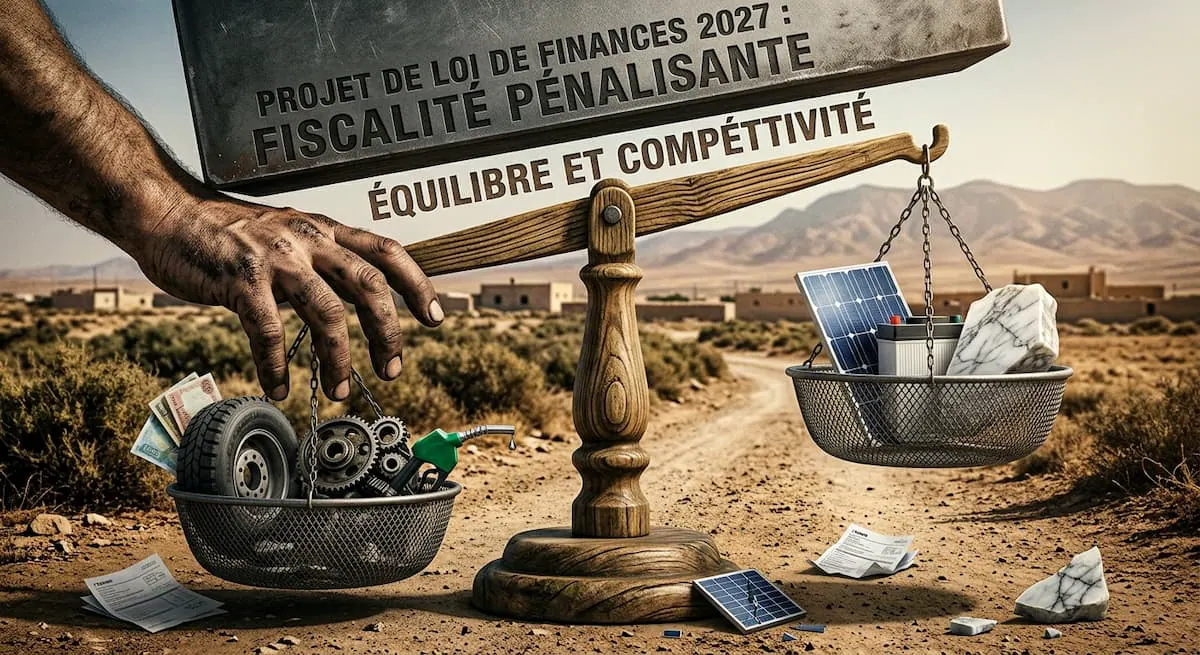
As the Tunisian government prepares to introduce its 2027 finance bill, three key sectors of the economy are speaking out about the need for fiscal reform. The sectors, which include transport and logistics, renewable energy, and marble extraction and processing, claim that the current tax system is unfair and is putting their very survival at risk. They are calling for changes to the tax code to make it more equitable and to reduce the burden on their industries.
The transport and logistics sector, represented by the National Grouping of Transport and Logistics at the Confederation of Tunisian Enterprises (CONECT), is seeking a reduction in the value-added tax (VAT) rate on transport services and the purchase of spare parts, tires, and fuel. Currently, these services are taxed at 19%, which is 12 points higher than the rate for other sectors. The group is also calling for the right to import vehicles and trucks directly from abroad, without going through local concessionaires, and for the same tax exemptions as the tourism sector.
The renewable energy sector, represented by the Professional Grouping of Renewable Energies at CONECT, is also seeking relief from high taxes. The sector's president, Sadok Besbes, warns that Tunisia's energy dependence has reached a critical threshold and threatens the country's sovereignty. He is calling for the elimination of customs duties and a reduction in the VAT rate on photovoltaic equipment and battery storage systems, which would help to reduce the costs of installing renewable energy systems and support small and medium-sized enterprises.
The marble extraction and processing sector, which employs over 50,000 people, is facing an existential threat due to the current tax regime, according to Ali Drira, a member of the National Chamber of Marble Extractors and Processors. The sector is seeking an end to what it sees as unfair and arbitrary treatment, including high taxes and customs duties that make it difficult for companies to compete. The sector's representatives argue that the industry is not just an economic issue but also a social one, as it provides a livelihood for thousands of families.
The three sectors are united in their call for a more equitable tax system that will allow them to compete and survive in a challenging economic environment. They argue that the current system is stifling their competitiveness and threatening their very existence. The government is expected to consider their proposals as it prepares the 2027 finance bill.
The transport and logistics sector is also seeking the right to transfer funds abroad to cover the costs of operating its vehicles, including fuel, maintenance, and tolls. The sector's representatives argue that this is essential for the survival of the industry, as it allows companies to operate efficiently and effectively.
The three sectors' calls for fiscal relief are part of a broader debate about the need for economic reform in Tunisia. The government is facing pressure to address the country's economic challenges, including a large trade deficit and a shortage of foreign currency. The sectors' proposals are seen as a key part of this effort, as they seek to create a more competitive and sustainable economy.
Key points
- Three sectors in Tunisia's economy are calling for fiscal relief, citing a tax system that is stifling their competitiveness and threatening their survival.