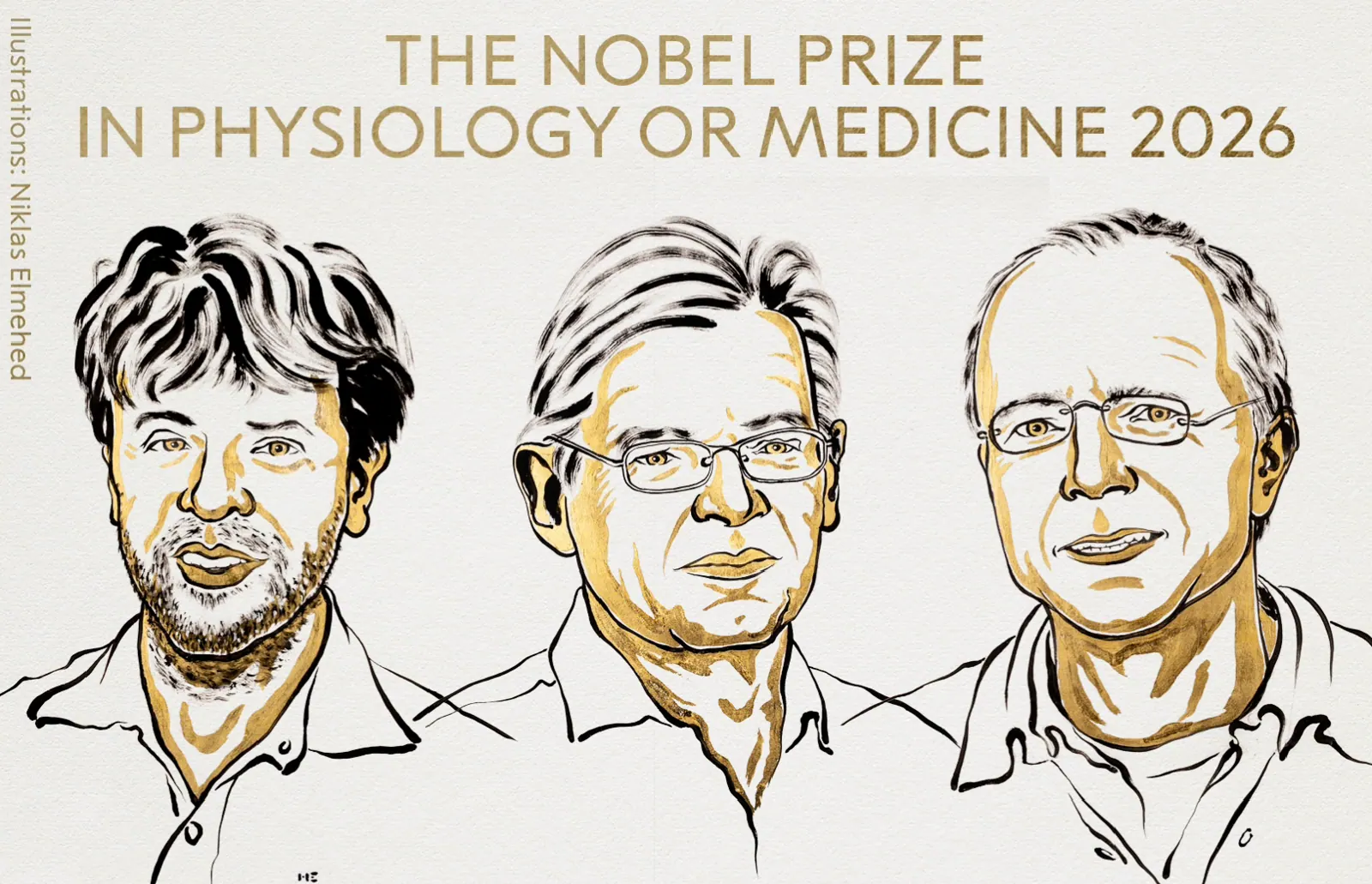
The 2026 Nobel Prize in Medicine has been awarded to three scientists, Karl Deisseroth, Peter Hegemann, and Georg Nagel, for their revolutionary work on optogenetics. This technique allows researchers to use light to switch specific nerve cells on and off, transforming the ability to control and study brain cells. The Nobel Committee announced the award on Monday, recognising the trio's discoveries that paved the way for this groundbreaking technology.
The Nobel Committee highlighted that the work of Deisseroth, Hegemann, and Nagel has given scientists an unprecedented tool for investigating how the brain works. This includes understanding complex neural processes behind movement, emotions, memory, and behaviour. At the heart of the breakthrough are light-sensitive proteins known as light-gated ion channels. These proteins play a crucial role in the development of optogenetics.
Hegemann and Nagel were instrumental in discovering and characterising light-gated ion channels. Their work laid the foundation for Deisseroth, who later helped transform the findings into a powerful method for controlling the activity of selected neurons using pulses of light. This breakthrough has opened a new frontier in neuroscience, enabling researchers to target particular groups of neurons with remarkable precision.
The development of optogenetics has revolutionised the field of neuroscience. Instead of relying mainly on drugs or electrical stimulation, researchers can now investigate the role individual cells and neural circuits play in both normal brain function and disease. This has significant implications for the study of neurological and psychiatric conditions, including disorders in which abnormal brain-cell activity plays a role.
Optogenetics has become an important research tool in the study of various neurological and psychiatric conditions. The technique allows researchers to probe the brain with extraordinary precision, enabling a deeper understanding of the complex organs in the human body. The Nobel recognition marks not just an achievement in laboratory science but a major step in humanity's continuing effort to understand the brain.
The award places Deisseroth, Hegemann, and Nagel among the scientists whose discoveries have fundamentally changed the direction of modern medical research. Their work demonstrates how a seemingly basic discovery about how cells respond to light can ultimately produce a powerful technology capable of probing the brain with extraordinary precision.
The 2026 Nobel Prize in Medicine is a testament to the impact of the trio's work on the scientific community. Their groundbreaking research has paved the way for further studies on the brain and has the potential to lead to new treatments for various neurological and psychiatric conditions. The Nobel Committee's decision recognises the significance of their contributions to the field of medicine.
Key points
- The three scientists were honoured for discoveries that paved the way for optogenetics, a revolutionary technique that allows researchers to use light to switch specific nerve cells on and off.
- The work of Deisseroth, Hegemann, and Nagel has given scientists an unprecedented tool for investigating how the brain works, including complex neural processes behind movement, emotions, memory, and behaviour.
- Optogenetics has become an important research tool in the study of neurological and psychiatric conditions, including disorders in which abnormal brain-cell activity plays a role.