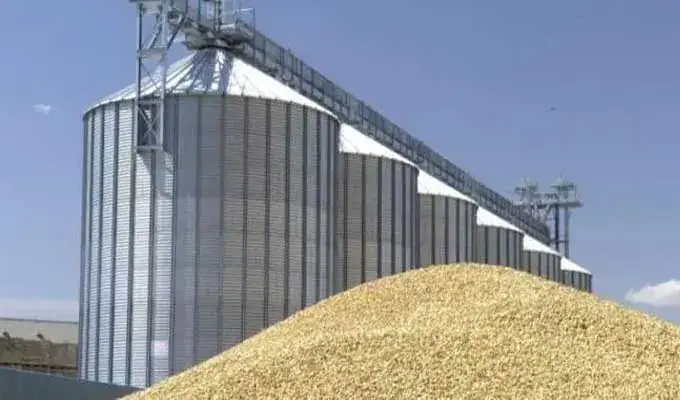
The Organisation for Economic Co-operation and Development (OECD) released a report on November 23, 2026, stating that export restrictions on cereals have moderately increased. The report covers the period from July 2025 to June 2026. Russia, India, and Argentina account for approximately 75% of the restrictions in place during this time. This concentration of restrictions maintains uncertainty in international agricultural markets.
The OECD report highlights that after a significant decline, export restrictions on major food crops have seen a moderate rebound. However, their levels remain lower than the peaks observed in 2024. The new measures implemented between July 2025 and June 2026 are dominated by taxes, which account for 46% of the restrictions. Quotas and licensing obligations make up 39% and 12%, respectively.
The report identifies wheat as the most affected crop, with 36% of the new restrictions, followed by rice (26%), maize (21%), and soybeans (14%). These instruments have different effects: taxes increase export costs, while quotas limit authorized volumes. All can alter the supply conditions for foreign buyers. The policies of Russia, India, and Argentina differ in their approach to export restrictions.
Russia and India primarily use quotas, which account for 56% and 47% of their active restrictions, respectively. In contrast, Argentina exclusively uses export taxes. Some measures remain in effect without a specified expiration date. The OECD reports that 53% of rice restrictions and 42% of wheat restrictions have no clear end date. This situation can lead to redirected demand and increased commercial tensions.
The impact of these policies on prices depends on the volumes affected and global availability. The number of restrictions alone is not enough to measure this impact. For Tunisia, a cereal importer, the issue is the predictability of supplies and purchase costs. However, no specific quantified effect on Tunisian prices can be deduced from this inventory.
The OECD's findings emphasize the significance of monitoring export restrictions and their potential effects on global food markets. The concentration of restrictions in a few countries can have far-reaching consequences. The report encourages stakeholders to consider the implications of these policies on international trade and food security.
The report's data provides valuable insights for countries reliant on cereal imports. Understanding the export restrictions and policies of major suppliers can help importing countries prepare for potential market fluctuations. As the global food market continues to evolve, the OECD's report serves as a crucial resource for analyzing trends and developing strategies to address emerging challenges.
Key points
- 75% of cereal export restrictions are concentrated in Russia, India, and Argentina.
- Taxes account for 46% of new export restrictions, while quotas make up 39%.
- The restrictions can lead to redirected demand and increased commercial tensions.