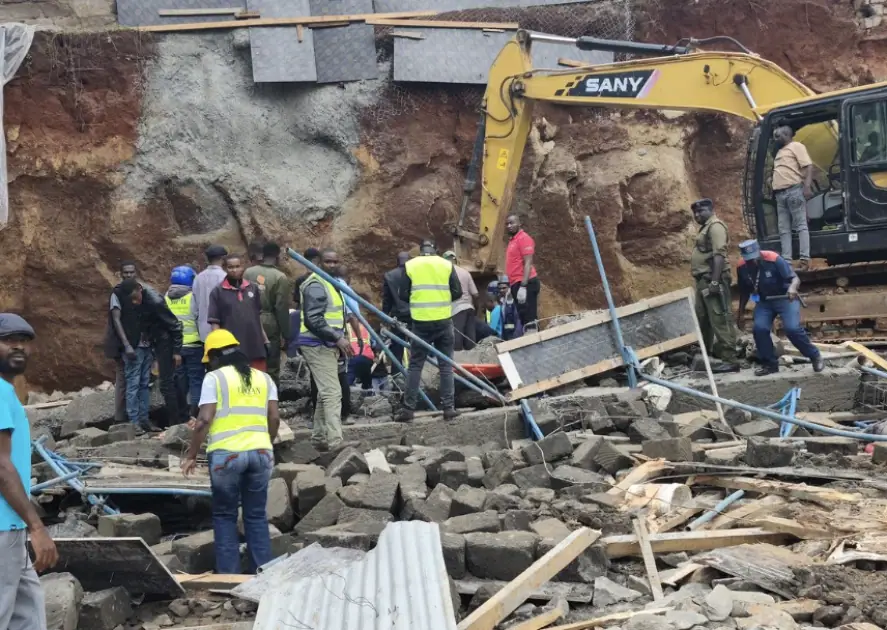
In a recent spate of tragic events, three building collapses in Kenya have claimed 18 lives, raising serious concerns about building safety and regulatory oversight. The most recent incident occurred on Saturday, November 13, 2026, when a wall collapsed in Nairobi's Riverside area, killing four people. This incident follows two previous building collapses, one of which occurred in Eastleigh, claiming eight lives, and another in Syokimau, where six construction workers lost their lives.
The Nairobi County Disaster Management Office has defended the county's record, stating that it is fulfilling its mandate to ensure building safety. Chief Officer Bramwell Simiyu claimed that once a building collapses, the responsibility for investigating and establishing culpability rests with investigative agencies, such as the DCI. However, with 23 days having passed since the Eastleigh building collapse, no arrests have been made in connection with the tragedy, raising concerns about the pace of accountability.
Nairobi Governor Johnson Sakaja has shifted the blame to professionals, accusing them of negligence and disregarding building standards. He acknowledged that the county had issued construction approvals but faulted some developers for using substandard materials. The Governor's comments have sparked a blame game, with various stakeholders pointing fingers at each other. Meanwhile, the National Disaster Management Unit is expected to release a report on the recent building collapses, which may shed more light on the causes of these tragedies.
The county government maintains that proper procedures are followed in approving building plans and that investigations are ongoing. However, questions persist about whether necessary safeguards were ignored, who failed in their duty, and who will answer for the 18 lives lost. For the families left behind, the search for answers continues, but accountability remains elusive. The incidents have also raised concerns about the systemic challenges behind the recurring tragedies and the need for decisive action to prevent further incidents.
Chief Officer Simiyu has stated that it is the county's responsibility to ensure that such incidents do not happen again. The county is assessing the systemic challenges behind the recurring tragedies and taking steps to prevent further incidents. However, the wait for accountability is growing longer, and the public is demanding answers about who dropped the ball and why oversight failed.
The building collapses have also raised questions about the role of contractors, county and national government agencies, and regulatory bodies in ensuring building safety. The incidents have highlighted the need for greater accountability and more effective oversight to prevent such tragedies from occurring in the future. As the investigation into the recent collapses continues, stakeholders are calling for more decisive action to be taken to address the systemic challenges behind these incidents.
As the nation grapples with the aftermath of these tragedies, the focus is on finding solutions to prevent similar incidents from occurring in the future. The government, contractors, and regulatory bodies must work together to ensure that buildings are safe and that those responsible for ensuring safety are held accountable. The families of the victims deserve answers, and the public demands greater accountability and action to prevent such tragedies from happening again.
Key points
- 18 people died in three building collapses in Kenya in less than a month.
- The incidents have raised concerns about building safety and regulatory oversight.
- The blame game continues, with various stakeholders pointing fingers at each other.