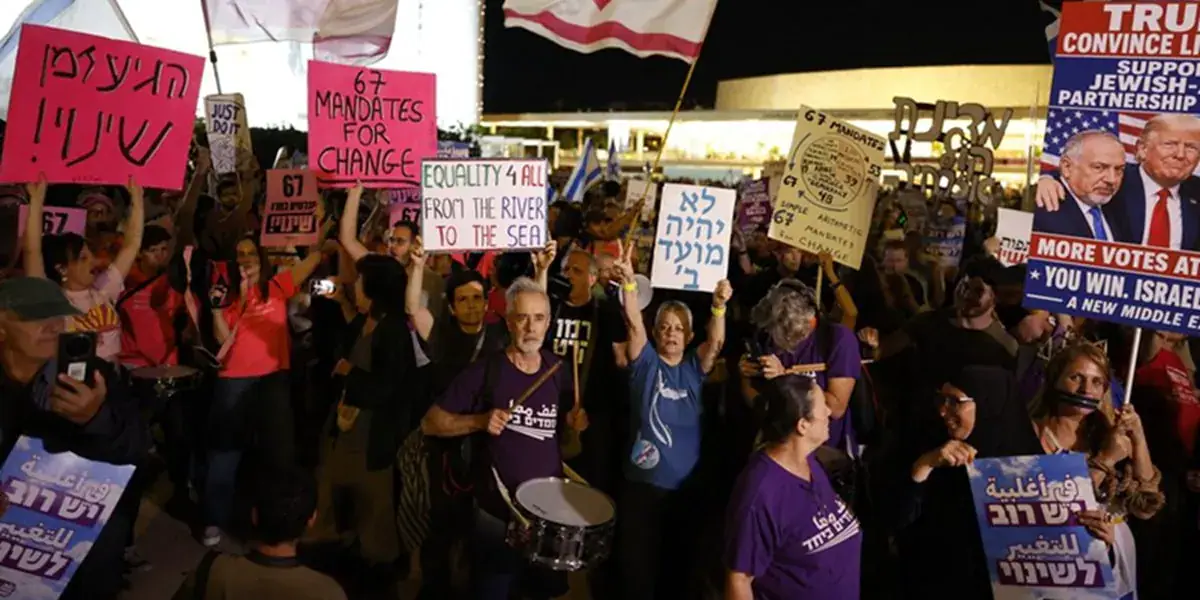
On October 31, a significant demonstration took place in Tel Aviv, with thousands of people calling for Israel's opposition to form an alliance with Arab parties to oust Prime Minister Benjamin Netanyahu. The rally comes after the October 27 elections, which left neither of the two main blocs with a majority, giving Arab lawmakers a crucial role in forming a new government. According to Al Jazeera, citing AFP reports, protesters are urging Gadi Eisenkot, the main rival of Netanyahu, to consider cooperation with Arab parties, an option he had previously ruled out.
The recent elections resulted in 53 seats for Netanyahu's bloc and 48 for the opposition led by Eisenkot. The Arab lists secured 19 seats, which could potentially allow the opposition to surpass the absolute majority of 61 seats in the 120-member Knesset. If an agreement is reached, the opposition could theoretically secure 67 seats. However, several opposition leaders have expressed reluctance to rely on the support of Arab parties, citing concerns about their stance on key issues.
The Arab parties, which have gained significant ground in the elections, are now in a position to influence the formation of a new government. According to the Central Election Commission, nearly 840,000 voters supported the Raam and United List parties, representing a 64% increase compared to the 2022 elections. These parties, led by Mansour Abbas and Youssef Jabareen, respectively, are now considering their options for potential cooperation with the opposition.
The modalities of a potential alliance between the opposition and Arab parties remain to be negotiated. Mansour Abbas has expressed willingness to participate in a government, as Raam did in the 2021-2022 coalition. In contrast, Youssef Jabareen is considering providing parliamentary support without participating in the government, citing the ongoing conflict in Gaza as a factor. Eisenkot has reiterated his demands for recognition of Israel as a Jewish, democratic, and liberal state, as well as the designation of Hamas as a terrorist organization.
The rally in Tel Aviv took place amidst a tense climate, with Netanyahu accusing the Arab parties of "stealing" the elections and receiving Qatari funding. Doha has rejected these allegations, denouncing a disinformation campaign. The protesters are calling on the opposition to translate the election results into a political agreement. To achieve this, Eisenkot will need to secure the support of his allies and define the terms of potential cooperation with Arab lawmakers.
The potential alliance between the opposition and Arab parties has sparked controversy, with Netanyahu's supporters organizing a counter-rally to denounce the prospect of a government associated with those they consider "terrorists." The outcome of the negotiations remains uncertain, with several factors, including the stance of Hamas and the Israeli government's policies, likely to influence the decision-making process.
The demonstration in Tel Aviv reflects the growing pressure on Eisenkot and the opposition to form a government that can command a majority in the Knesset. With the Arab parties holding the balance of power, their support will be crucial in determining the next steps in Israeli politics. The situation remains fluid, with multiple scenarios possible, including a government led by Netanyahu or a new coalition with Arab party support.
Key points
- Thousands of people rallied in Tel Aviv to urge Israel's opposition to form an alliance with Arab parties to replace Prime Minister Benjamin Netanyahu.
- The Arab parties secured 19 seats in the recent elections, which could potentially allow the opposition to surpass the absolute majority in the Knesset.
- The opposition leader, Gadi Eisenkot, faces pressure to consider cooperation with Arab parties, an option he had previously ruled out.