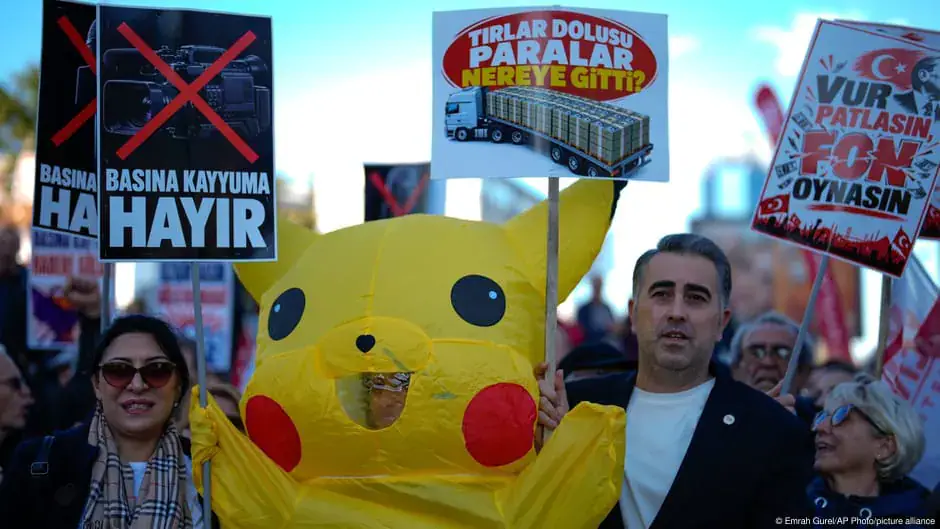
Thousands of people took to the streets of Istanbul on Sunday to protest against the closure of several media outlets linked to opposition groups in Turkey. The demonstrators marched several kilometres through the city, carrying a large banner that read, “We want freedom of thought, freedom of the press, and freedom for journalists.” They also displayed placards stating, “The press cannot be silenced.” The protests were called by Turkey’s main opposition party, Yeni Parti.
The protests were sparked by a police raid on Sozcu TV, one of the last remaining opposition television channels. Senior staff members were arrested, and a government-appointed trustee was installed, placing the station under compulsory administration. This incident marks the third such takeover in a year, following similar actions against Tele1, Halk TV, and the digital news website T24. The takeovers have been widely criticized as an attempt to silence opposition voices in the media.
Media freedom has increasingly come under attack in Turkey over the past decade, facing legal action, digital censorship, and accusations of spreading “fake news.” In the past two months alone, several journalists were arrested for covering a major investment fund scandal, with at least two remaining in pretrial detention. According to the media rights group MLSA, there are currently twenty-five journalists imprisoned in Turkey.
The protests were supported by journalists and media freedom advocates, who see the closure of opposition media outlets as a threat to press freedom. Timur Soykan, a journalist briefly detained for criticising the government, stated that authorities are striving to silence the media but are failing. He urged support for Halk TV journalists, who intend to continue broadcasting on a new YouTube channel.
The situation for media freedom in Turkey is dire, with Reporters Without Borders ranking the country 163rd out of 180 on its Press Freedom Index this year. The organization has expressed concern over the increasing pressure on journalists and media outlets in Turkey. The Turkish government has faced criticism from international organizations and human rights groups over its treatment of journalists and media freedom.
The protests in Istanbul are a sign of growing resistance to the Turkish government’s attempts to control the media. The government’s actions have been widely criticized as an attempt to suppress opposition voices and limit press freedom. The protests demonstrate that many Turks are willing to take to the streets to demand greater freedom of expression and press freedom.
The future of media freedom in Turkey remains uncertain, with many journalists and media outlets facing pressure and intimidation. However, the protests in Istanbul offer a glimmer of hope that there are still many people willing to stand up for press freedom and freedom of expression. The international community will be watching closely to see how the situation develops in the coming weeks and months.
Key points
- Turkey’s media freedom has been ranked 163rd out of 180 on the Press Freedom Index.
Reporting sources
- Turkey: Thousands Protest Against Closure of Essential Media Outlets · sierraleonetoday.co.com